

June 11, 2026, 3:12 pm | Read time: 4 minutes
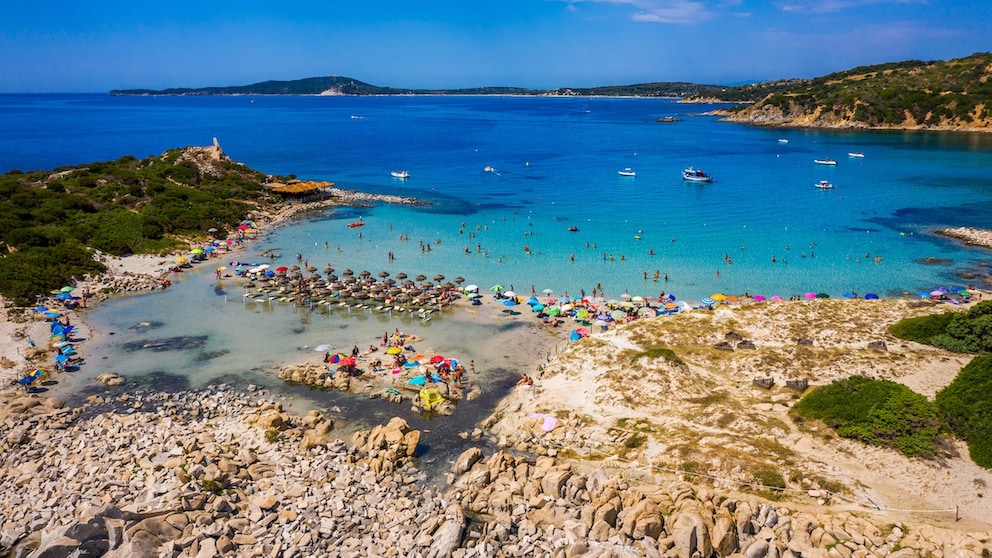
The summer UV exposure in Southern Europe is known to be very high. Therefore, when staying at the beach, it’s important to protect oneself from the sun. However, in the bay of Punta Molentis in Sardinia, only selected groups of people will be allowed to do so in the future. This is according to a new regulation that, according to media reports, Mayor Gianluca Dessì is said to have passed. For whom the controversial sunshade ban will apply and what is behind it—TRAVELBOOK takes a closer look.
The regulation stipulates that at Punta Molentis beach in the Sardinian municipality of Villasimius, mobile sunshades may only be used by families with children under ten years old and people over 65. The term “sunshade ban” is actually an understatement: Adults who do not meet these criteria are also prohibited from bringing other artificial shade providers. This was first reported by the Italian daily newspaper “La Repubblica.”
What initially sounds like pure harassment has, at its core, understandable reasons. However, the implementation raises, to put it mildly, questions.
What Is Behind the Sunshade Ban in Sardinia
Sardinia has been trying for years to protect its most popular beaches from the effects of mass tourism. In this context, TRAVELBOOK reported last year on the introduction of a reservation requirement for visitors to Tuerredda Beach. This is intended to ensure compliance with a visitor limit of 1,000 people per day.
In the current case, the measure is intended to prevent the bay of Punta Molentis from being overcrowded with large sunshades and other artificial shade providers. At the same time, it is likely also intended to regulate the influx of visitors: People for whom the sunshade ban applies may decide against visiting. In summary, the regulation is meant to protect the sensitive beach ecosystem and reserve the limited shade space for those considered particularly vulnerable to heat.
Measure meets with criticism
As expected, not everyone welcomes the new rule. Under the “La Repubblica” article, comments from users are increasing, pointing out the dangers of sunstroke, heat damage, and skin cancer risks—even for groups between 10 and 65 years old. Additionally, the municipality is accused of age discrimination, and individual health conditions that were not considered in the regulation are cited. Some users are outraged that childless people are disadvantaged, while others take the regulation with humor, joking that they will simply bring their grandparents to the beach in the future.
On the Facebook page of the municipality of Villasimius, users also accuse the authorities of linking nature conservation with questionable age limits. One comment also addresses the fundamental problem: If the beach is to be truly protected, it should be completely closed for a few years to allow flora and fauna to recover. This likely refers to the traces of a forest fire in Punta Molentis, which occurred in July 2025 as reported by BILD (also part of Axel Springer). The proposed solution, however, is half-hearted and, as the user sarcastically writes, will soon lead to a “black market for renting children or seniors.”
Beachgoers Must Book Their Spot via App Here
Beach Sprawling Causes Frustration Among Beachgoers–What’s Behind It
New Sunshade Regulation Is a Done Deal
But the outrage is of little help: The sunshade ban, or let’s call it the sunshade regulation, is a done deal. It is part of Mayor’s Ordinance No. 12 of June 5, 2026, which is cited in various official announcements and in the reporting of Italian media. The news platform “Isolaonline24” posted a screenshot of it.
The ordinance also includes an access restriction in the form of a contingent entry system, as well as time and numerical limits to control the occupancy of the coastal area. It also includes safety and fire protection requirements for appropriate behavior in the sensitive coastal area.
Further Measures Against Overcrowding on Italy’s Beaches
With its strict usage rules, Punta Molentis in Sardinia is just one example of the increasing access regulation to popular beaches in Italy. At the same time, prices for beach services are also rising. Although these price adjustments are not officially intended to manage visitors, they effectively contribute to structuring beach use more by cost. At the same time, they increase the pressure on the few remaining free, public beaches.