

March 29, 2026, 12:50 pm | Read time: 5 minutes
In the Bavarian community of Roggenburg, a very unusual event takes place once a year with the Leiberfest. The mortal remains of four saints from the local monastery church are laid out and carried festively adorned through the streets. And that’s not the only quirky aspect. This year, the tradition celebrates its 300th anniversary. However, this unique tradition is under threat.
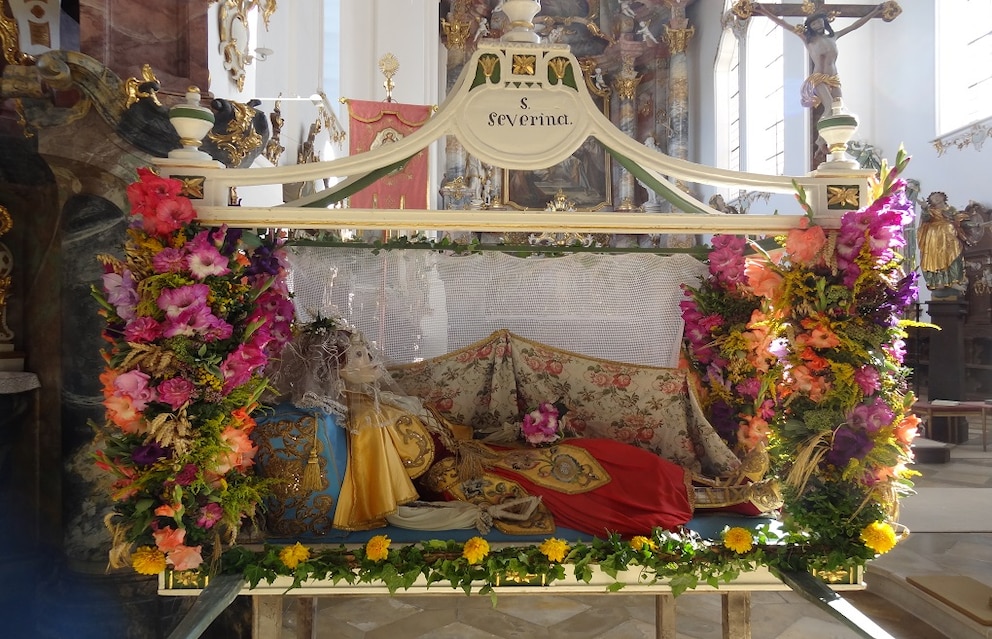
August 15 is an important holiday for all Catholics in Germany. On this day, the Assumption of Mary is traditionally commemorated. But in the Bavarian community of Roggenburg, this festival is celebrated in a unique way. The town’s perhaps most famous “residents” dress up in a very special way for this occasion, as for 300 years now, they have been given a peculiar honor on the Assumption of Mary. Laurentia, Severina, Valeria, and Venantius are carried festively adorned in a grand procession once around the Roggenburg monastery through the streets. This is when the Leiberfest is celebrated. The special feature: its main actors are the mortal remains of four saints.
That’s right, because Laurentia, Severina, Valeria, and Venantius are four valuable full-body relics that, according to the ” Katholische Sonntagszeitung,” moved into the Premonstratensian monastery in Roggenburg as early as 1722. The then-abbot Dominikus Schwaninger followed a trend that was sweeping across Europe at the time. Churches wanted to adorn themselves with the mortal remains of supposedly holy people. A craze that was triggered in Rome when, in the wake of the Reformation and after the Thirty Years’ War (1618 to 1648), various early Christian mass graves were discovered. The people buried there were sometimes summarily declared martyrs. And every church that prided itself wanted at least one such relic. The Leiberfest probably took place for the first time in 1726.
Carry the Dead Through the Streets
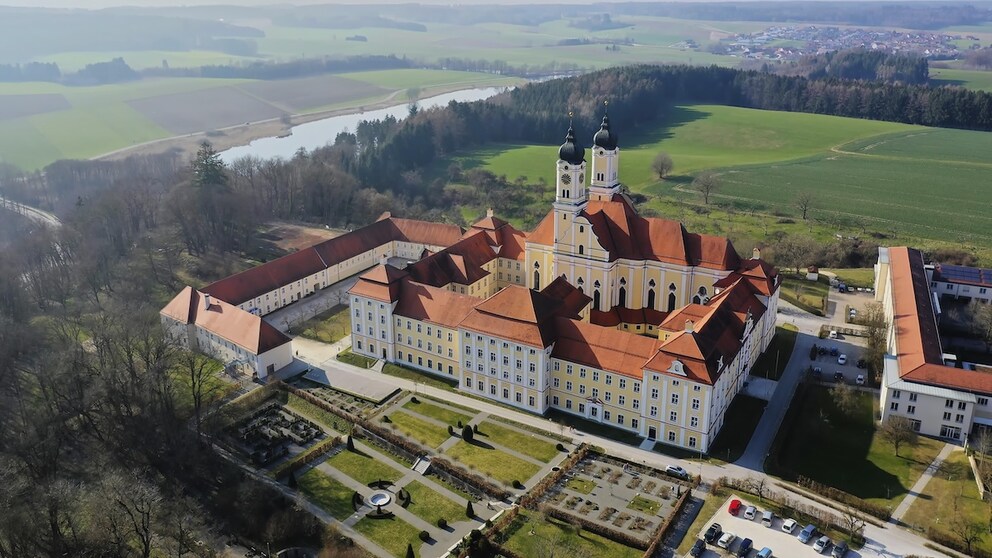
This year, the monastery celebrated an impressive anniversary, namely its 600th anniversary. According to the official site of the place, the abbey in Roggenburg was founded in 1126 by Count Berthold of Bibereck and his wife. Its sphere of influence quickly expanded to Switzerland, where branches of the “mothership” emerged. The custom of churches adorning themselves with the mortal remains of supposed saints at that time can also be explained by the spirit of the Baroque era. Since death was omnipresent anyway, people tried to take away its horror through the plastic depiction of often richly decorated saint figures. Celebrations like the Leiberfest further contributed to this.
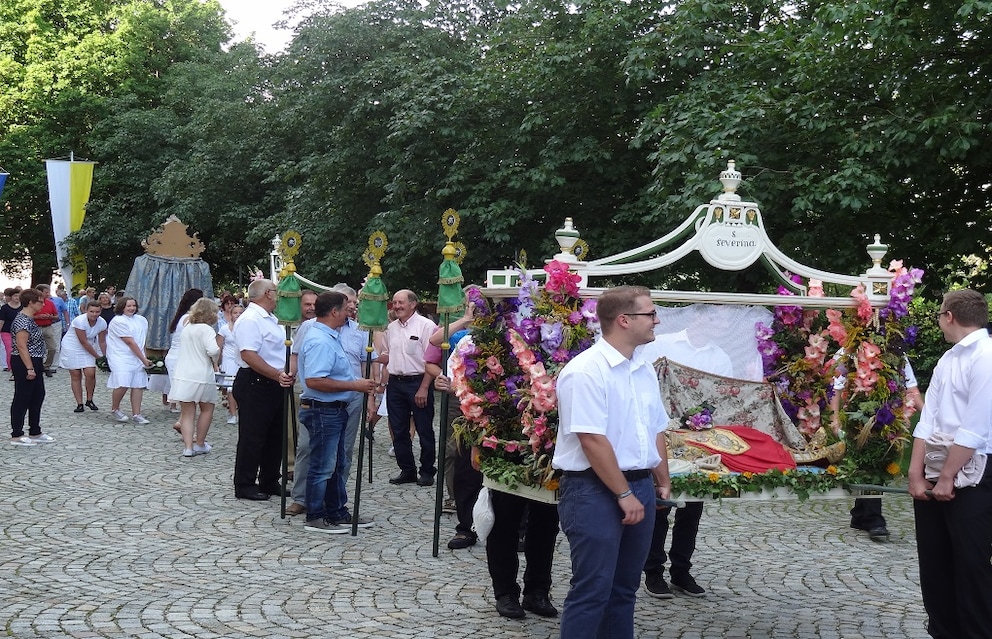
Because during this, the four saints of Roggenburg are still carried today in magnificent shrines adorned with floral ornaments through the streets. The day traditionally begins with the so-called patronal service. This is followed by the special procession, in which musicians also participate. The living participants of the Leiberfest also dress in full regalia. Many carry banners. Leading the procession is always a little boy, the so-called noble boy. The significance of this tradition is unclear. However, it probably goes back to the founders of the Roggenburg monastery. Their little son drowned in a pond in 1126, the founding year of the abbey. His death is considered the reason for the donation of the monastery.
Macabre Tradition

A special task falls to the bearers of the holy shrines. They must ensure that the mortal remains survive the outing unscathed once a year. It is a tradition for young girls to carry the three female saints, Laurentia, Severina, and Valeria. Venantius, on the other hand, is transported by young men. However, there are not always enough volunteers for this honorable task. Some years, a relic could not participate for this reason. But there is also another, somewhat macabre reason. The frock coats that the men must traditionally wear during the procession are passed down from generation to generation.
In addition to the faithful from Roggenburg, people from the villages of Meßhofen and Ingstetten, which belong to the local parish, also participate in the Leiberfest. According to “Atlas Obscura,” the celebrations traditionally conclude in the monastery beer garden with food and drink. This year, the Assumption of Mary is likely to be celebrated even more grandly than usual. In 2026, the Leiberfest will mark its 300th anniversary. Additionally, the Roggenburg monastery will celebrate its 900th anniversary, which is why, according to the official website, there will be special events such as concerts, lectures, and tours throughout the year. Today, the abbey is also a popular place for school trips and conferences, and the monastery inn is a three-star superior hotel.
According to the Roggenburg town hall, as requested by TRAVELBOOK: “The Leiberfest is unique in our region and always very festive. No busloads of tourists come because of it, but it has always been well attended in the past. Especially the church is always full.” After the procession had to be canceled in the last two years due to the renovation of the monastery church, plans are now being made for 2026. This is also confirmed by the local parish community to TRAVELBOOK: “We are already in the planning phase. However, due to ongoing construction work, there may not be a procession of the Leiber this year. But the anniversary will, of course, still be duly celebrated.”