

August 4, 2026, 9:35 am | Read time: 4 minutes
High temperatures and lack of rainfall can have various impacts on the environment, including drought and low water levels. The river cruise industry is now also affected. As water levels drop, ships have less depth available. The low water levels have already prompted some cruise lines to adjust their routes on several European rivers. Cruises have also been canceled.
The low water levels pose challenges for the entire inland shipping industry, as explained by the Federal Association of German Inland Navigation (BDB). This association represents both freight and passenger shipping. For freight shipping, low water levels mean that ships can carry less cargo. Additionally, falling water levels can prevent river cruise ships from passing certain routes or force them to change their itineraries.
Currently, the Rhine, Main, Moselle, and Danube are among the rivers affected by low water levels. The consequences for travelers were highlighted just last week by an incident on the Danube: As the Bulgarian Ministry of the Interior announced on July 28, the cruise ship Viking Ullur ran aground due to low water levels. The 186 passengers and 52 crew members on board had to be evacuated.
First Cruises Canceled Due to Low Water Levels
While this case is still an exception, some cruises have already been canceled. For instance, Nicko Cruises was unable to conduct three Danube cruises to the Black Sea, as reported by the portal “Kreuzfahrten und Schiffe” citing a notice to affected passengers.
Viva Cruises also had to cancel a trip: The river cruise from Strasbourg to Düsseldorf planned for August 3 could not take place due to the further declining Rhine levels and lack of suitable docking points, as TRAVELBOOK learned from the cruise line. Affected guests were rebooked on other trips.
These new cruise ships will be sailing Europe’s rivers in 2025
Official Hygiene Inspections: These Cruise Ships Failed to Impress
Cruise Lines Adjust Routes and Ships to the Situation
In many cases, cruise lines are trying to continue with planned cruises. For example, Viva Cruises’ trips on the Seine, Rhône, Douro, as well as the regulated canals of northern Germany and along the Baltic Sea coast, can proceed as scheduled. The Rhine north of Düsseldorf is also currently navigable, according to a spokesperson. However, water levels can drop by up to 20 centimeters in a single day, making forward planning difficult. The cruise line is continuously monitoring the situation—the safety of guests and crew is a priority.
Phoenix Reisen also notes that due to the dynamic situation, short-term route or ship changes are possible. Water levels vary significantly across different river sections—often just a few centimeters determine whether a passage is possible. For trips on the Danube, Moselle, and Rhine departing through August 12, Phoenix offers free rebooking. Excluded are trips to Holland and Belgium.
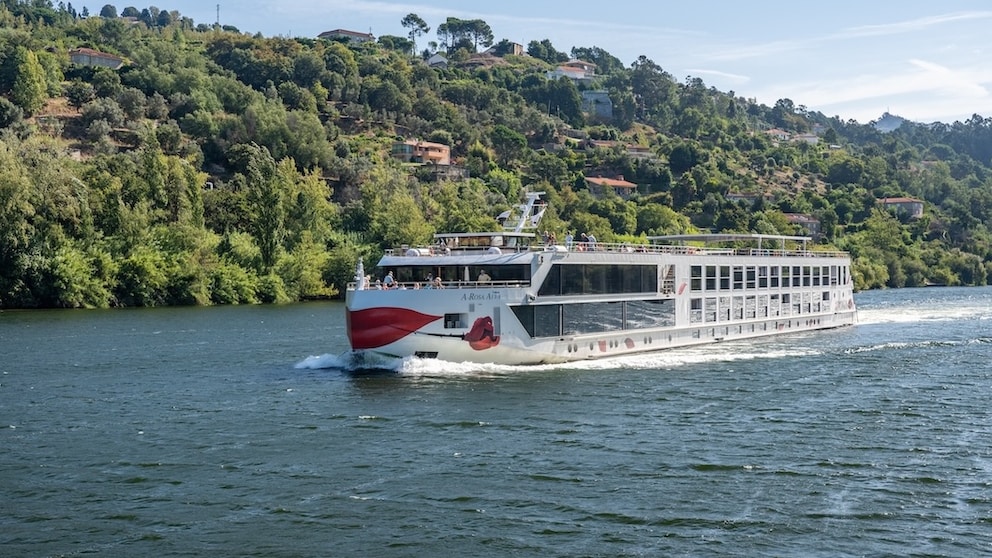
The approach of all cruise lines is currently largely the same: They continuously monitor water levels and coordinate with the relevant authorities. Arosa is also following this approach. The company is trying to carry out planned trips despite low water levels, a spokesperson told TRAVELBOOK. If a trip cannot be fully completed, the cruise line organizes an “attractive” alternative route with an excursion program if possible. However, Arosa also states: “If a trip can only proceed with significant restrictions, we are unfortunately forced to cancel the trip.”
Travelers Should Stay Informed
To give you a better idea of the current situation: At an official measuring station in Kaub, Rhineland-Palatinate, the recorded water level was temporarily less than 30 centimeters at the end of July. However, it’s important to note that navigability depends not only on the water level but also on the actual water depth in each section.
Travelers should be aware that even if a river cruise initially proceeds as planned, changes can occur at short notice. Those who have booked a trip on the Rhine, Moselle, or Danube in the coming weeks should check the current status with the operator before departure. Particularly important are possible changes to the embarkation or disembarkation port and the itinerary.