

September 9, 2026, 8:58 am | Read time: 6 minutes
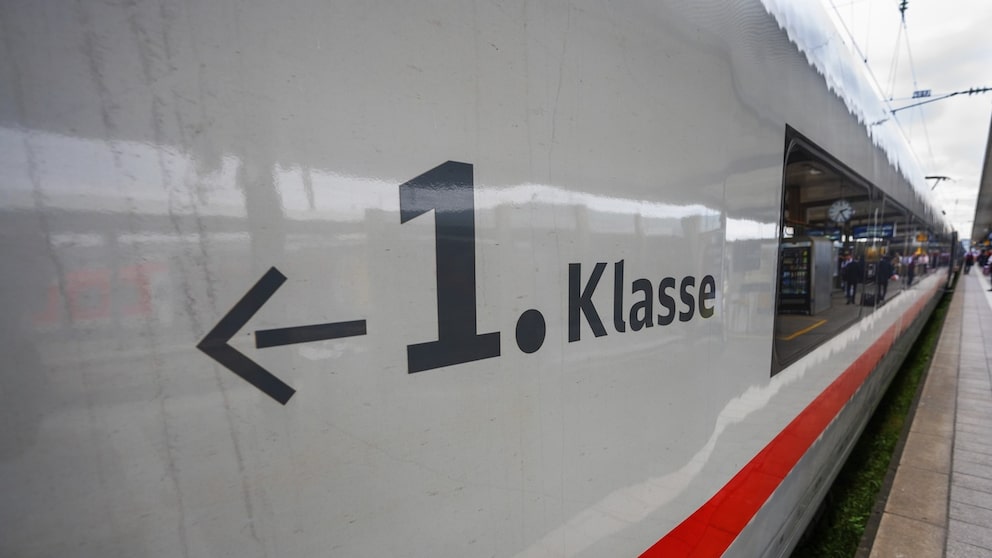
A ticket for second class on Deutsche Bahn entitles you to travel in that class. But does it also mean that as a “second-class” passenger, you can’t even briefly stay in the usually more expensive and comfortable first class? Not even for a short time, or, for example, between the compartments? TRAVELBOOK investigated.
It’s clear that passengers with a second-class ticket can’t simply travel in first class. After all, the two classes exist because they offer different services, and therefore, they cost differently.
If you have a ticket (for second class) and thus a travel entitlement but no seat, you might encounter problems with DB. In extreme cases, a train can even be evacuated due to overcrowding. More commonly, in heavily booked ICEs and regional trains, many passengers have to sit on the floor. If there’s any space left at all.
Train Manager Can Open First Class to All Passengers
The train manager could show leniency, as attorney Nicole Mutschke explains to TRAVELBOOK in this article, and allow all passengers to use first class—including those with a second-class ticket. However, this rarely happens in reality.
But what if you don’t want to claim a seat? Can a second-class passenger at least sit on the floor of first class?
Can Second-Class Passengers Stay in First Class?
At first glance, the answer isn’t so clear. DB’s transport conditions explicitly state that passengers with a second-class ticket cannot sit in first class, even if it’s overcrowded. However, it doesn’t say they can’t enter first class at all.
One Instagram user reports having once sat on the floor in the corridor between two first-class cars. His booked train was canceled, and the next one was so full that there was no room even on the floor of second class. The train staff still asked him to stand up and leave the first-class area.
The question is: Does the ban apply to merely being there—regardless of whether you’re sitting (on the floor) or standing?
DB Spokeswoman: Staying in First Class Without a Ticket Is Not Allowed
Yes, says Deutsche Bahn in response to TRAVELBOOK. To stay in the first-class area, passengers generally need a valid first-class ticket. “Without the appropriate ticket, staying is not permitted,” says the company spokeswoman. This also rules out the supposed loophole of sitting on the floor. Those with a second-class ticket cannot simply sit in the first-class area just because they aren’t claiming a seat there.
However, if second class is so full that particularly vulnerable people cannot be adequately accommodated, they can exceptionally be seated in first class. They don’t need to buy a first-class ticket in advance; instead, the upgrade to first class can be paid for on the train, explains the DB spokesperson.
Violation Considered Traveling Without a Valid Ticket
The separation of classes applies in both long-distance and regional transport for the entire area, as the spokeswoman emphasizes, not just for the seats. Therefore, anyone traveling in first class without a valid ticket is doing so without a valid fare.
What happens next? According to the DB spokeswoman, the train team points out the rule and can prohibit the stay, directing the person to second class. An increased fare may also be charged. Additionally, in certain trains, it’s possible to purchase an upgrade to first class from the conductor afterward. This usually costs the price difference to first class, possibly with an onboard surcharge. However, there is no entitlement to this after the journey has started.
Even Brief Standing in First Class Is Prohibited
So, the rule generally remains: Staying in first class with a second-class ticket is not allowed. And “staying” doesn’t just mean a longer visit. Even a brief stop in first class can already be problematic.
This is illustrated by a case known to TRAVELBOOK: A traveler with a second-class ticket wanted to reach his connecting train at Frankfurt Central Station as quickly as possible. Since the station is a terminus and trains stop at the end of the platform, it can be advantageous to stand as far forward in the train as possible when disembarking. As his train was delayed and time was tight for the connection, the traveler worked his way to the frontmost car during the journey. However, that car belonged to first class. There, a conductor asked him to go back—to his disadvantage, of course.
Am I Allowed to Sit in First Class on an Overcrowded ICE Train?

Can I Really “Live” on the Train with the BahnCard 100?
Even First-Class Entrances and Exits Are Off-Limits for “Second-Class” Passengers
Second-class passengers are not allowed to disembark in the first-class area—nor to board there. This is also pointed out by a user on “Reddit,” and not very charmingly. As he explains, “the rabble”—meaning second-class passengers—are not even allowed to use the first-class entrances. Not even if they want to continue from there. They must “push through the full door of second class,” which is also monitored by the conductor.
The topic divides users on the platform. In another discussion on “Reddit,” some report that it’s usually tolerated if you enter the train through a first-class entrance but then quickly move on to reach the second-class compartments. Others are sure that you should directly use the entrances of your own travel class.
The latter are correct. Staying in the entire first class is prohibited, and this includes the entrance areas.
Conclusion: First Class Is Completely Off-Limits for the “Rabble” at All Times
Standing, sitting, crouching on the floor—all of this is prohibited for passengers with a second-class ticket in the first-class area of Deutsche Bahn. You don’t have to find this pleasant as an affected person. At the same time, first-class passengers have indeed paid for their exclusivity.
The term “rabble” is still completely inappropriate. And its use should not be allowed for members of the “better” travel class in return.