

June 16, 2026, 4:12 pm | Read time: 4 minutes
“All Inclusive” literally means “everything included.” In the context of travel, the term describes a package where the services included are already covered in the travel price. These typically include accommodations, main meals, snacks, and a wide selection of drinks. But does this also apply to tips? TRAVELBOOK explored this question.
Except in countries where tipping is uncommon or even frowned upon, it is often seen as a sign of appreciation to give service staff a voluntary extra payment. In Germany, it is always a voluntary additional service from a third party. More details can be found in the information sheet on tipping from the German Hotel and Restaurant Association (DEHOGA). It is not part of the agreed compensation—with a tip, guests or customers express their satisfaction with the service provided.
There are also areas where employees in certain industries rely heavily on tips due to comparatively low wages. In some places, tips are not only appreciated: guests and employees consider them a natural part of compensation. One might wonder if an all-inclusive hotel represents a special case in this context.
Tipping in All-Inclusive Hotels: Appropriate or Unnecessary?
Tipping in all-inclusive hotels—why not? Perhaps because for many users, the purpose of such models is precisely not to have to deal with money or tipping issues on-site. This is expressed by some users in a discussion on “Reddit.” Others, however, point to hotel brands with clear “no tipping” policies.
Their occurrence is confirmed in an article on the online portal “All Inclusive Guide.” According to this, explicit tipping bans prevail, mostly in establishments that consciously pay their employees higher wages and do not foresee additional payments from guests. Overall, however, these are more exceptions. More common are accommodations where tips are already included in the travel price through service charges, as well as those where additional tips remain customary despite included services. Overall, the practice varies significantly depending on the hotel chain and travel destination.
One could simply ask at the reception or check the accommodation’s usage rules. This recommendation is also given by Linda Kaiser, deputy chairwoman of the German Knigge Society, upon TRAVELBOOK’s inquiry. But what do the appropriate etiquette rules generally say about the topic?

How Much “Tips” Will Cruise Lines Charge You

Airline Offers Money for Delayed Flights–Is the Deal Really Worth It?
What Knigge Says About Tipping and All-Inclusive Hotels
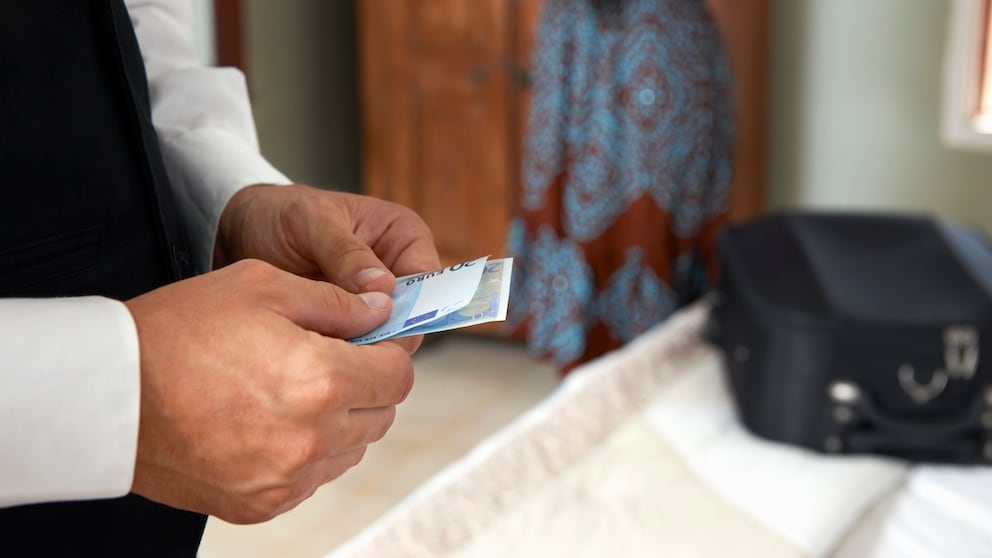
In all-inclusive vacations, tipping is quite common, according to Knigge expert Linda Kaiser. This is especially true for personal services such as carrying luggage, room cleaning, or room service. In restaurants, however, especially with buffet offerings, tipping is less common and is usually only given when individual table service is used.
Kaiser reminds us that tipping is fundamentally a voluntary service—”except in certain countries like the USA, where it is a fixed part of the income system,” as briefly mentioned above. If no tipping flat rate or service charge is specified in the booked all-inclusive facility, it is advisable, even with this travel model, to always have some coins or small bills ready to show appreciation when needed.
And if Tipping—How Much?
According to Knigge expert Linda Kaiser, the amount of the tip does not depend on the type of accommodation. What matters are the customs in the respective travel country, not whether it is an all-inclusive establishment. As a rough guide, 1 to 2 euros per piece of luggage for luggage service, 1 to 2 euros per day for room cleaning, and 10 percent of the bill for room service are considered.
At the bar or café, people often round up or add a small amount per order. With longer contact with the bar staff, a flat acknowledgment for the duration of the stay is also appropriate.