

July 16, 2026, 11:02 am | Read time: 3 minutes
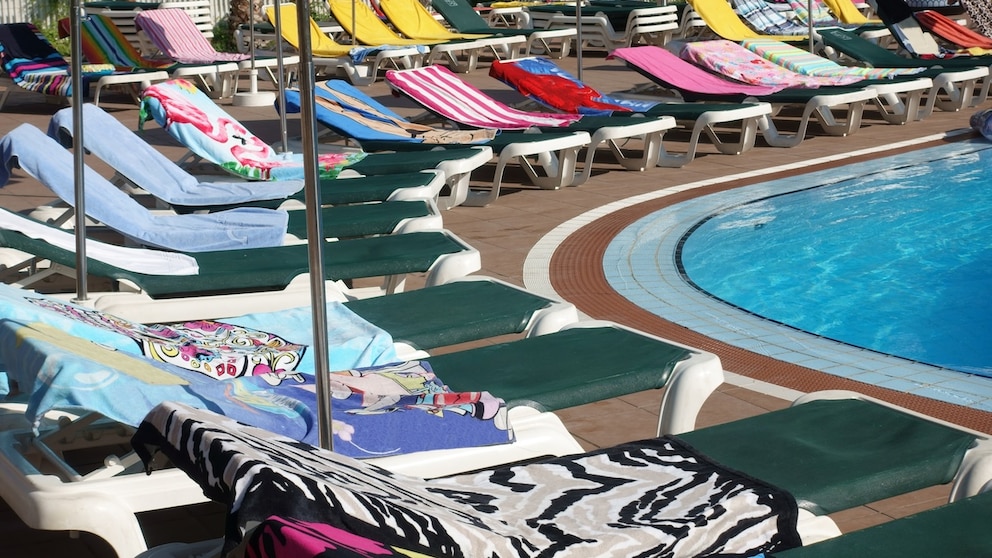
The daily race for the best spots by the pool has been a part of vacation life in many resorts for years. Even before breakfast, poolside loungers are claimed with towels—much to the annoyance of many guests. Following a sensational court ruling, more and more hotels in Europe are responding with new concepts aimed at ending the towel-reserving practice.
Court Ruling Draws Attention
A family vacation on the Greek island of Kos became the catalyst for a successful legal case for a traveler from Düsseldorf. According to him, all 400 sun loungers at the five-star Grecotel Kos Imperial were blocked by towels in the summer of 2024. The court awarded him compensation of about 990 euros against his tour operator.
Hotels Assign Loungers at Check-in
To avoid disputes and potential lawsuits, many hotels now use fixed allocation systems. Guests receive their sun lounger upon arrival.
At the St. George Beach Hotel & Spa Resort in Cyprus, each guest is assigned a fixed lounger at no extra cost. The hotel advertises on its website: “We strive to meet our guests’ wishes so that everyone has the opportunity to get their preferred spot by the pool or on the beach.” The Sunrise Beach Hotel, the Grecian Bay Hotel, and the Olympic Lagoon Resort in Cyprus also follow this principle.
Sun Lounger Reservation via App
The five-star Iberostar Selection Sabila hotel in Tenerife uses a digital solution. Guests can reserve their lounger up to 48 hours in advance via an app. If the spot is not used by 10:30 a.m., the reservation expires.
The Sea Hotel by Grupotel in Can Picafort, Mallorca, also offers this system. After check-in, guests can book their beach loungers through the hotel app or at the reception. Two loungers and an umbrella cost 15 euros per day. The reservation is exclusively for the beach area and is time-limited.
Unused Loungers Are Cleared
At the four-star Amàre Beach Hotel in Ibiza, reserved loungers are cleared if left unused for more than 30 minutes. Berlin attorney Roosbeh Karimi considers this approach permissible: “The hotel can stipulate such rules in its house regulations.”
In practice, this means hotel staff remove towels after the set time and store them at a designated location. “Then you have to pick up the towel and find a new lounger,” says Karimi.

Cruise Line Takes Firm Stance Against Deck Chair Reservers

The Crazy Race for the Best Poolside Loungers
Cruise Lines Also Take Action
Not only hotels are tightening their rules. Unused loungers are increasingly being cleared on cruise ships as well.
The British cruise line P&O Cruises employs the so-called “Lonely-Lounge” principle. “If the lounger remains unused for more than 30 minutes, personal items are taken to the storage area for abandoned loungers,” it states.
NCL also acts against reserved but unused loungers. At Carnival Cruise Line, staff initially mark abandoned spots with adhesive stickers. After 40 minutes, towels and other items are removed and securely stored.
Travel Expert Anticipates New Standard
Lisa Henning from the British travel agency Inspire believes that reservable sun loungers will become a standard feature of many vacation offerings. “Many of our customers place great importance on the location of their hotel room. Similarly, I can imagine they want to be sure of getting a sun lounger in the right spot—and are willing to pay for it,” she explains to the “Daily Mail.”