

December 11, 2022, 5:05 am | Read time: 3 minutes
It is not only the most famous church in Paris but also one of the most renowned worldwide: the Notre-Dame Cathedral. Most people knew of it even before its devastating fire in 2019. However, the following facts about the “Heart of Paris” might not be known to everyone.
Anyone traveling to Paris must visit the famous Notre-Dame Cathedral. Although the cathedral has been closed to the public since the 2019 fire, the facade alone is worth seeing. To be a bit informed before your visit, TRAVELBOOK has gathered seven curious facts about Notre-Dame:
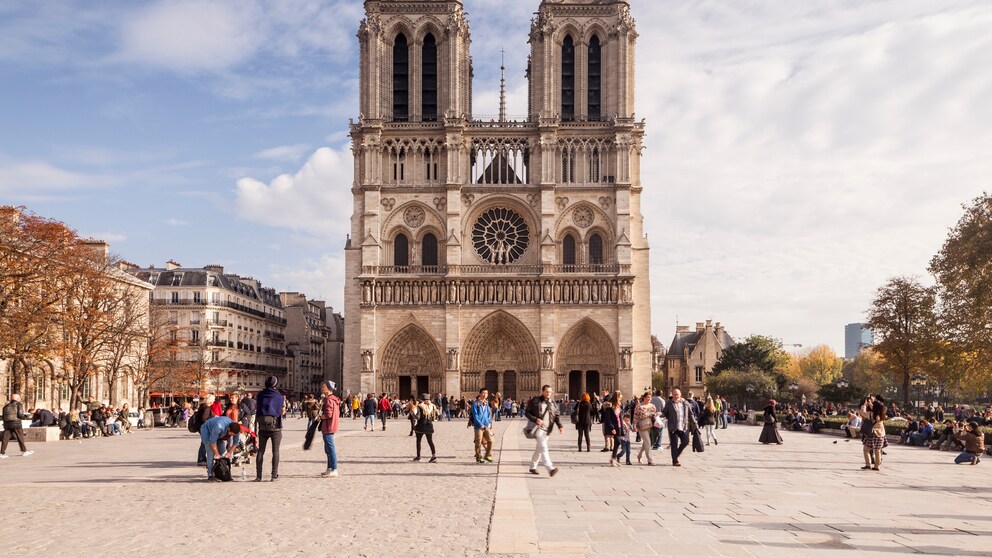
The Twin Towers Are Not Identical
Although the two towers are hardly distinguishable at first glance, they actually have some differences: The north tower is slightly taller than the south tower. This is because it was built 15 years earlier. Until the completion of the Eiffel Tower in 1889, the towers were the tallest buildings in Paris.
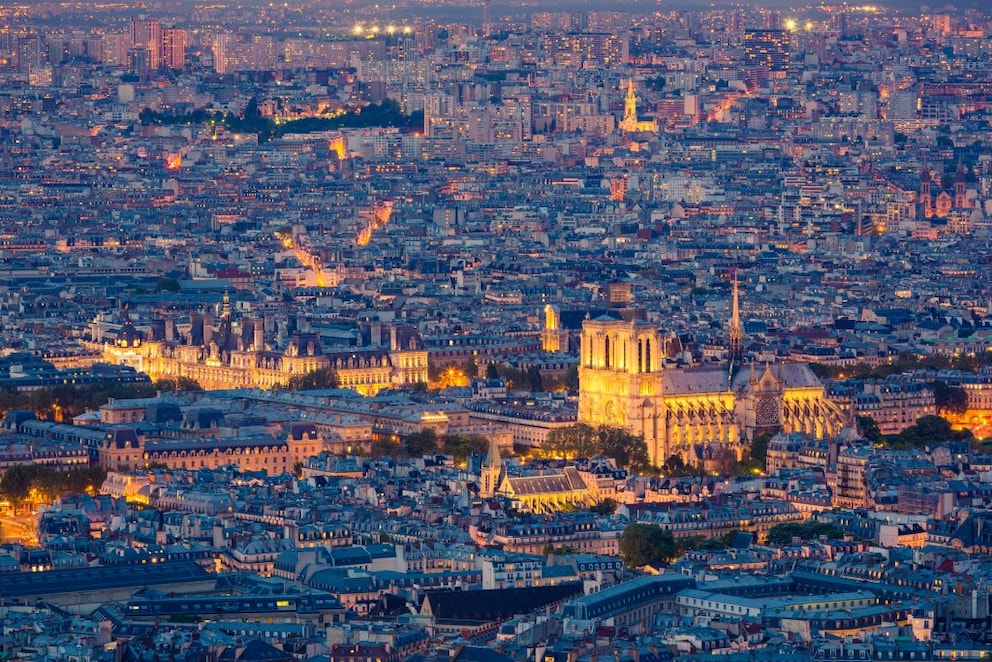
Notre-Dame Is Also the Geographical Heart of Paris
Directly in front of the church is “Point Zéro.” From here, the distance to the major roads leading to Paris and other cities in France is measured. The church is thus not only symbolically but also geographically the heart of Paris.
Also interesting: Discover Paris in 2 Days? Here’s How!
Former Bells Were Turned into Cannons
Almost all the bells of Notre-Dame were melted down after the French Revolution to make cannons from the metal. During the revolution, which was primarily against the monarchy and church elite, Notre-Dame suffered significant destruction. For example, 28 statues of kings were torn down with ropes and beheaded by an angry mob in 1793.
Also interesting:4 Tips to Avoid the Long Line at the Louvre
Victor Hugo Once Saved the Cathedral
Before Victor Hugo’s successful novel “The Hunchback of Notre-Dame,” which led to the famous Disney adaptation, Notre-Dame was in terrible condition. It was only through the book, published in 1831, which Hugo wrote to draw attention to the cathedral’s dreadful state, that the church gained the status of representing the soul of Paris and France in the minds of Parisians. This led to a thorough renovation and restoration of the church.
The “Hunchback” of Notre-Dame Really Existed
For a long time, it was believed that Hugo’s fictional character, known in French and English as the “Hunchback” rather than the “Bell Ringer,” was purely fictional. However, in 2010, researchers found the memoirs of a British sculptor who worked in the cathedral while the book was being written. He wrote about a hunchbacked sculptor who avoided the company of other workers in the cathedral.
Also interesting: The Secret Apartment in the Parisian Eiffel Tower

This is how you can discover Paris in only 2 days

Belleville — the trendy district of Paris
The Famous Gargoyles Are Younger Than Most Think
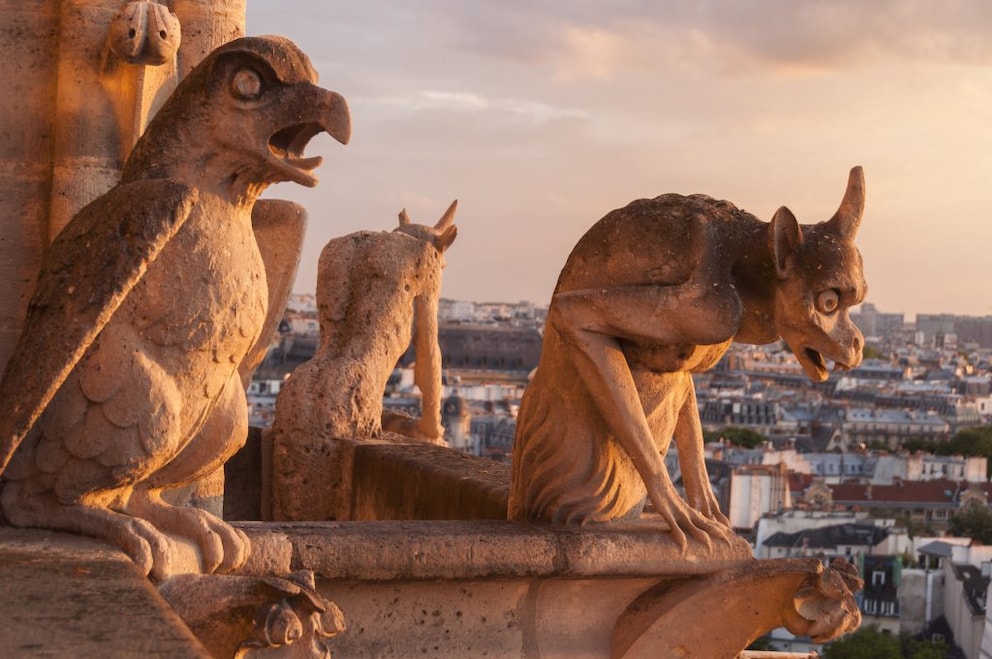
While many believe the eerie gargoyles are relics from the Middle Ages, most of the statues were actually added during the 19th-century renovations. Hugo also inspired these renovations, as his vivid descriptions of the few remaining medieval statues motivated the architects.
Also interesting: What Notre-Dame Will Look Like After Reconstruction
Visiting Notre-Dame After the Fire
Currently, the Notre-Dame Cathedral and its forecourt are closed to visitors. The fire in April 2019 caused immense damage. The tallest spire, the crossing tower, collapsed during the fire, and parts of the roof caved in. Hundreds of firefighters were involved in the rescue and extinguishing efforts, which saved the two main towers on the west facade and parts of the vaulted ceiling. More than 900 million euros were donated for the cathedral’s reconstruction. The reopening is planned for 2024, but until then, the cathedral and its forecourt remain closed to the public.