

May 15, 2026, 4:40 am | Read time: 5 minutes
Germany is full of places that have made history—literally. Fifty-five natural and cultural sites in the country currently hold the title of UNESCO World Heritage. These include impressive buildings, well-known landmarks, beautiful landscapes, and natural areas, as well as places where you can see how people’s lives have changed over time.
The UNESCO title is more than just an award; it comes with responsibilities. All sites are under special protection due to their “outstanding universal value,” as explained by the German UNESCO Commission. The goal is to preserve them long-term, maintain them sustainably, and make them accessible for future generations. TRAVELBOOK has compiled a list of these sites, sorted by federal state.
Germany Ranks Third for Most World Heritage Sites
Internationally, Germany is a leader: Behind Italy and China, we rank third among countries with the most World Heritage sites. Italy leads with 61 sites, China follows closely with 60, and Germany has 55 in total, including 52 cultural sites and three natural sites. All 16 federal states have at least one, and some sites span multiple states.
Germany is particularly strong in cultural heritage—the country is even a frontrunner, ranking second right behind Italy. A history spanning over 2,000 years has left its mark on Germany, as noted on the official German World Heritage site.
The large number of World Heritage sites in Germany is also due to the diligent nomination work of the federal states. Each year, they can submit proposals to UNESCO. Established criteria are then used to determine whether a site is added to the World Heritage list.
Crowned! Germany’s Most Beautiful State
5 UNESCO World Heritage Sites in Germany You Might Not Know
New Candidates for the UNESCO World Heritage List
Each year, a committee consisting of 21 elected member states of the World Heritage Convention meets. It decides on the inclusion of new cultural and natural sites in the World Heritage list and also addresses the conservation status of already listed sites.
The 48th session of the World Heritage Committee will take place from July 19 to 29, 2026, in South Korea. Germany has already submitted a new nomination proposal: The Waldsiedlung Zehlendorf is to complement the existing World Heritage entry “Berlin Modernism Housing Estates.” Additionally, there is a German tentative list that collects potential candidates for the coming years.
One of the first sites ever to be included in the UNESCO World Heritage list was Aachen Cathedral in 1978. The list below shows all current heritage sites in Germany, sorted by federal state and in chronological order of their year of inclusion, from the oldest to the most recent. In 2025, the so-called fairy-tale castles of Bavaria’s King Ludwig II were added to the World Heritage list.
Also interesting: UNESCO Designates 26 New World Heritage Sites—Including a German Tourist Magnet
All Current UNESCO World Heritage Sites in Germany, Sorted by Federal State
Baden-Württemberg
- Maulbronn Monastery Complex
- Reichenau Monastic Island
- Architectural Work of Le Corbusier (Weissenhof Estate Stuttgart)
- Caves and Ice Age Art in the Swabian Jura
Bavaria
- Würzburg Residence and Court Gardens
- Pilgrimage Church of Wies
- Old Town of Bamberg
- Old Town of Regensburg with Stadtamhof
- Margravial Opera House Bayreuth
- Augsburg Water Management System
- Frontiers of the Roman Empire: Danube Limes
- Castles of King Ludwig II of Bavaria: Neuschwanstein, Linderhof, Schachen, and Herrenchiemsee
Berlin, Bremen, Hamburg
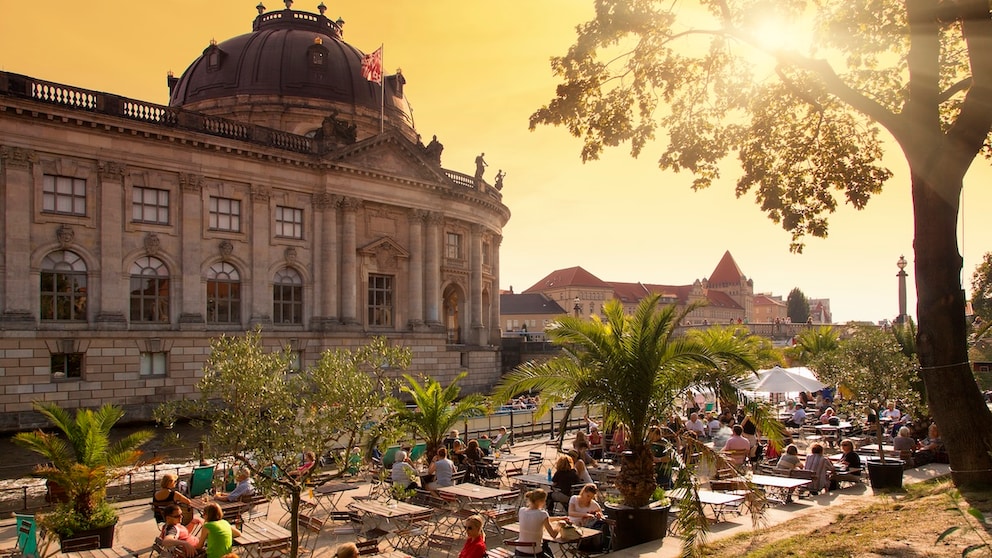
- Museum Island Berlin
- Berlin Modernism Housing Estates
- Town Hall and Roland in Bremen
- Speicherstadt and Kontorhaus District with Chilehaus in Hamburg
Hesse
- Lorsch Abbey and Altenmünster
- Messel Pit Fossil Site
- Wilhelmshöhe Park
- Mathildenhöhe Darmstadt
Mecklenburg-Vorpommern
- Old Towns of Stralsund and Wismar
- Schwerin Castle Complex
Lower Saxony
- St. Mary’s Cathedral and St. Michael’s Church at Hildesheim
- Mines of Rammelsberg, Historic Town of Goslar, and Upper Harz Water Management System
- Fagus Factory in Alfeld
North Rhine-Westphalia
- Castles of Augustusburg and Falkenlust at Brühl
- Aachen Cathedral
- Cologne Cathedral
- Industrial Complex Zeche Zollverein in Essen
- Carolingian Westwork and Civitas Corvey
Rhineland-Palatinate
- Speyer Cathedral
- Roman Monuments, Cathedral of St. Peter and Church of Our Lady in Trier
- Upper Middle Rhine Valley
- SchUM Sites of Speyer, Worms, and Mainz
Saarland
- Völklingen Ironworks
Saxony
- Muskau Park
- Erzgebirge/Krušnohoří Mining Region
- Herrnhut as Settlements of the Moravian Church
Saxony-Anhalt
- Collegiate Church, Castle, and Old Town of Quedlinburg
- Luther Memorials in Eisleben and Wittenberg
- Garden Kingdom of Dessau-Wörlitz
- Naumburg Cathedral
Schleswig-Holstein
- Hanseatic City of Lübeck
- Archaeological Border Complex of Haithabu and Danewerk
Thuringia
- Bauhaus and its Sites in Weimar, Dessau, and Bernau
- Classical Weimar
- Wartburg Castle
- Jewish-Medieval Heritage in Erfurt
Cross-state
- Palaces and Parks of Potsdam and Berlin (Brandenburg, Berlin)
- Frontiers of the Roman Empire: Upper Germanic-Rhaetian Limes (Rhineland-Palatinate, Hesse, Baden-Württemberg, Bavaria)
- Wadden Sea (Lower Saxony, Schleswig-Holstein, Hamburg)
- Ancient and Primeval Beech Forests of the Carpathians and Other Regions of Europe: five areas in national parks and forest areas (Brandenburg, Hesse, Mecklenburg-Vorpommern, Thuringia)
- Prehistoric Pile Dwellings around the Alps (Baden-Württemberg, Bavaria)
- Great Spa Towns of Europe: Baden-Baden, Bad Kissingen, and Bad Ems (Baden-Württemberg, Bavaria, Rhineland-Palatinate)
- Frontiers of the Roman Empire: Lower Germanic Limes (North Rhine-Westphalia, Rhineland-Palatinate)