

August 19, 2026, 9:31 am | Read time: 5 minutes
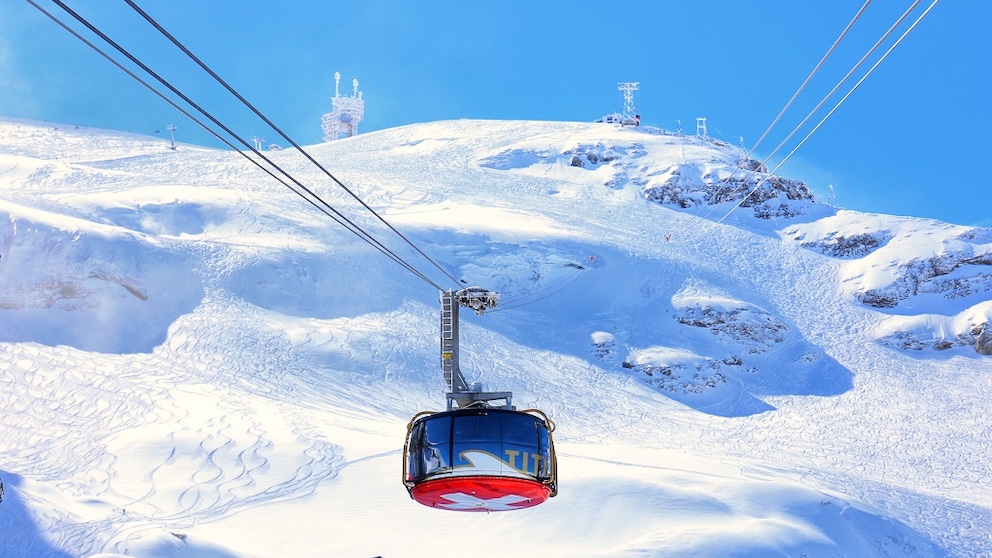
In the Swiss canton of Obwalden, you can take a unique attraction from Engelberg to the local mountain Titlis. It’s the Rotair gondola, which has been operating here since 1992 and rotates 360 degrees during the ride. And plans for the future are already underway.
Anyone in the Swiss community of Engelberg in the canton of Obwalden who wants to reach great heights is inevitably drawn to the local mountain Titlis. At 3,238 meters above sea level, it towers over the landscape and has been a long-time destination for alpine enthusiasts. Early on, there were remarkable pioneering achievements around the summit, such as Switzerland’s first aerial cableway, which began operating here in 1927. But since 1992, there’s been an attraction that literally takes guests’ breath away. Since then, you can reach the summit in the so-called Rotair gondola, which rotates 360 degrees during the (relatively short) ride. However, this exclusive pleasure doesn’t come cheap.
The history of the development of Titlis begins, according to the official tourism website, in 1912. That year, the “Drahtseilbahn Engelberg-Gerschnialp DEG AG” was founded. Tourism, along with winter sports, was booming, and they wanted to make the mountain accessible to guests from around the world. Even back then, Engelberg had a showcase project, boasting the world’s longest bobsled track at three and a half kilometers. In January 1913, the first cable car transported guests from Engelberg to Gerschnialp, reaching an altitude of about 1,260 meters. But the next record for the Rotair pioneers was soon to follow.
First Aerial Cableway in Switzerland
In 1927, Engelberg made history when Switzerland’s very first aerial cableway began operating here in December. It ran from Gerschnialp to Trübsee, which is significantly higher at 1,763 meters. But the long-term goal was likely clear even then. Ultimately, it was to reach Titlis, where today the Rotair gondola’s mountain station is located at 3,020 meters. As early as the 1930s, Engelberg came up with a brilliant idea to extend the winter sports season. They simply held a ski downhill race from the summit of Titlis to Trübsee at Easter. Back then, participants had to climb the mountain from Trübsee on foot.
Also interesting: The quirky coffin lift in the Italian Dolomites
In 1938, due to this idea, the FIS Alpine Ski World Championships were even held in Engelberg. As a result, the place became increasingly known internationally, and soon stars were flocking here. Audrey Hepburn and Sophia Loren were frequent visitors. Even the future Pope John XXIII and the future Indian Prime Minister Indira Gandhi made stops here. In March 1967, after five years of construction, the first cable car to Titlis opened, a remarkable pioneering achievement at the time. Less than two years later, it had already transported its millionth passenger. But it would take another 25 years before the rotating Rotair gondola was invented.
Ride to the Top of the Mountain in This Open-Air Gondola!
The Strange “Coffin Lift” in the Italian Dolomites
Expensive Pleasure
In 1992, the time finally came, and Engelberg set another record. The Rotair is the world’s first gondola to rotate 360 degrees during the ride. Fabian Appenzeller, spokesperson for Titlis Bergbahnen, said in response to a TRAVELBOOK inquiry: “The idea came from our then-director Eugenio Rüegger. He was inspired by the revolving restaurant Metro Alpin in Saas-Fee. Together with the Swiss cable car manufacturer Garaventa, the idea was implemented. On December 20, 1992, the Titlis Rotair opened as the world’s first rotating aerial cableway.” The ascent to Titlis begins in the valley, initially going over Trübsee to the middle station Stand at 2,428 meters. There, you transfer to the Rotair gondola and enjoy the panorama during the relatively short five-minute ride.
Also interesting: The unique CabriO-Bahn at Stanserhorn
“On this section, guests are offered an impressive panorama of the surrounding mountain world and the Titlis glacier. The rotation ensures that all passengers get the same views during the ride.” The price for the ride is at least as dizzying as the spectacular views. A ticket for a round trip currently costs 102 Swiss francs, which is about 108 euros. However, it does include a visit to the glacier cave at the summit and the Cliff Walk, Europe’s highest suspension bridge. The gondola ride is also accessible, as Appenzeller emphasizes. Additionally, it is very safe: “There has never been an accident with the Rotair.” In the 2024/25 fiscal year, more than a million people used the Titlis cableways.
There Is Also a Rotating Gondola in Italy
With the “Project Titlis,” a comprehensive renovation and new construction at the mountain station is set to be completed by 2029. The renowned architectural firm Herzog & de Meuron is building the “Titlis Tower,” an observation tower that will open on June 1, 2026, along with a new, fully glazed cable car station, for 150 million Swiss francs (nearly 160 million euros). Once at the top, the “Ice Flyer” chairlift transports guests to the ski slopes that run from the summit. In summer, it also takes visitors to the glacier park, where you can, for example, slide down the slopes on rubber tires or sleds.
Also interesting: Dresden has the world’s oldest suspension railway
It may come as no surprise that such a spectacular experience as the Rotair gondola is no longer unique worldwide. Today, you can also take a rotating cable car in Italy, at Lake Garda, to the famous Monte Baldo. First, you travel from Malcesine in the valley to the intermediate station San Michele, where you then board the rotating cabin to the summit. This can transport up to 75 people at once. However, the round-trip ticket for adults is not exactly cheap at 30 euros.