

March 27, 2026, 4:23 pm | Read time: 5 minutes
Love until death and beyond: In Germany, several soccer clubs offer their fans the option to be buried in special club cemeteries. Here, you might even rest next to real team legends, which is why this unusual burial has been popular for years. Internationally, the “demand” is sometimes even greater. TRAVELBOOK explores the concept and prices for eternal rest.
Week after week, fans across Germany flock to soccer stadiums to support their team during a match. While the heroes on the field strive for the next victory for their supporters, those in the stands loudly chant songs. These are sometimes funny, often martial, and unfortunately sometimes quite inappropriate. Some even express the desire to remain loyal to their favorite club until death and beyond. Perhaps it was these hymns that inspired several German teams in recent years to open special fan cemeteries. A unique trend that has long been a successful concept internationally.
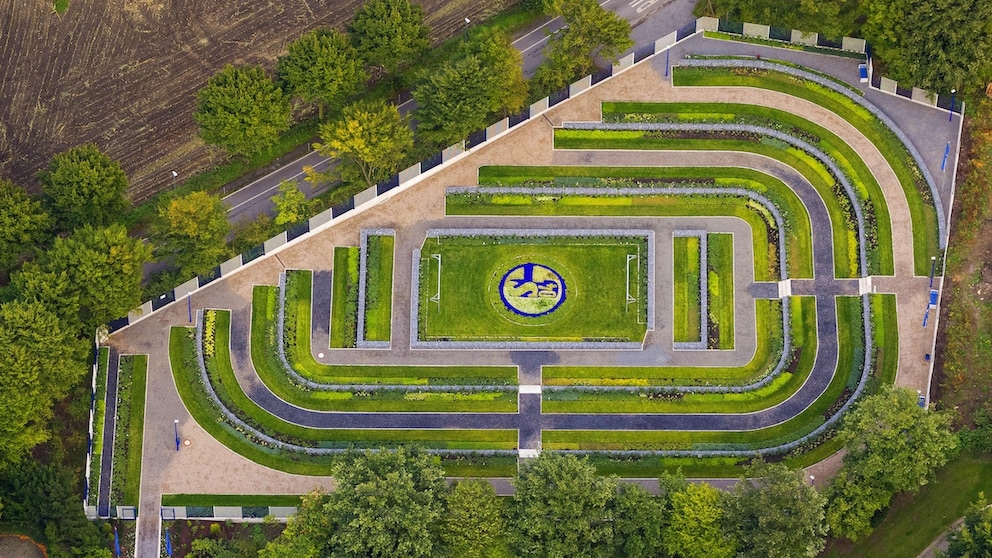
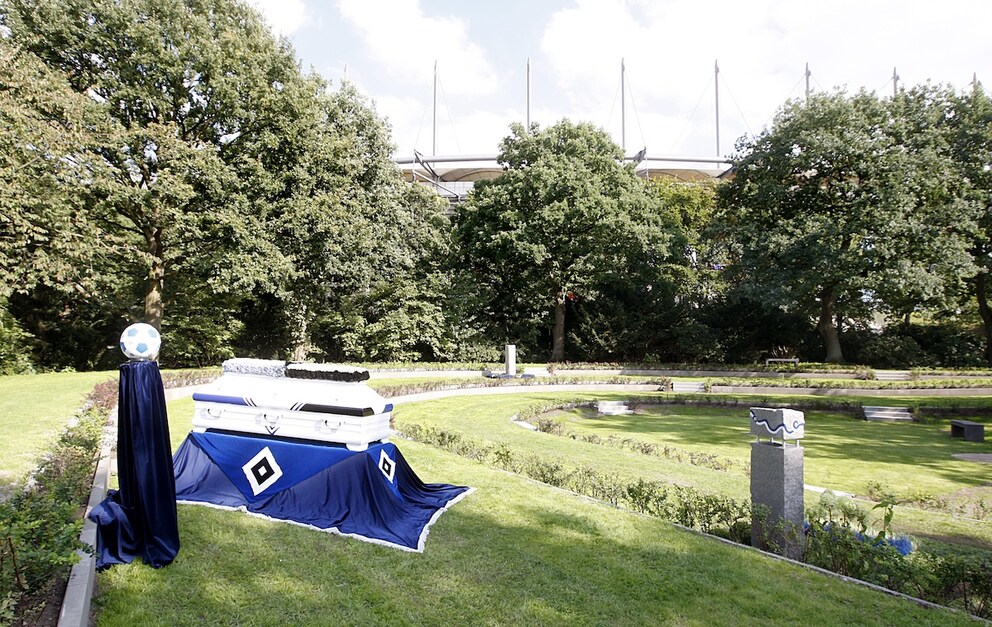
According to “Deutsche Welle,” the first German soccer cemetery has existed since 2008. It was opened in the Hanseatic city of Hamburg, where particularly loyal fans of the local Hamburger Sportverein (HSV) can be buried near the stadium. When a goal is scored for the home team in the arena, the cheers can be heard all the way to the cemetery. Resting here forever is quite an exclusive “pleasure,” as there are only 150 fan spots in the HSV cemetery. In contrast, the club-owned burial site of FC Schalke 04 has over 1,904 spots, covering an area of 5,000 square meters. The number of graves here refers to the club’s founding date on May 4, 1904.
Reserve During Your Lifetime
Soccer clubs Borussia Mönchengladbach, Rot-Weiß Essen, and SpVgg Greuther Fürth also have their own fan cemeteries, some located near stadiums. Another privilege: You might even be buried next to a real club legend on one of the soccer fields for eternal overtime. For example, club icon Reinhard “Stan” Libuda is buried at the Schalke cemetery. However, these special “resting places” are not cheap. A grave site at FC Schalke’s soccer cemetery costs from 2,800 euros, plus municipal fees and undertaker costs, according to the club’s website.
Also interesting: Tower of Silence: The world’s most bizarre cemetery
In return, the bereaved receive a comprehensive package. This includes grave maintenance and restoration over a period of 25 years. Planting and repairing any damage are also included. If you want to ensure you’re buried close to your beloved club, you can reserve a spot in a soccer cemetery during your lifetime. The operator of the FC Schalke mausoleum offers something special. Socially disadvantaged fans can sometimes receive a grave site for free.
International Trend
Those who wish to be buried in the Hamburger Sportverein’s club cemetery must dig deep into their pockets. The cheapest urn burial costs from 8,800 euros, while the most expensive “all-inclusive package” is available from 25,400 euros, according to the official website. Here, grave maintenance and cemetery fees are included. Fan burials at Greuther Fürth are significantly cheaper. You pay 80 euros annually for an urn grave, 160 euros for a coffin. The initial term is ten years. Borussia Mönchengladbach’s soccer cemetery is a columbarium, meaning only urns are interred here. It has a total of 48 spots. Rot-Weiß Essen offers its fans a total of 60 urns and 20 coffins on its own burial site.
Also interesting: On this cemetery in Rome, only German speakers are buried
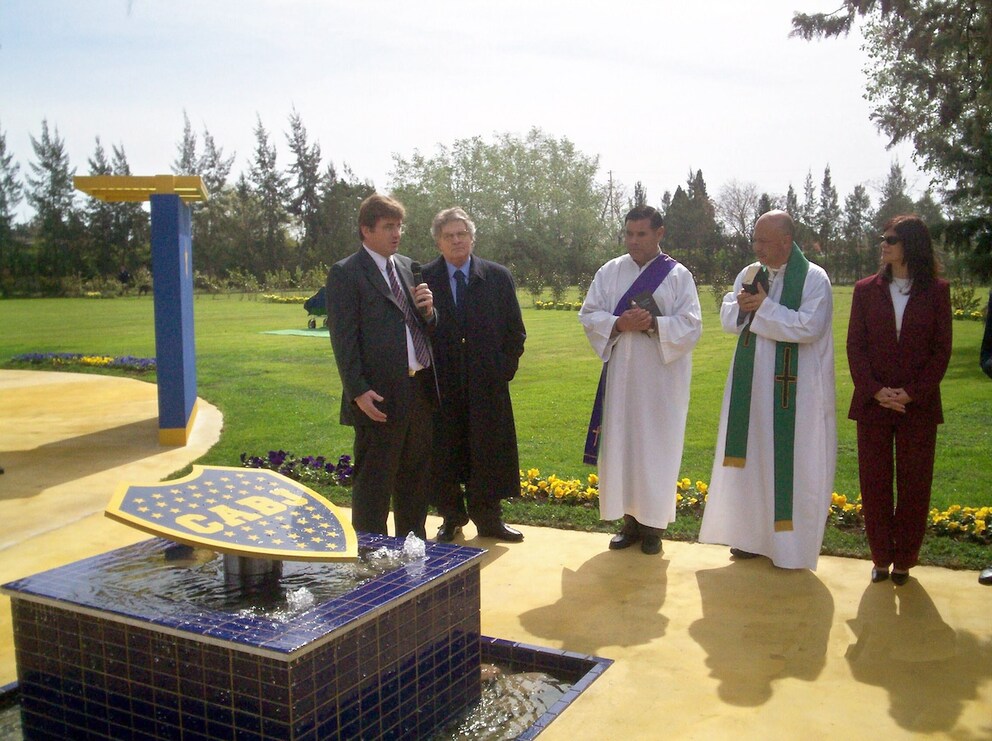
Internationally, it has long been a trend for loyal fans to be buried in their club’s soccer cemetery. The Argentine club Boca Juniors offers its loyal supporters a club-near burial, as does the Brazilian club Corinthians São Paulo. In the stadiums of Spanish teams from Barcelona, Madrid, and Seville, there are niches for fan urns. In England, the birthplace of soccer, they sometimes go a step further. For example, at the Queens Park Rangers team, it is tradition to scatter the ashes of particularly loyal fans right on the field. In Germany, this special type of burial would not be permitted due to cemetery regulations.
At the Rehder GmbH cemetery gardening, which operates the Hamburger Sportverein cemetery, they say in response to TRAVELBOOK’s inquiry: “In principle, the grave sites are in demand. However, we had imagined it to be a bit more lively. Many fans apparently still don’t know that such a burial concept even exists.” When asked about burial prices, they say: “We offer various packages at comparatively favorable market conditions. One must not forget, this is not a cell phone contract. Behind it is the work of real people.” And at the end of a life, the opportunity for fans to truly remain loyal to their club beyond death.