

July 13, 2026, 5:12 am | Read time: 4 minutes
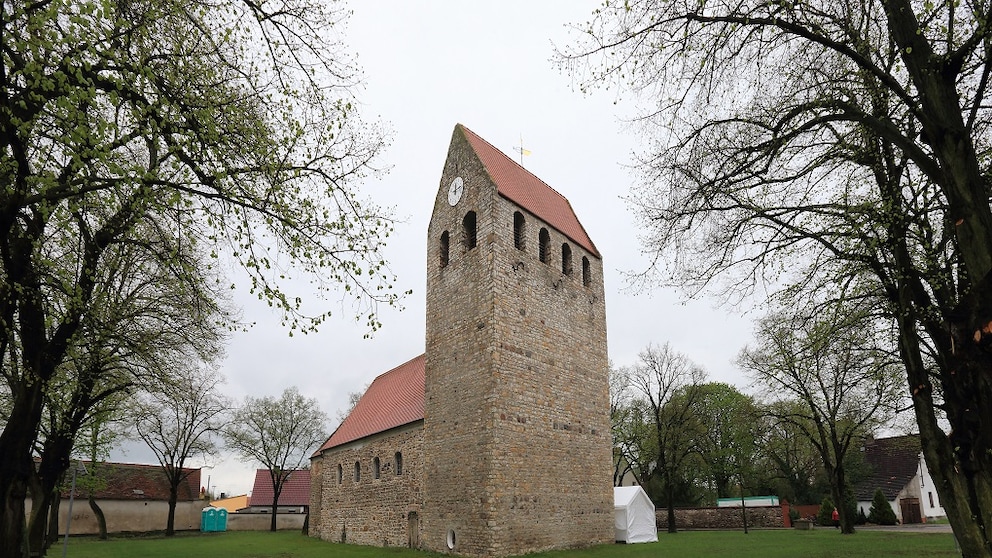
In the small town of Nedlitz in Saxony-Anhalt stands a very special church. In the crypt of the local St. Nicholas Church, several mummies have rested, some for more than 300 years. Their preservation and public display today are thanks to the efforts of a volunteer association. TRAVELBOOK tells the story of this unusual sacred building.
The small town of Nedlitz near Gommern in Saxony-Anhalt might be nothing more than a brief stop on Federal Highway B 246 toward Magdeburg if it weren’t for a very special church. We’re talking about St. Nicholas Church, where since 2014, visitors can see an unusual and eerie attraction in the crypt. It involves two people who have remained preserved as mummies for more than 300 years after their deaths.
The first mummy was placed in the church crypt in 1720, which the influential Privy Councilor and Finance Director Robert Christian von Hake had built as his final resting place, explains Dr. Peter Weber, chairman of the St. Nicholas Church Nedlitz Association, in response to a TRAVELBOOK inquiry. He wanted to avoid being buried underground at all costs. “He probably believed that his soul could ascend to God more easily this way.”
Decay or Dry Out
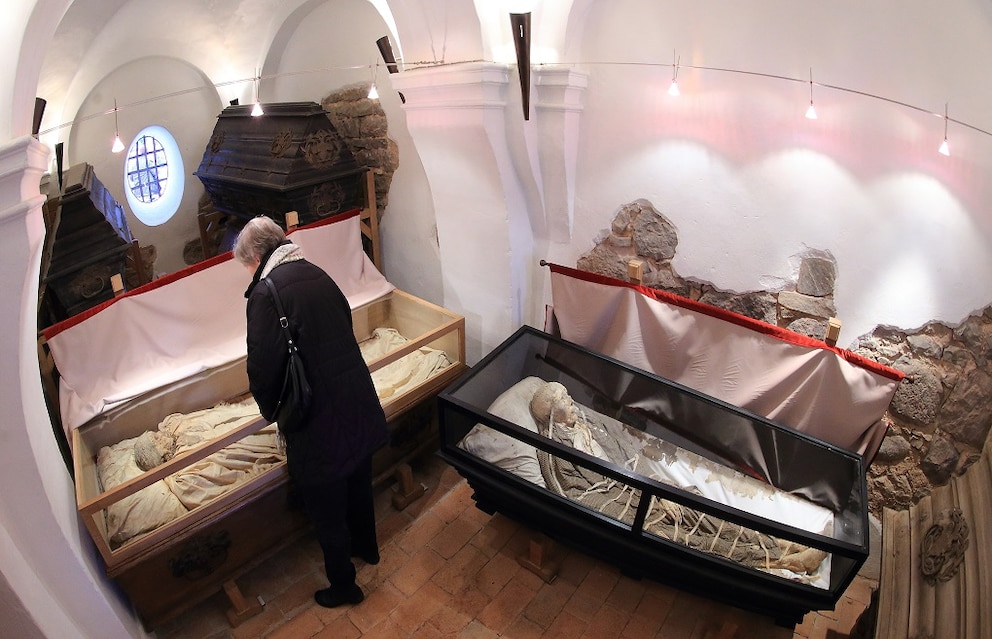
But how did von Hake and a total of six other people buried in the church in Nedlitz become mummies? “The crypt consists of two rooms with cross ventilation, which slowly removed the fluids from the deceased bodies.” According to Weber, a natural process begins about 10 days after death, during which the body either decays or dries out, thus mummifying. “Von Hake must have known this,” he speculates. However, five days before the nobleman, his pastor had already died, making him the first body in the crypt. Over time, five more deceased were added.
Also interesting: The John Coltrane Church Venerates a Musician as a Saint
As the years and centuries passed, the church in Nedlitz fell into disrepair and was officially closed in 1974. Its tower showed a long crack and was at risk of collapse. “If the reunification had come two years later, St. Nicholas would probably have been demolished.” But things turned out differently, and the people of Nedlitz restored their church. In 2013, there was another significant turn when the mummies in the crypt were rediscovered. “Six of the coffins were buried under meters of rubble. Only two mummies were still preserved; the rest had already crumbled to dust and bones.”
Soccer with a Skull

In the past, the church and its mummies were not always treated with respect. “For a time, it even served as a horse stable. There’s also a story from the post-war period when children in the village played soccer with one of the skulls from the crypt.” In 2014, however, the two remaining mummies were taken to mummy expert Jens Klocke in Hildesheim, who painstakingly restored them over nine months. Weber says with audible pride, “Klocke said that Nedlitz has the best-preserved mummies north of the Alps.” Since then, the unique remains can be admired in the church again.
The church, built around 1140 and thus one of the oldest east of the Elbe, can only be visited on a guided tour. These can be arranged through the official website of the association. “We do this even for just one person. We show everyone our church.” The approximately one-hour tour with local and history-savvy volunteers is free. However, donations are requested. “We use them to finance concerts in the church, among other things.” Today, about 800 to 900 people come each year to see the mummies of Nedlitz.
Weber’s invitation to the church in Nedlitz is especially extended to families. He dismisses the question of whether the sight of the mummies might be too scary for children with a laugh. “With everything they see on TV and the internet today? Here they can really learn something. Our tour is interesting for everyone. These were once real people. They lived, laughed, and loved. We want to rekindle the thought of how to deal with life and especially with death.”