

July 25, 2025, 1:36 pm | Read time: 2 minutes
The picturesque Lago Maggiore, located at the edge of the Alps, is a popular travel destination–also because of its small islands. Now, there’s another one to discover.
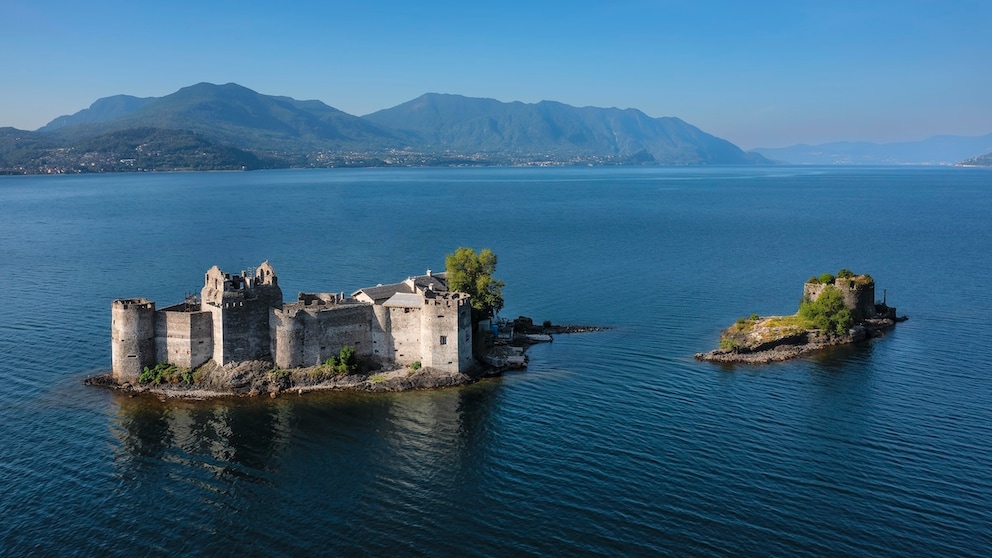
This summer, the small lake fortress Castelli di Cannero opened to tourists on Lago Maggiore. It is situated on a tiny islet near the municipality of Cannero Riviera on the lake’s western shore and has been accessible again since June 28. “A project over a decade in the making, returning a site of exceptional historical, architectural, and scenic significance to the community,” states the official website of the Borromean Islands.
Audio guides narrate during the tour how, in the Middle Ages, the Mazzarditi brothers extorted the villagers from the castle, how Ludovico Borromeo built a new fortress around 1520 as a bulwark against the advancing Swiss, and how Queen Victoria in 1879 raved about the picturesque ruin, which in the meantime had been a citrus plantation and rabbit hutch.
Castelli di Cannero Belong to the Same Noble Family
The small fortress island is reportedly part of the estates of the Borromeo noble family on Lago Maggiore–as are the islands Isola Bella and Isola Madre, famous for their gardens. Visitors to the islands pay an entrance fee of 25 euros, including the ferry ride, with discounts for children.
The lake lies mostly in northern Italy, specifically in Piedmont (western shore) and Lombardy (eastern shore). The northernmost part belongs to the Swiss canton of Ticino. The nearest major city is Milan.
Incidentally, Lago Maggiore translates to “Greater Lake.” However, it is only the second largest lake in northern Italy after Lake Garda. With its 212.5 square kilometers, it is still quite impressive. And a true insider tip. In terms of scenic diversity and Mediterranean charm, Lago Maggiore can certainly compete with Lake Garda–but is far less crowded during the peak season. This also makes it significantly cheaper in terms of hotel prices, provided you vacation on the Italian rather than the Swiss side of the lake.
With material from dpa