

November 11, 2025, 3:51 pm | Read time: 5 minutes
The Peloponnese peninsula is a popular travel destination in Greece. Visitors here are likely drawn to Monemvasia. The medieval town in the southeast of the peninsula impresses with its wild landscape and picturesque architecture. However, there is concern about a planned construction project at the historic tourist attraction.
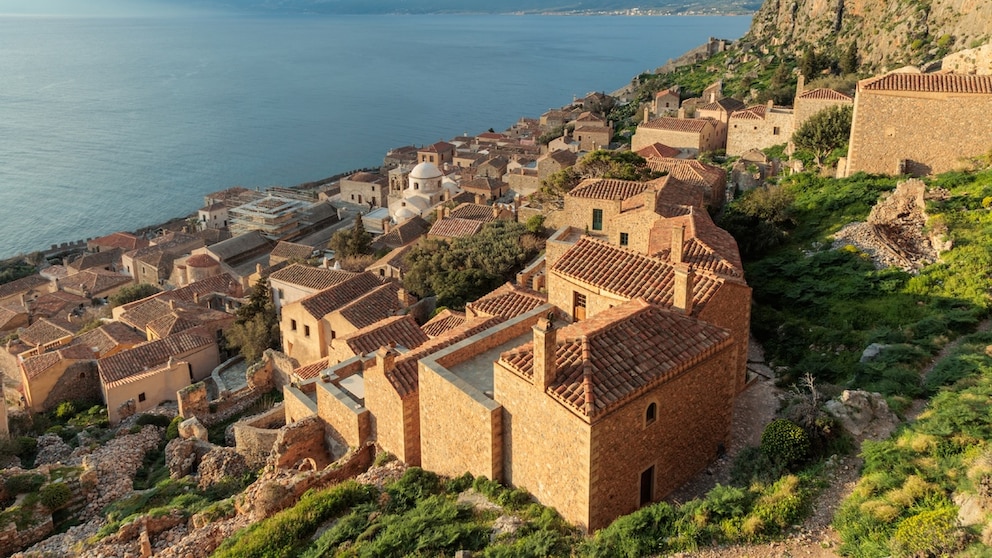
Entering the city gate of Monemvasia feels like stepping into another era. Narrow, cobblestone streets, Byzantine churches, old mansions–and a wide view of the blue sea define the scene. No cars, no rush. The small rock town on the southern Greek Peloponnese off the coast of Laconia, often called the “Gibraltar of the East,” is among the region’s tourist highlights.

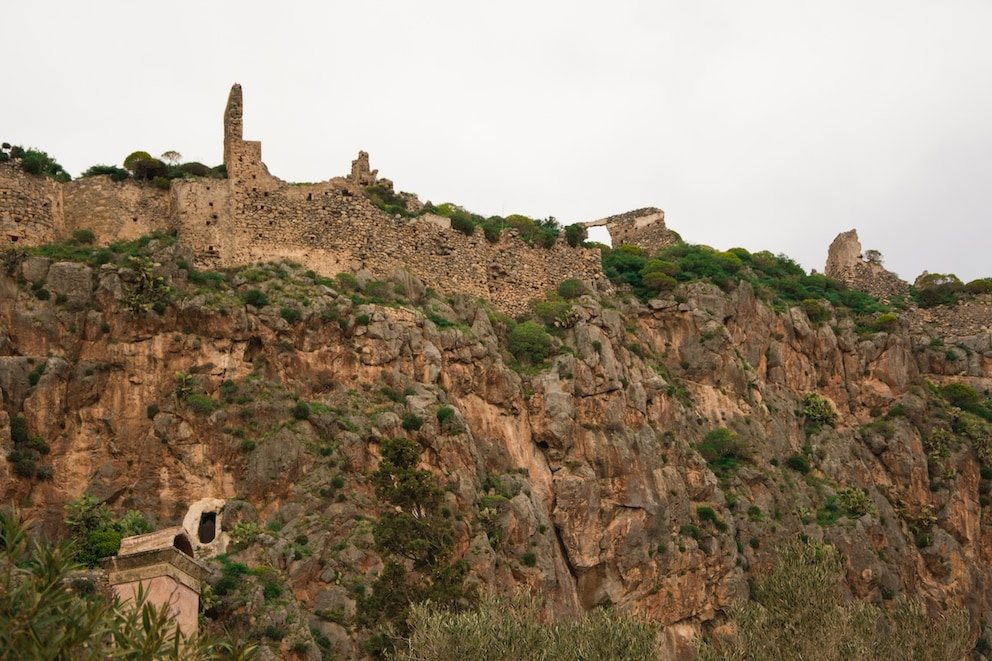
Surrounded by a fortress, the old town on a massive rock in the sea invites exploration. Here, alongside the well-preserved castle, are significant sites, numerous churches, small, lovingly designed shops, and romantic restaurants and cafes. The upper part of Monemvasia is also worth a visit: The uninhabited upper town is marked by ruins and the 12th-century Agia Sofia church, offering a spectacular view of the sea. Visitors can also search for remnants of past times when Byzantines, Ottomans, and Venetians ruled here.
Cable Car Aims to Improve Visitor Experience–Faces Criticism
To experience this, however, one must climb a steep path from the lower town on foot. According to the municipality of Monemvasia, the ascent takes about 15 minutes. Due to this challenge, only a maximum of 20 percent of visitors reach the upper town, according to Monemvasia’s mayor, Iraklis Trichailis. Those who are not fit enough or have physical limitations are thus denied access to the summit.
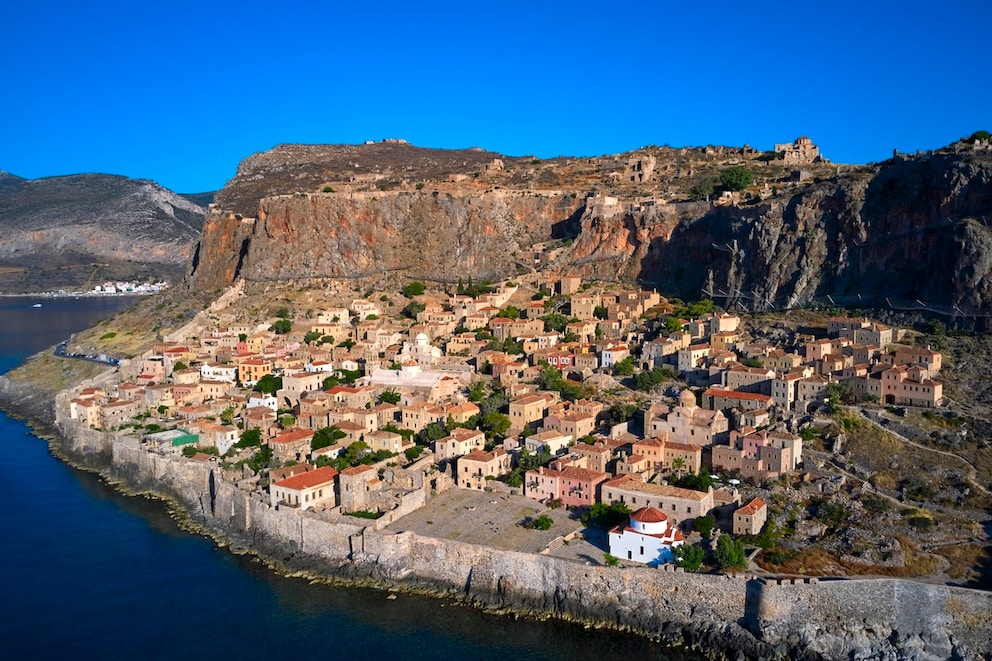
This is set to change in the future. A planned cable car will transport visitors to the upper part of Monemvasia. Two cabins, each accommodating 15 people or two wheelchairs with companions, will handle the transport. There will be two stations with a mast not visible from the land.
However, the Greek Society for the Environment and Culture Ellet, a nonprofit organization dedicated to protecting cultural heritage, warns: “The cable car clearly poses a threat to the ecological and cultural value of the entire area, impairs the visitor experience, and disrupts the landscape’s unity.”
The nearly seven million euro project seems, according to Ellet, “more inspired by profit interests than accessibility concerns.” Instead of a cable car, the organization calls for a passenger elevator–similar to one installed in the upper town for restoration purposes several years ago.
On the List of Europe’s Endangered Cultural Sites
The organization has nominated the construction project for the “The 7 Most Endangered Cultural Sites in Europe 2025” program by the European heritage organization Europa Nostra. An expert team from Europa Nostra visited the Greek capital Athens and Monemvasia last July, referring to the latter as a “place of unique historical and cultural value.” Accessibility can also be achieved through “alternative, less invasive measures,” such as enhancing historical footpaths, conducting archaeological research, restorations, and access regulations.
The team therefore recommends suspending the cable car project in the Natura 2000 protected area until legal questions are clarified and alternatives are examined. Additionally, close cooperation between authorities and communities should occur–also with a view to a possible UNESCO World Heritage nomination.
Mystras – Greece’s Impressive Ruined City
Is Machu Picchu Losing Its Status as a ‘New Wonder of the World’?
Residents Oppose Construction Project
Residents are also resisting the planned construction. The “Friends of Monemvasia Association” filed a lawsuit against the project with the Council of State. “The cable car alters the natural and protected environment of this unique historic town,” the reasoning states. The construction would impair the rock’s physical integrity, endanger the ecosystem, and be based on insufficient studies.
Additionally, opponents criticize that the argument of accessibility is being used as a pretext to promote mass tourism. Instead, they demand–as does the expert team from Europa Nostra–improved accessibility for people with disabilities in the inhabited lower town and the creation of barrier-free paths there. An ongoing petition against the construction is intended to provide additional support.
Authorities See Benefits in Planned Cable Car
The Ministry of Culture in Athens, on the other hand, emphasizes that the environmental impact assessment was unanimously positively evaluated by the Central Archaeological Council. Monemvasia’s mayor also defends the plans: “The cable car will be positioned 140 meters from the castle and neither affects the landscape nor generates noise.” It allows older or restricted individuals access to the upper town and can also be used for evacuations or firefighting in emergencies, says Trichailis.
There is thus disagreement over the benefits of the planned cable car. Monemvasia thrives on its history, tranquility, and authenticity. The cable car could increase visitor numbers in the upper town and enhance the site’s safety, but it could also affect the landscape and thus the image of the popular tourist attraction.