

June 24, 2026, 3:42 pm | Read time: 4 minutes
On the North Sea island of Sylt lies Germany’s northernmost and perhaps oldest castle site: Tinnum Castle. It likely existed around the time of Christ’s birth and is the last remaining structure of its kind on the popular vacation island. It probably once served as protection against Viking raids. However, those expecting a fortress with walls and towers will be surprised.
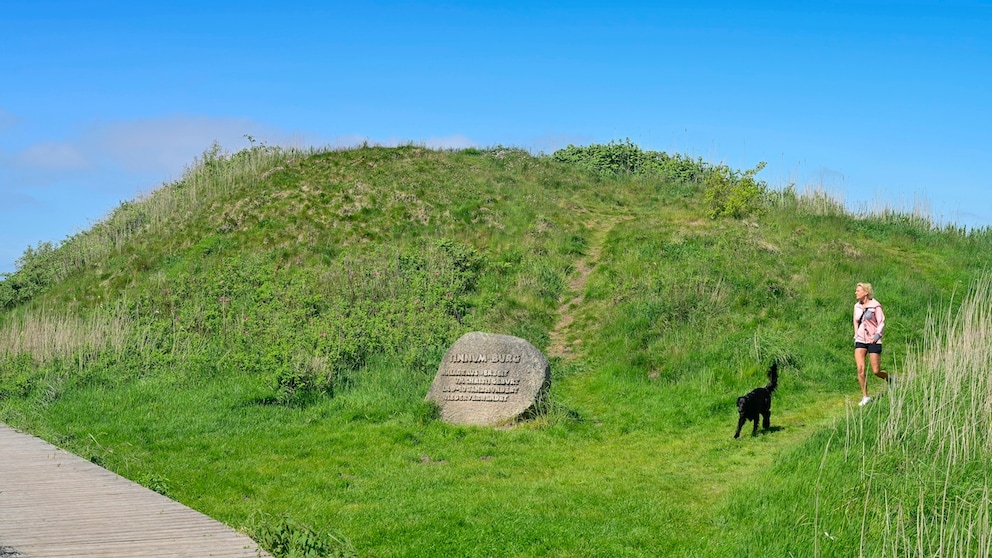
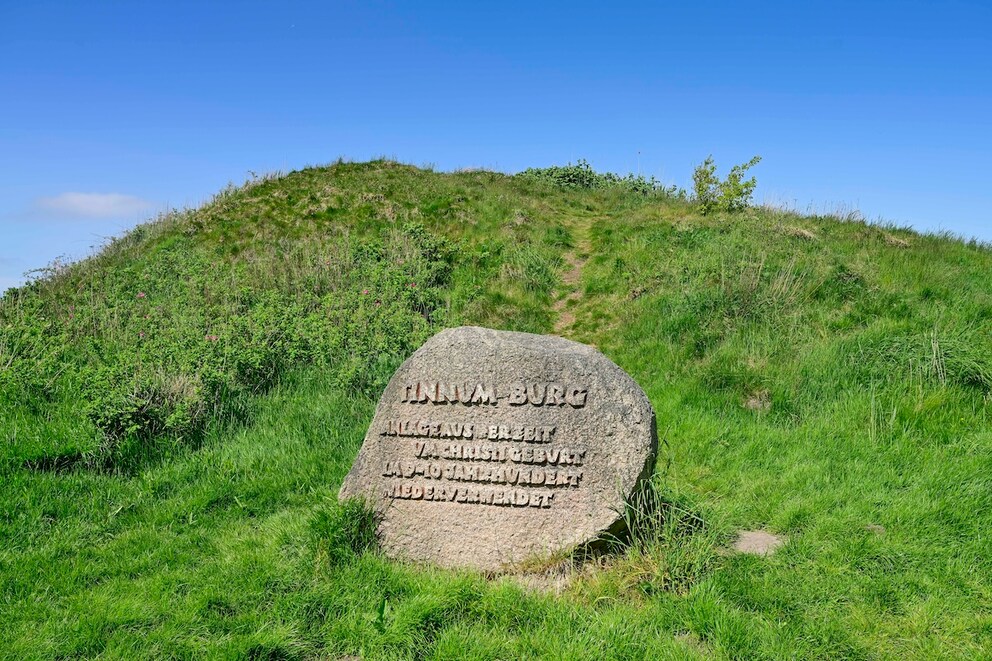
An otherwise inconspicuous boardwalk leads to one of the most fascinating sights on the popular North Sea island of Sylt. In the middle of the Tinnum meadows lies a monument that may have existed around the time of Christ’s birth, and its exact purpose remains a mystery to scientists to this day. This is Tinnum Castle, Germany’s northernmost castle site. However, it is not a classic fortress with walls, towers, and a drawbridge, but a ring fort made of earth, peat, and sod.
According to the website “Sylt Exklusiv,” the site has a diameter of 120 meters, with earth walls piled up to eight meters high. Originally, it likely served as a Germanic cult site, then as a defensive bulwark against marauding Vikings in the 8th to 10th centuries. Archaeological excavations took place on-site in 1870, 1948, and 1976, suggesting that Tinnum Castle was probably built in the early Roman Imperial period. This means it could be up to 2,000 years old. The presumed age was deduced from ceramic finds.
Complex Social Structures
Trade objects such as Norwegian whetstones were also found during the excavations. However, the discovery of the remains of old sod houses and other structures inside the walls of Tinnum Castle was even more intriguing. According to researchers, this suggests that the inhabitants of the site were people who developed complex social and political structures. A comparable castle site in southwestern Denmark near Lemböckesburg suggests that the inhabitants of Sylt likely had both cultural and economic ties with the Scandinavian region.
Until 1938, when the marshy land on Sylt was diked, Tinnum Castle stood island-like in the landscape and rose out of the water during storm surges. Today, it lies on dry land. Old maps suggest that the site may have once been near a navigable body of water. This leaves room for interpretation that the site was also an important trading post. One thing is certain: In its significance, the castle is unique for the North Frisian Islands. It points to an early, highly developed society that left its mark here.
The Last Castle on Sylt
Tinnum Castle is also the last of what were originally three such structures on Sylt. According to the island’s official tourism website, Archsum Castle was destroyed, and Rantum Castle was buried by dunes. Its exact location is still unknown. The site that remains today served, according to historians, in the 14th century as a so-called “Zwingburg,” where the population had to bring their tributes to the Danish authorities. Today, the site is freely accessible to everyone and can be visited free of charge. You can drive or take a bus close to the Tinnum meadows, but the last stretch must be covered on foot or by bicycle.
Maximilian Owen, sustainability officer of Sylt Marketing GmbH, says in response to a TRAVELBOOK inquiry: “The site is already very popular, especially still among the locals. But we also promote it on our website and in the guest guides.” He has a literally hot tip for visitors: “Every year on February 21, we hold the big Biike fire at various locations on the island. Tinnum Castle is also a venue. It’s a kind of Easter festival to drive away evil spirits with the flames.” Another interpretation is that the fires once served as orientation for whalers.