

December 14, 2025, 2:04 pm | Read time: 6 minutes
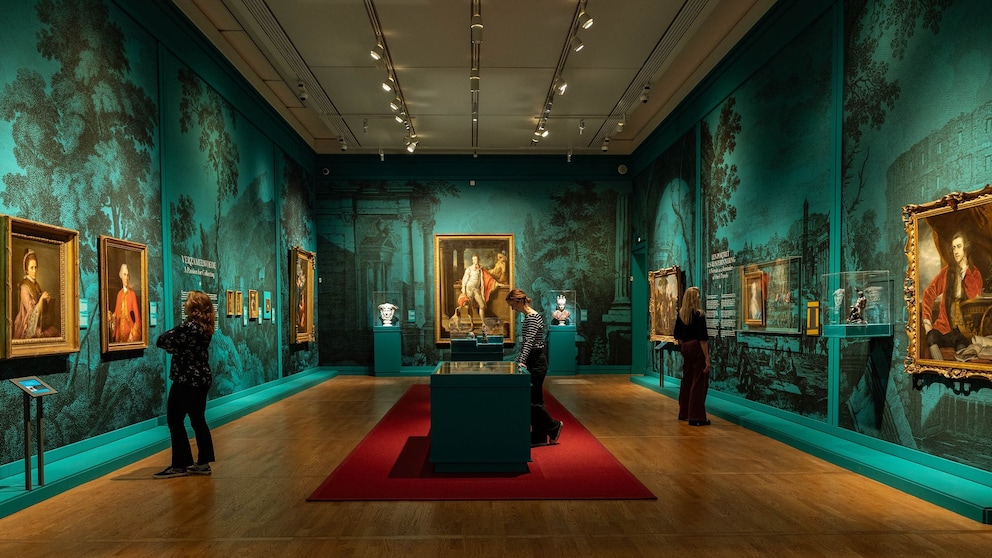
Crates of Souvenirs: Over 300 years ago, young English aristocrats embarked on the “Grand Tour.” They set trends in tourism and travel souvenirs. Even a precursor to the selfie was popular, as a current exhibition at the Mauritshuis in The Hague shows.
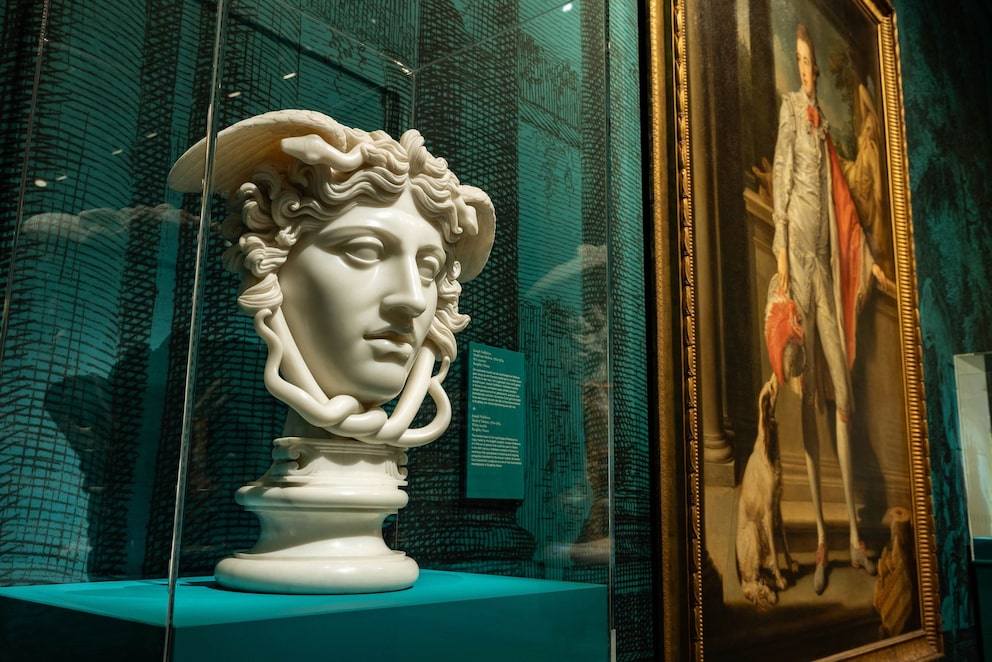
The young Earl of Exeter, Brownlow Cecil, had a head in his suitcase when he returned to England from his grand tour of Italy at the end of the 18th century. The head of Medusa! The terrifyingly beautiful mythical figure with snakes winding around her head was artfully carved from marble.
The earl placed the bust on the mantelpiece of his country estate, Burghley House in Lincolnshire. He even had to cut a piece out of the wall behind it. The head still stands there, and now the earl’s descendants gaze upon this souvenir from Italy.
A striking souvenir from an eccentric earl? An isolated case, then? It wasn’t all that unusual, says Dutch art historian Ariane van Suchtelen. “Actually, we do the same today: We buy a copy of an artwork as a memento. For example, a small David by Michelangelo made of plaster or plastic.” The Medusa is also a copy of an artwork, created about 300 years ago by sculptor Joseph Nollekens specifically for British tourists.
“Grand Tour” as the Beginning of Tourism
The hunt for souvenirs is as old as travel itself. “One is overwhelmed by the incredible beauty of a city like Venice or Rome, by a landscape or a work of art,” says the art historian. “You want to take something home that evokes the atmosphere and feeling and keeps the memory alive.” Souvenirs promised remembrance.
Van Suchtelen is a curator at the Mauritshuis in The Hague. The museum, famous for its paintings by Dutch masters from the 17th century such as Vermeer and Rembrandt, is currently showcasing a special exhibition featuring highlights from the art collections of three British country houses: “Grand Tour – Destination Italy” presents the souvenirs of the first tourists. She emphasizes: Souvenirs from the past are not so different from today’s keepsakes.
Starting in the early 17th century, British aristocrats embarked on the “Grand Tour”–considered the beginning of tourism. The tour was meant to be an educational journey primarily for young wealthy men. They were to learn about the classical culture of Italy but also enjoy life before it became serious with career and family.
They traveled with a large entourage, carriages, butlers, and tutors, and such a journey often lasted more than a year. But this trip was also a shopping tour. The young earls and barons bought crates of art and curiosities. The Earl and Countess of Exeter did the same. They spent a fortune, says Jon Culverhouse, the curator of Burghley House: “Honestly, they wanted to flaunt their wealth and good taste.”
Paintings as Souvenirs
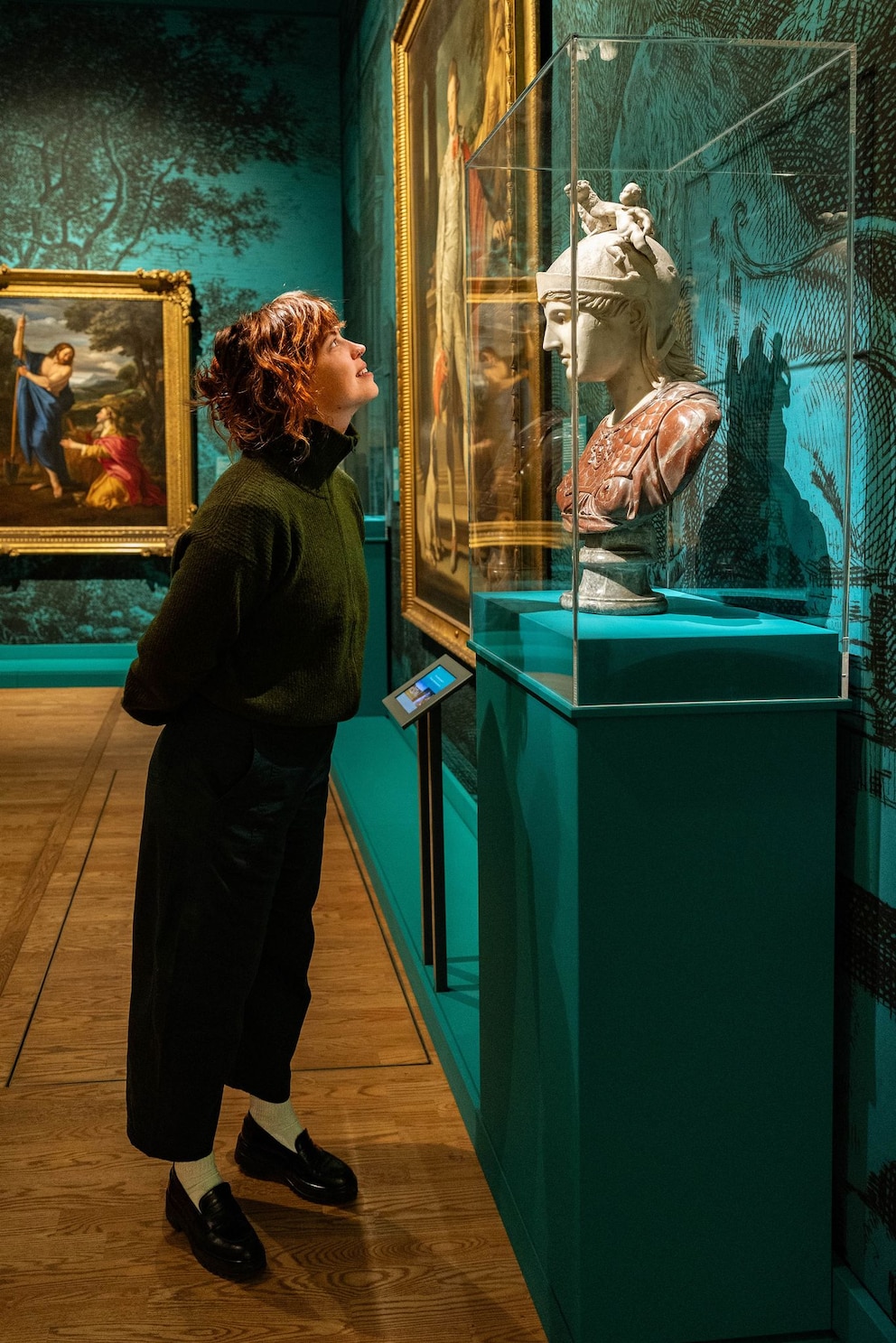
One of the first tourists was also Earl Thomas Coke. He was only 15 years old when he was sent to Italy in 1712. In the south, he bought art to decorate his future family home: Holkham Hall in Norfolk. Coke had this magnificent palazzo built after his return, modeled on Italian architecture. To this day, paintings of St. Peter’s Basilica and the Colosseum in Rome hang on the walls covered in crimson damask in the salons.
Coke had commissioned a painter in Italy to create images of places he had visited. Today, his descendants live in Holkham Hall surrounded by these mementos. “These cityscapes were the classic souvenir,” says Ariane van Suchtelen. Comparable to today’s postcards, “and back then it was big business.” German or Dutch artists moved to Italy specifically to create souvenirs for tourists: pictures of landmarks, copies of artworks, or pseudo-antique statues.

The Monster Forest in Italy Baffles Experts with Unsolvable Mysteries

This Castle Is the Real “Downton Abbey”—and You Can Visit It
Portrait as a Precursor to the Selfie
A portrait was an absolute must. The young men had themselves painted by popular artists of the time against Italian backdrops. It was more laborious than taking a selfie with a smartphone today and significantly more expensive, but money was no object for these immensely wealthy dandies. “The grand travel portraits were, of course, meant to impress at home: Look, here I was,” says Ariane van Suchtelen.
In Burghley House, for example, the portrait of Earl Cecil hangs above the sofa. He proudly poses in a stylish red doublet in front of the erupting Vesuvius. “We would take a selfie in front of a volcano just like that,” says the art historian.
The desire for genuine, authentic souvenirs is also ancient. Just as today Berlin tourists would prefer not to leave without a piece of the Wall, the first tourists wanted to take stones from Pompeii or archaeological finds. The main thing was that it was old. But even then, it wasn’t always legal.
Not Always Legal or Genuine
Archaeological finds, in particular, could not simply be taken out of the country, says the art historian. “The Vatican was especially active in ensuring that important statues remained in Italy.”
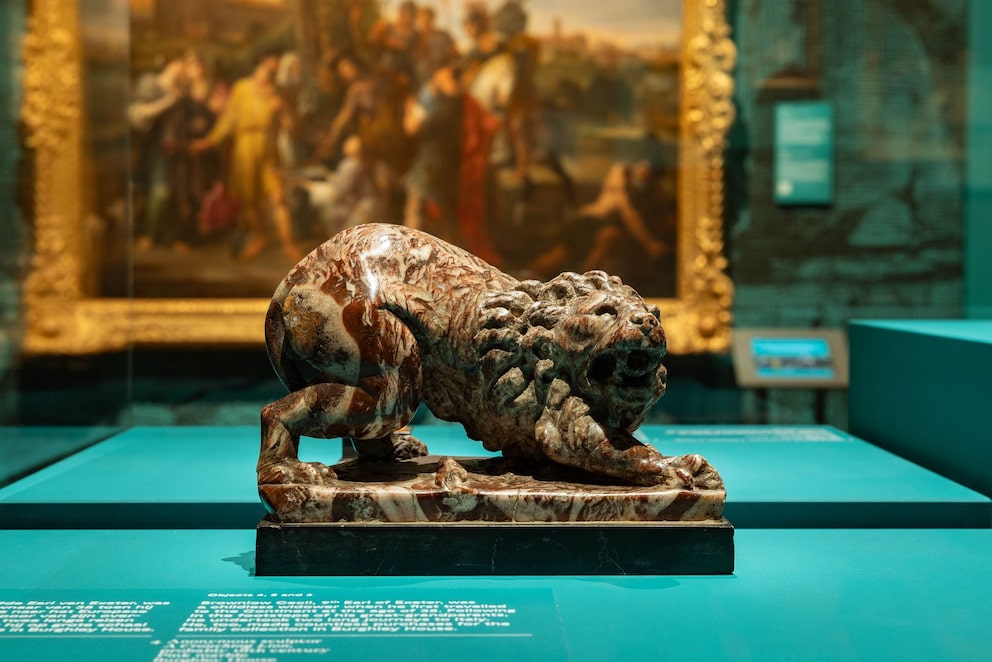
A realization that held true then as now: Not everything that looks genuine is genuine. Earl Cecil, for example, bought a small lion made of pink marble. “Genuinely antique, he thought,” laughs curator Jon Culverhouse. The earl had been led to believe that the lion was excavated from the villa of the Roman Emperor Hadrian in Ostia and thus over 2,000 years old. Experts, however, date it to the early 18th century. “But,” says Culverhouse, “it’s still a very pretty statue.”
With the advent of the railroad in the early 19th century, the tradition of the Grand Tour ended, but not tourism. On the contrary, travel became affordable for more and more people, and the hunt for souvenirs continued.
The exhibition “The Grand Tour – Destination Italy” runs until January 4, 2026, and costs 20 euros for regular admission (children up to 18 years free). Admission to Burghley House with its large art collection, historic rooms, and gardens is 20 pounds (approximately 23 euros), and to Holkham Hall 24 pounds (about 27 euros).
With material from dpa