

October 11, 2026, 11:38 am | Read time: 5 minutes
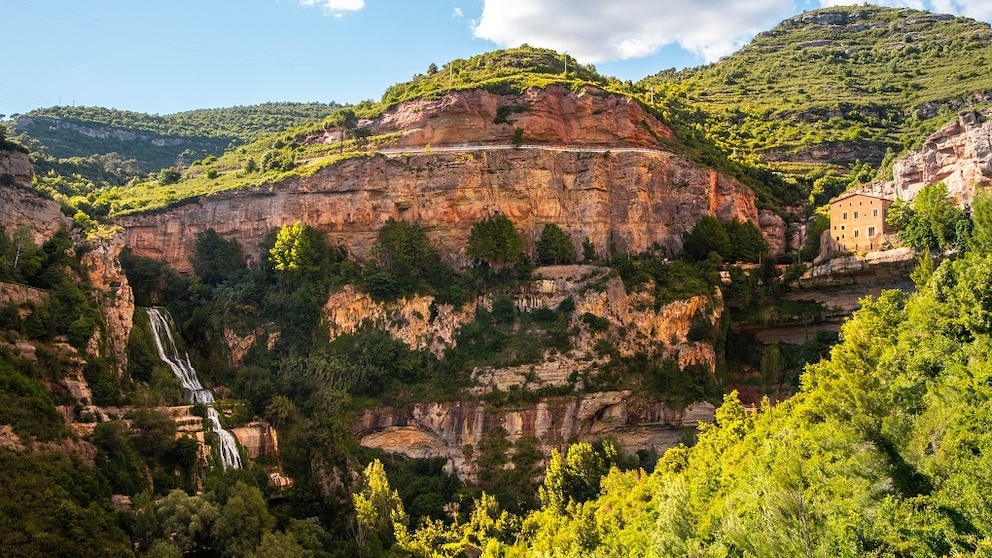
The rock church Sant Miquel del Fai, part of an ancient abbey in the Spanish region of Catalonia, could easily serve as a believable setting in any fantasy film. Dramatically nestled against the rock, a waterfall cascades nearby. These sights made the location one of the area’s biggest tourist attractions as early as the 19th century. For decades, it even served as a hotel and restaurant. Today, the sanctuary is especially protected and still captivates countless visitors each year.
In the Spanish region of Catalonia, not far from the town of Sant Feliu de Codines, stands one of the most impressive churches in the Iberian country. Its history began more than 1,000 years ago, and since then, Sant Miquel del Fai has experienced a varied fate. Initially part of a monastery, the church carved directly into the rock later served as a civil war hospital and then for decades as a popular hotel and restaurant. Due to its rugged beauty, it is mentioned in the works of some significant contemporary writers and continues to fascinate tourists from around the world with its beauty and location. TRAVELBOOK tells the story of this house of worship.
According to the official tourism website of Catalonia, the site’s history begins in the year 887. It was first mentioned in writing and documented at that time, specifically due to a predecessor of Sant Miquel del Fai, the chapel of Sant Martí. Before the rise of Christianity in the region, pagan services were likely held here. In the late 10th century, the name Sant Miquel del Fai appeared for the first time in world history. At that time, the Counts of Barcelona gifted the lands on which the unusual house of worship stands to the knight Gombau de Besora.
From Monastery to Tourist Attraction
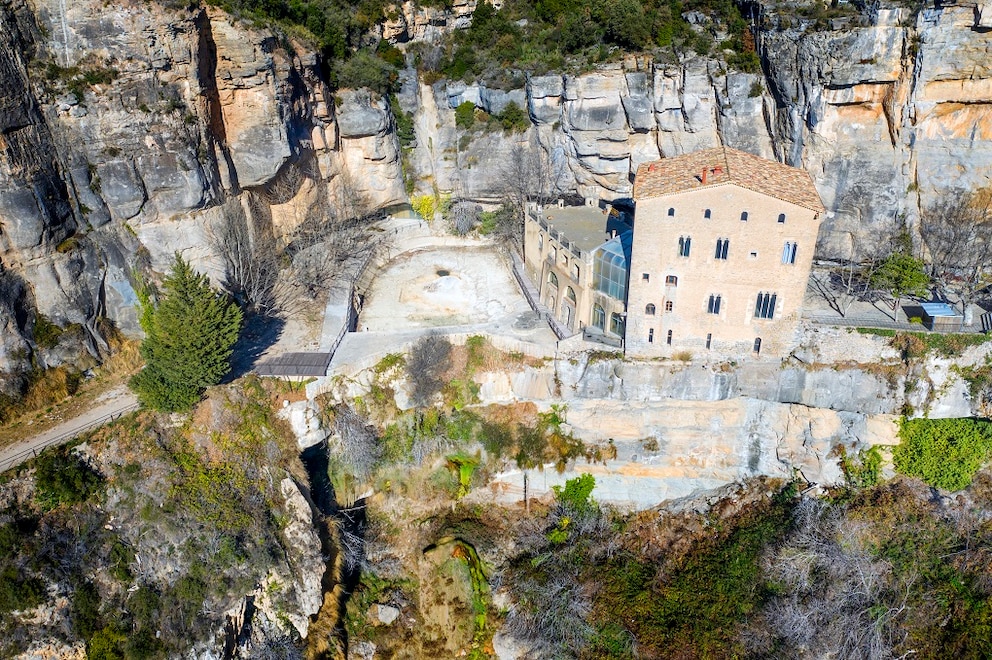
The nobleman had a monastery built on the grounds, which he personally entrusted to the powerful Abbey of Marseille in France in 1042. From this, even a pope, Urban V, later emerged. Thus, the Spanish monastery and Sant Miquel del Fai were now directly under the Holy See in Rome. It was not until 1576 that it was released from this connection and placed under the Cathedral of Girona. In 1832, the monastery was finally abandoned due to a lack of new monks. However, the history of the house of worship continued in an unusual way. It became one of the region’s largest tourist attractions, not least because of its spectacular location.
Also interesting: Is Las Lajas in Colombia the most spectacular church in the world?
According to the Natural Park Administration of the Province of Barcelona, this trend began in 1875 with the improvement of the road to Sant Miquel del Fai. At that time, the monastery served a secular function as a hotel and restaurant. Thanks to a direct carriage connection, the journey from Barcelona could now be completed in just two hours, leading to a true influx of day-trippers. At that time, the establishment must have been a splendid place, as evidenced by old pictures on the Natural Park Administration’s website.
Fallen into Disrepair During the Civil War
The boom of Sant Miquel del Fai continued until the outbreak of the Spanish Civil War in 1936. Prominent contemporary writers like Francisco de Zamora and even international guests like Lord Byron visited the site and immortalized it in their works. In the following years, the complex fell into disrepair due to its repurposing as a military operations center. Its two houses of worship served as storage, later as shelters for hikers, and even as cattle stalls. It was not until the late 1950s that tourism here began to experience a gentle revival.

Since that time, gastronomy and tourism have returned, and events such as weddings or banquets have been held around Sant Miquel del Fai. In 2017, the Provincial Council of Barcelona finally acquired the sanctuary to protect its cultural heritage. Since 1988, the old monastery complex has been considered a site of cultural interest. But the old house of worship is not the only attraction in the region. In the rocky surroundings, shaped by the waters of the Rossinyol and Tenes rivers, there are also two caves. In the cave of Sant Miquel, you can admire stalactites. It is open to the public and even illuminated.
Also interesting: This church venerates a jazz musician as a saint
The second cave can only be entered with a professional guide. Adding to the fantasy film-like setting around Sant Miquel del Fai is the waterfall of the Tenes River, which plunges noisily into the depths here. Around the old monastery, there is also a small network of hiking trails totaling 12 kilometers in length. Those who wish to visit the site and its impressive surroundings now have the opportunity to do so year-round. Admission is free.