

May 10, 2026, 6:26 am | Read time: 7 minutes
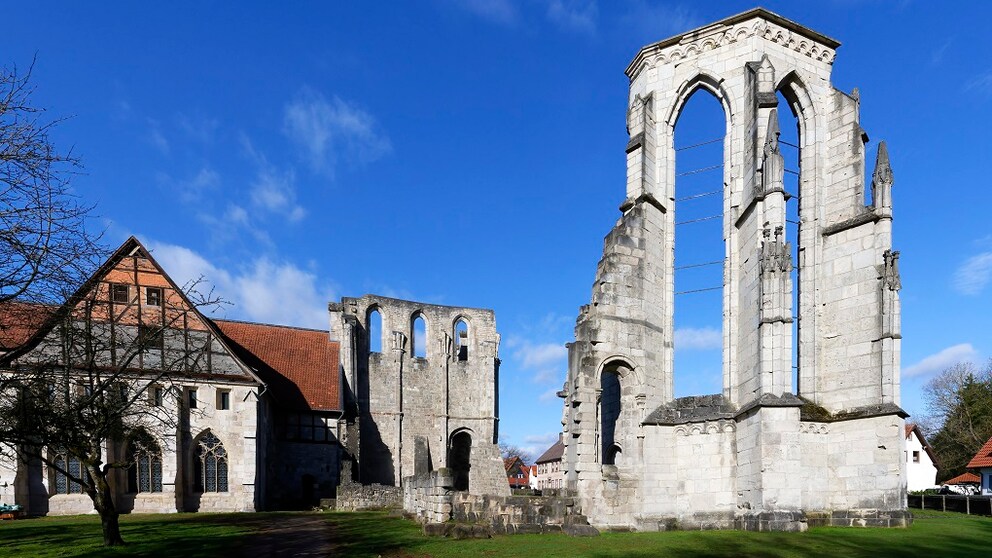
In the town of the same name in the Harz region stand the impressive ruins of the former Cistercian monastery Walkenried. Once one of the largest and most powerful abbeys in all of Germany, the monks here amassed legendary wealth and influenced the region’s fate for over five centuries. According to legend, they even planned to murder one of the most famous men of the time.
A special stroke of luck while traveling is to arrive at places that leave you speechless. In September 2025, I embarked on a two-week long-distance hike in the Harz and stumbled upon such a gem. I’m talking about the ruins of the venerable Cistercian monastery Walkenried in the small town of the same name, which suddenly rose against the bright blue late summer sky before me. A calming, all-encompassing silence surrounded me, and at the same time, there was curiosity. For Walkenried today houses one of the largest monastery museums in all of Europe, and now I wanted to know everything about the history of this fascinating house of God.
You can also read about this on the official website of the Walkenried Monastery, but a visit on-site truly lets you grasp the dimensions of one of Germany’s once largest and most powerful abbeys. Founded in 1129 by just one abbot and twelve brothers, Walkenried rose over its nearly five-hundred-year existence to become one of the wealthiest spiritual dynasties ever. Monks, who in the spirit of the Cistercians were actually committed to material renunciation, became hard-nosed businessmen who did not shy away from violence to achieve their goals. And it was precisely this circumstance that ultimately led to their downfall.
Mafia-like Methods
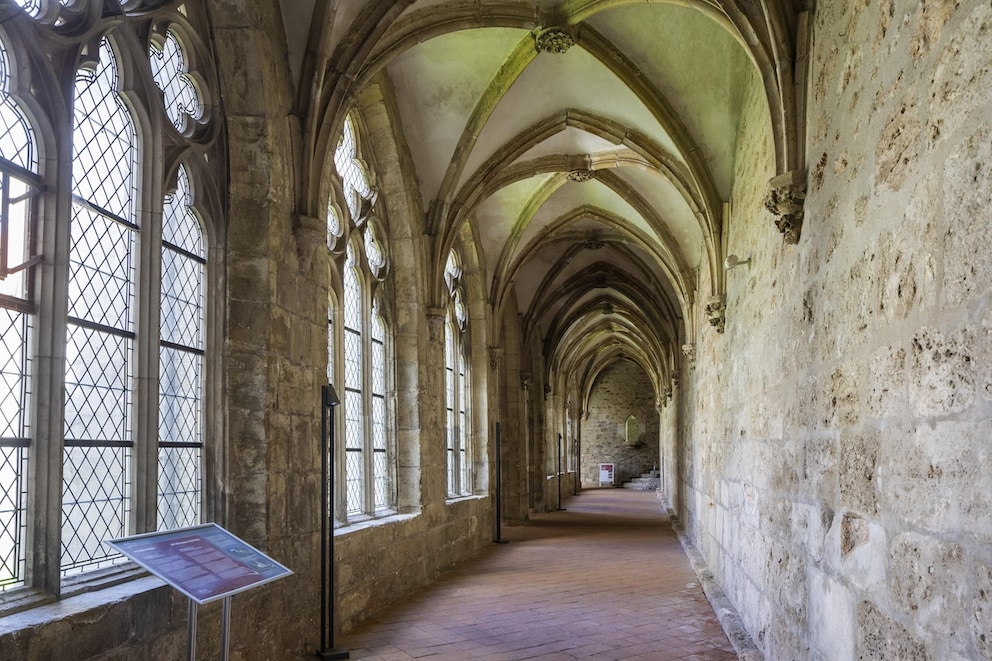
Parts of the Walkenried Monastery are still so remarkably preserved today that the museum I now entered was built within them. Through the entrance with an attached café and small souvenir shop, you reach the heart of history, standing immediately in one of the impressive cloisters. Where the brothers once dedicated themselves to silence, every step, every whisper echoes in an almost ethereal way today. My friend couldn’t resist the temptation to sing here, and the vaults amplified her voice many times over. Unsurprisingly, concerts and other events are still regularly held in these sacred halls.
At every turn, visitors are accompanied by information boards explaining monastic life in the cold walls, even in warm temperatures. In the beautiful, simple chapel, services are still held today. And although it was originally a life of deprivation close to God that soon after its founding drew hundreds of brothers to Walkenried, the monastery quickly rose to become a powerful economic organization that did not shy away from mafia-like methods. The monks controlled large parts of agriculture and mining throughout the Upper Harz.
Also interesting: Kloster Eberbach: Germany’s Hollywood Abbey
World Heritage Created by Monks
Walkenried founded its first branches less than ten years after its own establishment, rising to a major landowner thanks to donations from Emperor Lothar III. On-site, they operated a hospital that was highly modern by the standards of the time, where even Henry the Lion, Duke of Saxony and Bavaria, was treated for months after a riding accident. The wealth of the monastery was mainly increased by revenues from mining, including a stake in the Rammelsberg mine in Goslar, which, like the house of God, is now a UNESCO World Heritage site with over 1,000 years of history. The monks, or rather their subordinates, created another World Heritage site themselves.
They established an extensive pond system, which as part of the so-called Upper Harz Water Management, includes over 107 ponds. There were also ditches with a total length of 310 kilometers and watercourses of 31 kilometers. All of these served to harness the energy of water for mining and are considered the largest pre-industrial monument here. It was in use for several centuries. Even today, you can admire these bodies of water throughout the Upper Harz, as well as old mines. Most of the water bodies are found around the town of Clausthal-Zellerfeld, where you can still study mining today.
Also interesting: Fontevrault in France: The once largest abbey in Europe
A Legendary Murder Plot
Walkenried was so successful in its operations that the monastery soon became known as the “White Corporation.” And it did not shy away from wiping out entire villages for its interests, as one learns in the magnificent exhibition on-site. This is spread over several rooms and is so detailed and exciting that you can easily spend several hours in the building. At regular intervals, monastic chants sound from speakers, and if you close your eyes, you might feel a bit like you’ve been transported back in time.
In addition to the rich information, various artifacts of monastic life are on display. In showcases, you can also trace the rise and fall of Walkenried through numbers and graphics. You also learn the astonishing legend of a perhaps planned but never realized crime. For shortly before its collapse in 1525, the reformer Martin Luther criticized the monastery and predicted its downfall on that occasion. The brothers were reportedly so enraged by this that they (in spirit) considered drowning the troublemaker in their sewer. However, Luther never visited the place himself, and indeed, the success story of Walkenried ended shortly thereafter.
Also interesting: This monastery in Berlin was the scene of a murder legend
The Exciting History of the Monastery Kloster Lehnin
Kloster Eberbach is Germany’s Hollywood Abbey
The Fall of the Monastery

Provoked by the strict rule of the authorities and the sometimes inhumane living conditions, the common people rose up in 1525 in the so-called Peasants’ Wars. The peasants occupied the Walkenried Monastery and destroyed the rider of the church roof. The house of God, consecrated in 1290 on the monastery grounds, was larger than the Berlin Cathedral during its existence. Walkenried never recovered from this blow, and in 1593, all remaining lands of the abbey finally fell to the Dukes of Brunswick-Lüneburg. Thus ended an almost 500-year saga, but the history of the Walkenried Monastery still fascinates today.
Living History
I have rarely seen a place where history can be experienced and breathed so vividly as in Walkenried. The monastery fascinated me so much that I returned for a second visit in November 2025. And although I supposedly already knew everything, the magic was unbroken. I would still recommend a visit here to the interested reader for the warmer season, as you can also enjoy fantastic hiking around the site and the small town. Besides the monastery museum, the extensive grounds also house the World Heritage Center Walkenried.
The monastery museum is currently open from Tuesday to Sunday from 10 a.m. to 5 p.m. until the end of October. For guided tours, advance registration with the visitor service at 05525-95 99 064 or info@kloster-walkenried.de is required. During special and evening events, parts of the cloister may be closed to museum visitors. Admission for adults is eight euros, reduced six euros. A family ticket for two adults with up to four children costs 20 euros. Please refer to the official monastery website for all further information.