

August 7, 2025, 10:32 am | Read time: 5 minutes
Have you ever been to Sicily? If so, you probably flew or took a ferry from the Italian mainland. Soon, it will be much easier to reach Messina. A long-discussed project to build the world’s longest suspension bridge is finally set to move forward. TRAVELBOOK has gathered all the information about this mega-project and its significance—not least for the Italian economy—for you.
Approval for World’s Longest Suspension Bridge to Sicily Granted
Even in the Roman Empire, there were considerations to create a connection between the Italian mainland and Sicily. For nearly 60 years, it has been a more concrete topic. In 1969, the Italian government first commissioned designs for a suspension bridge between Italy and Sicily. The project was not only initiated but even approved multiple times, only to be shelved each time. It poses enormous technical challenges and immense costs; moreover, the bridge has always been politically controversial, not least due to environmental concerns. But now the approval is here, significantly advanced by Prime Minister Giorgia Meloni and Infrastructure Minister Matteo Salvini.

Key Facts About the Planned Suspension Bridge
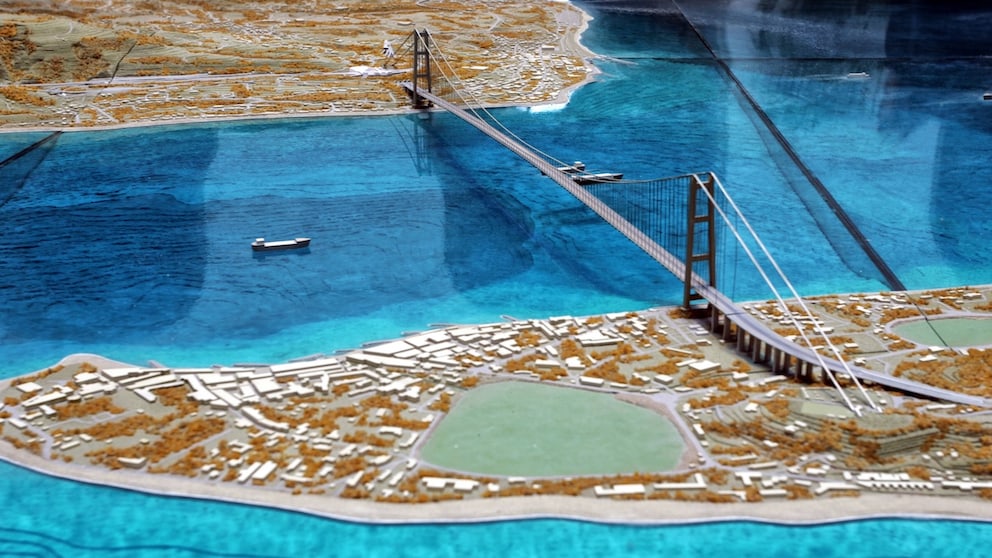
The total length of the bridge between the Sicilian city of Messina and Villa San Giovanni in Calabria is expected to be nearly 3.7 kilometers. The main span between the two pylons, the section of the bridge that hangs without intermediate supports, is planned to measure an impressive 3.3 kilometers. This is significantly more than the Çanakkale Bridge in Turkey, which previously held the title of the world’s longest suspension bridge with a main span of 1,277 meters. The Italian construction company WeBuild, which was responsible for the Çanakkale Bridge, will also lead the construction of the Messina Bridge.
Also of interest: New World’s Tallest Bridge to Open This Summer
According to a Reuters report, the bridge will have three lanes for cars in each direction. Infrastructure Minister Salvini stated that up to 6,000 cars per hour could cross the world’s longest suspension bridge, allowing for much faster travel between the Italian mainland and Sicily (or vice versa) than before. Previously, crossing by ferry took about 100 minutes. The new suspension bridge is expected to reduce travel time to ten minutes.
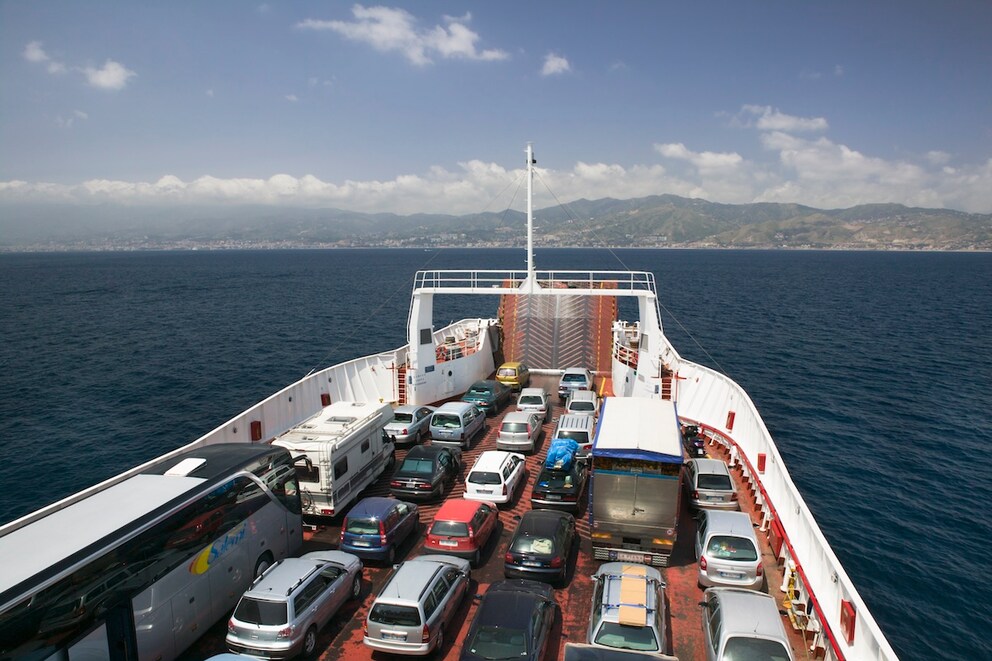
Additionally, the structure is expected to accommodate 200 trains daily thanks to a double-track railway. Before the planned suspension bridge, trains between Sicily and the Italian mainland also had to use a ferry: They were loaded onto special ferry ships and transported across. This was complicated and could take about 2.5 hours. The new transport solution could reduce the journey to about 15 minutes.

Bridge Over the Red Sea to Connect Megaproject Neom With Egypt

This Will Be Europe’s Longest Train Route
Significance of the Suspension Bridge to Sicily
In the long term, the suspension bridge to Sicily is expected to help reduce CO₂ emissions by replacing some ferry traffic, thus providing a more environmentally friendly transport route. The project is considered significant for the development of southern Italy and is part of a larger plan to boost the regional economy. It aims to create jobs and improve infrastructure. The bridge is intended as an important link in the EU-wide transport network and is expected to connect Berlin directly with Palermo by land. For logistics, this means faster and more reliable transportation.
Furthermore, the bridge is expected to be used for military operations by NATO. According to the Italian government, it represents “security-relevant infrastructure”—a classification that serves the political and financial security of the project. According to Reuters, 13.5 billion euros have been allocated for this over the next ten years. As a reminder, under pressure from U.S. President Donald Trump, NATO countries committed to spending at least 3.5 percent of their GDP on defense and 1.5 percent on military-usable infrastructure by 2035. The construction of the bridge can thus be credited toward NATO requirements, helping the government meet these obligations without needing an additional military budget.
Concerns Remain
Security experts warn that the region around the Strait of Messina is one of the most seismically active zones in Europe. The tectonic plates meet there—this configuration has already caused severe earthquakes in the past. WeBuild aims to address these concerns. On its website, the company describes suspension bridges as being less susceptible to seismic forces from a structural perspective. Successful constructions of these transport routes in particularly earthquake-prone areas such as Japan, Turkey, and California are cited as evidence.
When Construction Can Begin Is Still Unclear
According to the Reuters report, construction is planned to begin in the second half of the current year. This is vague—we are already in this timeframe. Although the Interministerial Committee for Economic Policy (CIPESS) approved the project on August 6, 2025, the Italian Court of Auditors (Corte dei Conti) still needs to review the plan, and this process could take several weeks. Archaeological and geological surveys may begin, but no construction work can start yet.