

February 4, 2025, 5:35 am | Read time: 6 minutes
Once the seat of kings and emperors, Quedlinburg remains an impressive city in the Harz region of Saxony-Anhalt, thanks to its more than 1,000-year history. Visitors not only have the chance to marvel at a genuine UNESCO World Heritage site but also to enjoy the special Christmas atmosphere currently. In the milder seasons, the equally impressive surrounding nature is a draw.
Who has ever vacationed in a living museum? In a city with over 1,000 years of history that looks as if the Middle Ages just ended? Where every step and corner makes you stop in awe, wanting to rub your eyes in disbelief at the sheer charm? Welcome to Quedlinburg, Germany’s unknown World Heritage gem.
Quedlinburg? Never heard of it? The city, with about 20,000 residents, is located in Saxony-Anhalt, on the edge of the Harz, and is considered one of Germany’s largest area monuments. The reason is the approximately 2,100 half-timbered houses, the oldest of which has existed since the 14th century. That’s more than 600 years of living history. Nationwide, the city even holds the record for the most half-timbered houses. The city’s former economic and political significance can still be sensed in the magnificent colorful buildings, even though Quedlinburg seems quite sleepy today.
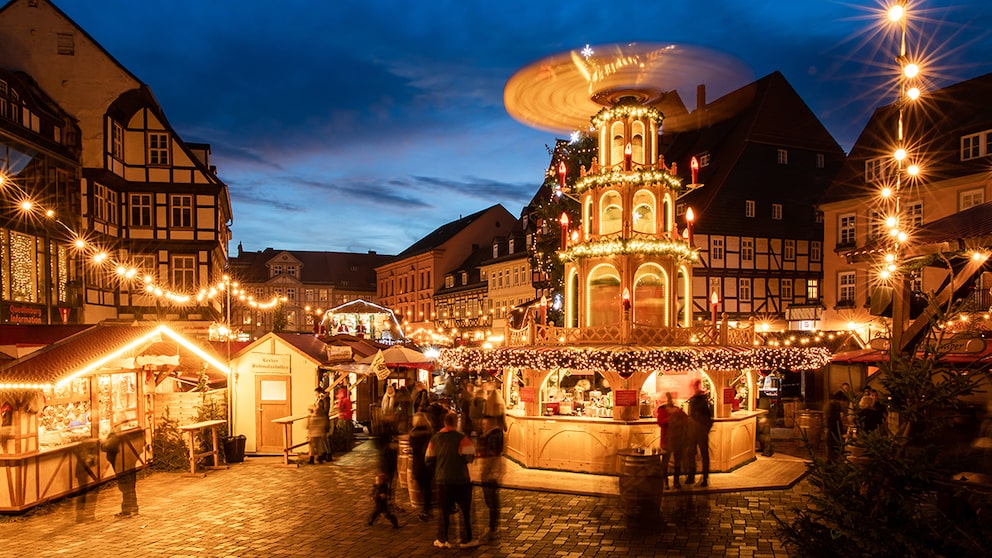
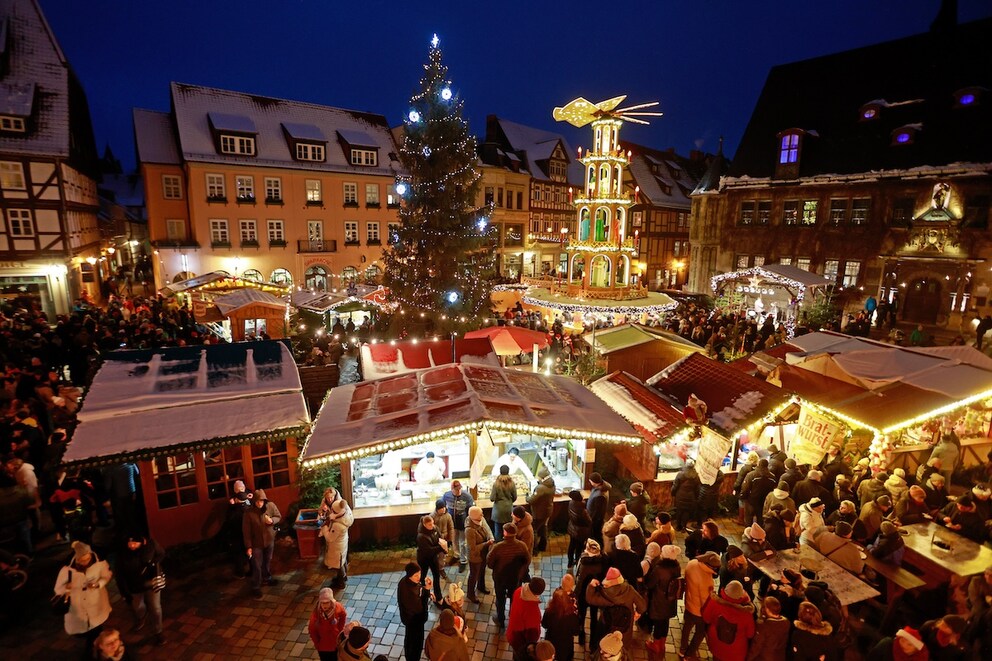
Starting next week (November 26), the half-timbered houses will again form the backdrop for one of Germany’s most beautiful Christmas markets. The scent of cinnamon and fir greenery wafts through the old town, lights sparkle in the marketplace, and visitors stroll among crafts, mulled wine, and Christmas tunes.
Beyond Germany’s borders, “Advent in the Courtyards” has become known, taking place on more than 20 courtyards of the old half-timbered houses from the first to the third Advent weekend. It’s advisable to book accommodations in advance during this time, as it can quickly become crowded.
Also interesting: The best travel tips for the Harz
Cafés and Kings
Particularly charming are the countless small cafés found throughout the narrow streets and alleys and around the marketplace. They entice tourists with true cake and pastry offensives. It’s impossible to walk past the many shop windows without stopping for a short or longer break. From “Café Boulevard,” for example, you have a wonderful view of the old marketplace at reasonable prices. “Café Roland” is a curiosity, as it spans a total of seven half-timbered houses. Inside, you can sit in countless small nooks and crannies, almost like in a private booth. “Vincent” prides itself on being the oldest cheesecake café in all of Germany. It is strategically located near the imposing Quedlinburg, which gave the city its name.
The fortress sits atop a 30-meter-high sandstone hill and also houses the more than 1,000-year-old collegiate church. Here, you can still view unique relics today. Additionally, since 936, Henry I, considered the first “German” king, has been buried here. Not least, from the castle hill, you have a wonderful view over the Quedlinburg old town with its red shingle roofs. If you wish, you can dine heartily at the “Schlosskrug am Dom” inn, although the prices are somewhat higher due to the unique location. The second proverbial highlight in Quedlinburg is the Münzenberg, whose settlement dates back to the 13th century. Numerous half-timbered houses still stand on it today, and the view from here of the castle and the old town is unique. Once home to the so-called Marienkloster, you can visit parts of the historic monastery church today.
Also interesting: The Alpine Garden on the Brocken
This Small Town in Bavaria Is a True Hidden Gem!
The Most Beautiful Old Town in Germany is Located in …
Art and Churches
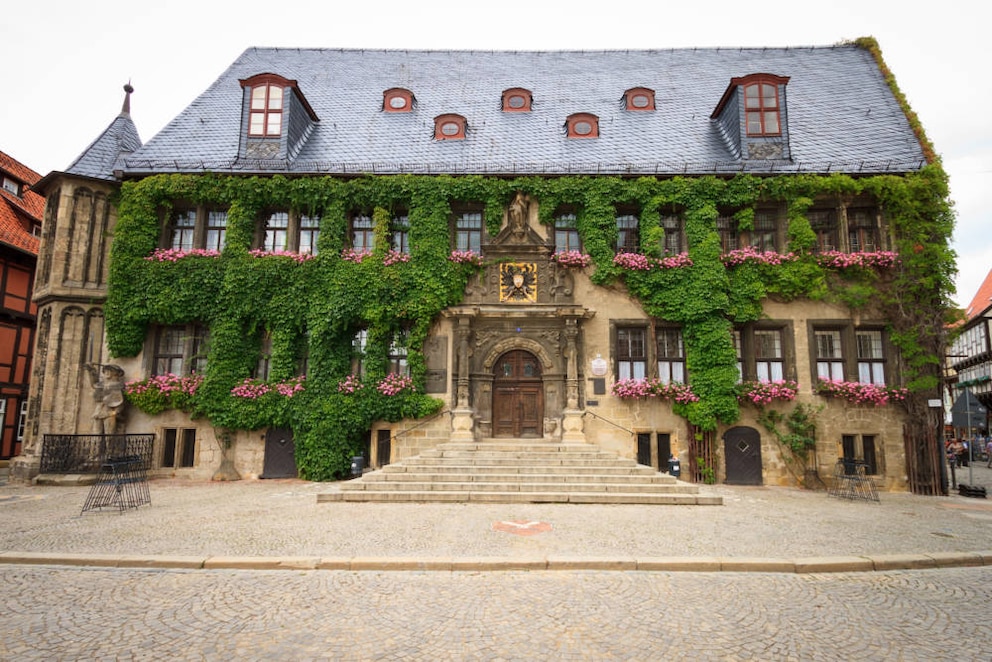
In Quedlinburg, there are also six churches to visit, according to the official city website. Of these, St. Blasii is probably the oldest—it was first mentioned in documents in 1231. The Market Church or St. Benedikti overwhelms visitors with its baroque interior. And generally, the churches or their towers are good landmarks to avoid getting lost in the small but maze-like old town. Also impressive is the more than 700-year-old town hall. Its facade dominates the marketplace, and the city administration still sits here today. The stone Roland figure in front, incidentally one of the oldest in all of Germany, embodies the freedom of medieval Quedlinburg as a wealthy city with economic and political significance. Numerous imperial diets were once held here, and the city was often visited by many kings and emperors.
Also interesting: 29 places in Germany that seem like they’re from another world…
That the small town can also do great art is proven by the Lionel Feininger Gallery. Here you will find works by the well-known painter, as well as works by Emil Nolde, Wassily Kandinsky, and Paul Klee. It also houses the largest collection of Feininger graphics in all of Europe, featuring watercolors, drawings, sketches, and some early paintings by the master. Another type of art can be admired and tasted in the numerous shops in Quedlinburg, namely handmade products. Mustard in all flavors and variations tops the list here. But sausage specialties made from game meat are also highly popular. If you’ve always wanted to know what badger tastes like, you’ll find it here.
If you’re thirsty afterward, you can quench your thirst with liquid art at the Lüdde Brewery, as the beer brewed here tastes excellent. The brewery is also a popular meeting place for both locals and visitors alike—depending on the season, there are various beer specialties to try. On good days, according to the staff, up to 3,000 liters are served.
Worthwhile Surroundings
Incidentally, Quedlinburg is also worth a visit for another reason, as from there you can quickly reach the wonderful nature of the Harz. I drove about 20 minutes by car to Thale in the Bodetal, from where a cable car with a glass-bottom gondola (!) takes you to the so-called Hexentanzplatz. This mountain, where women with magical powers are said to have gathered in earlier times, offers an incredible view of the surrounding landscape up to the Brocken, probably the most famous landmark of the Harz.
Another attraction is located in the small town of Rübeland—about 29 kilometers from Quedlinburg—namely two stalactite caves. And with the “Titan RT,” one of the longest pedestrian suspension bridges in the world awaits the brave in the small town of Oberharz am Brocken—it crosses the Rappbode Dam, Germany’s highest dam.