

August 18, 2026, 10:54 am | Read time: 7 minutes
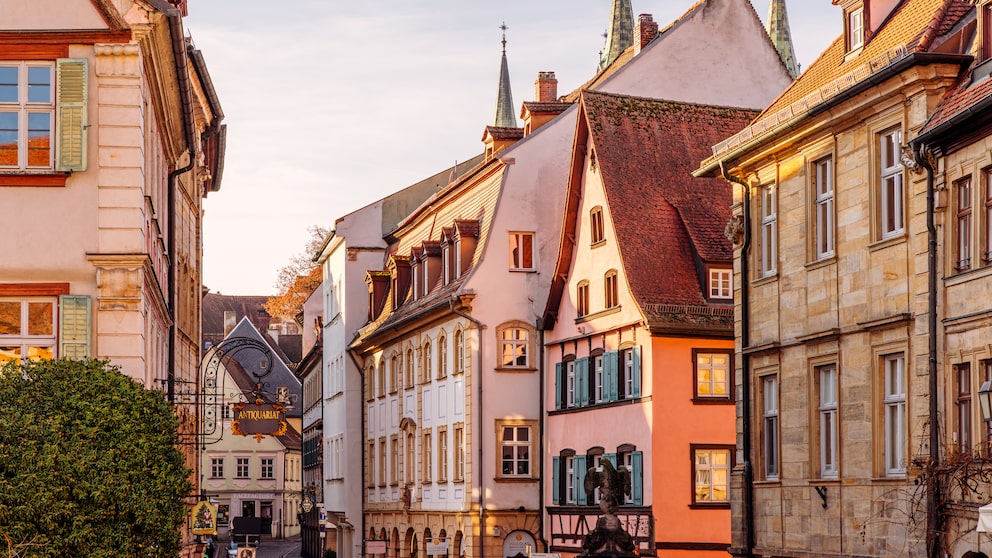
Romantic flair, winding alleys, and cobblestone streets. Bavaria boasts numerous beautiful old towns. Some are more, some less known. TRAVELBOOK presents six of the most beautiful old towns in Bavaria in detail.
The historic core, the old town, often exudes a special charm. Old houses, many of which are protected as historical monuments, and walls that tell stories from centuries past. And in between, you stroll through narrow alleys and well-trodden paths. Bavaria has several of these charming old towns–here we present particularly beautiful ones (without claiming completeness).
Miltenberg
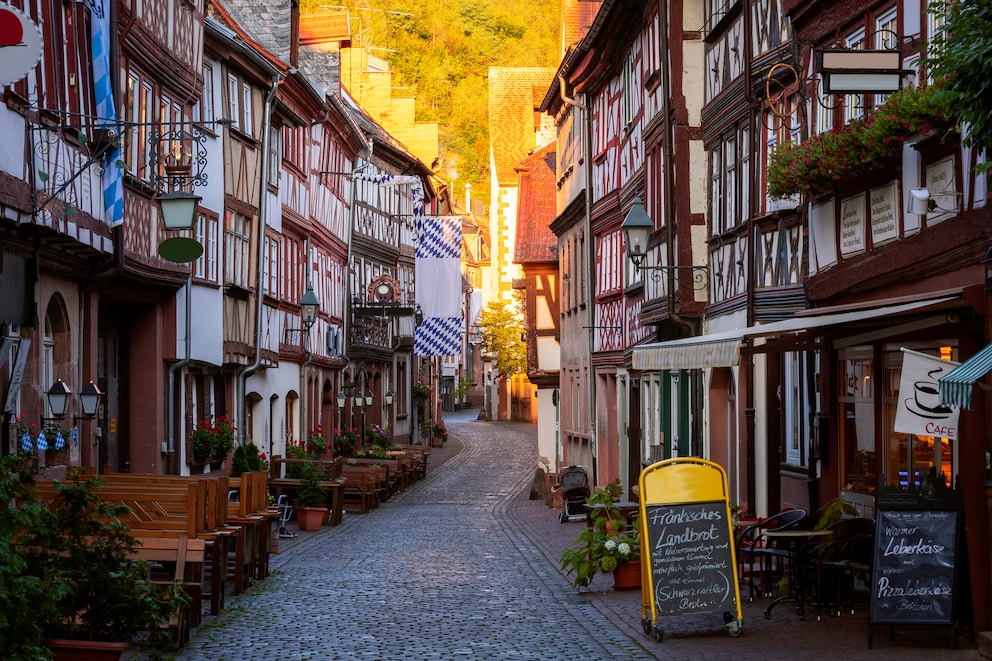
Miltenberg is also called the “Pearl of the Main” and is located between Aschaffenburg, Wertheim, and Obernburg. Here you’ll find one of Bavaria’s most beautiful old towns, characterized by half-timbered buildings and romantic alleys. There’s also the old marketplace, known as “Schnatterloch.”
Many of the old buildings date back to the 16th and 17th centuries, and there are numerous half-timbered houses from the period after the Thirty Years’ War. Particularly beautiful is the old Renaissance-style market fountain in the marketplace.
The historic inn “Zum Riesen,” located in Miltenberg, is noteworthy. It was first mentioned in documents in the mid-12th century and claims to be Germany’s “oldest princely inn.” Charles IV and King Ludwig the Bavarian stayed there.
If you want to see Miltenberg from above, you should take the short climb to Mildenburg. It was built in the 12th century and can be reached from the marketplace via narrow alleys and steep stairs in about 15 minutes. The complex is accessible as a museum and features works from the 17th to 19th centuries.
Füssen
Füssen in the Allgäu is also dubbed “the romantic soul of Bavaria.” At least by the local tourism office. And it’s not entirely wrong. Füssen offers more than 2,000 years of history and, above all, beauty.
Above the old town towers the High Castle with its distinctive towers and artistic facade paintings. It was once the summer residence of the Prince-Bishops of Augsburg. Today, it houses the Municipal Gallery and the branch gallery of the Bavarian State Painting Collections. Inside, the Knights’ Hall with its carved coffered ceiling is a real eye-catcher. From the clock tower, you also have a great view over the city.
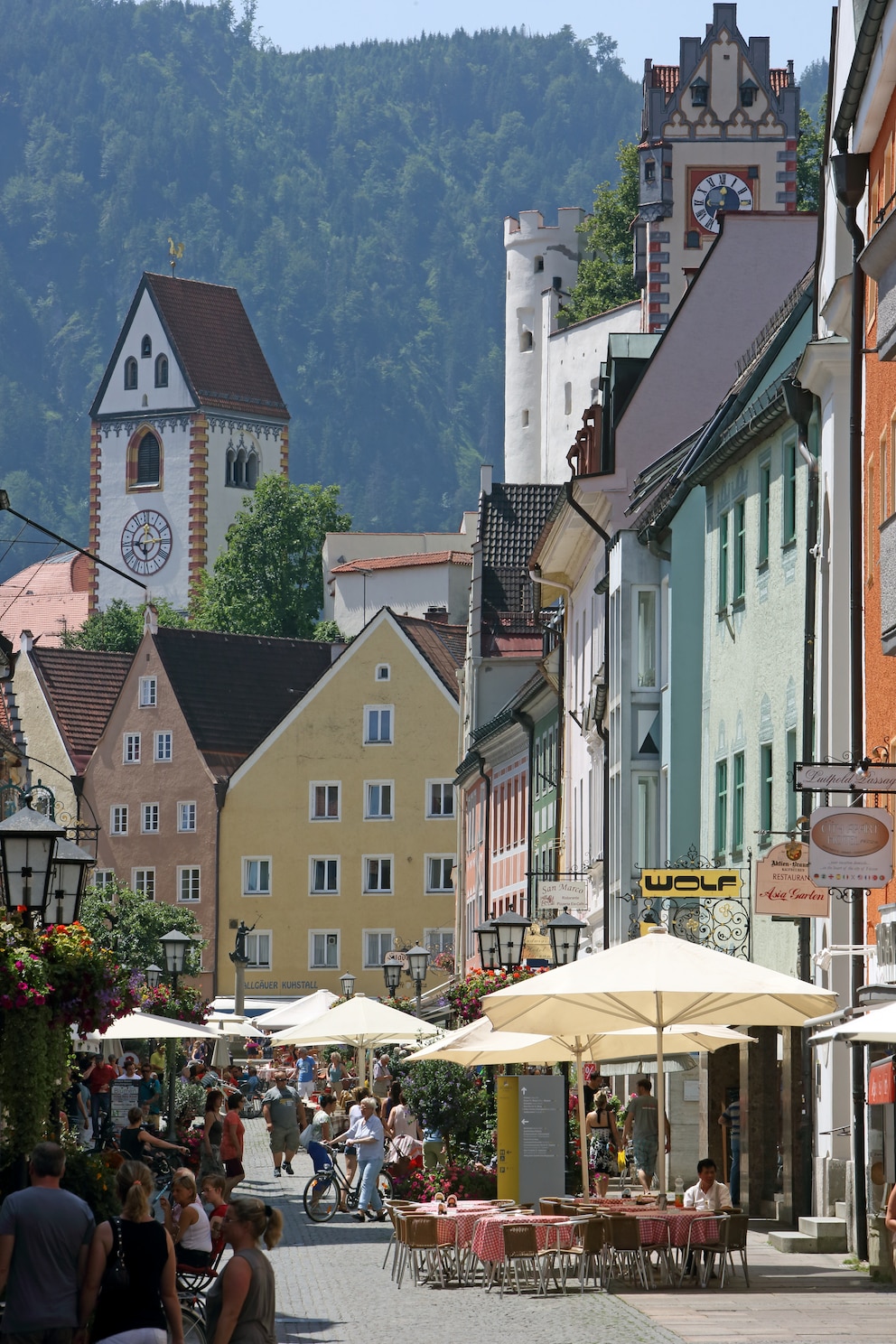
The Seiler Tower is probably one of the 14 towers of the former city wall, built in the 13th century. The archway is still well-preserved today and was one of the entrances to the city. The current center of the old town is the so-called Reichenstraße. It was once the trade route, and at its upper end is the city fountain with St. Magnus, Füssen’s patron saint.
Visitors to the bread market in Füssen will also find the Lute Maker’s Fountain. This commemorates Füssen’s historical significance for lute and violin making. To this day, the city has workshops that continue the old craft and build instruments.
Nördlingen
The old town of Nördlingen is definitely worth a visit–it is one of the best-preserved in all of Bavaria. At least the city wall from the 14th century. It is completely intact with five gates, twelve towers, and a bastion, enclosing the city center entirely. The battlement is walkable for 2.6 kilometers all around and offers visitors a wonderful view over the city and surroundings.
The city’s slogan is “The most beautiful corners are round.” Anyone who views Nördlingen from a bird’s eye view knows why. The old town forms an almost perfect circle. This is particularly visible from the “Daniel.” That’s what the locals call the 90-meter-high tower of the late Gothic-style St. George’s Church.
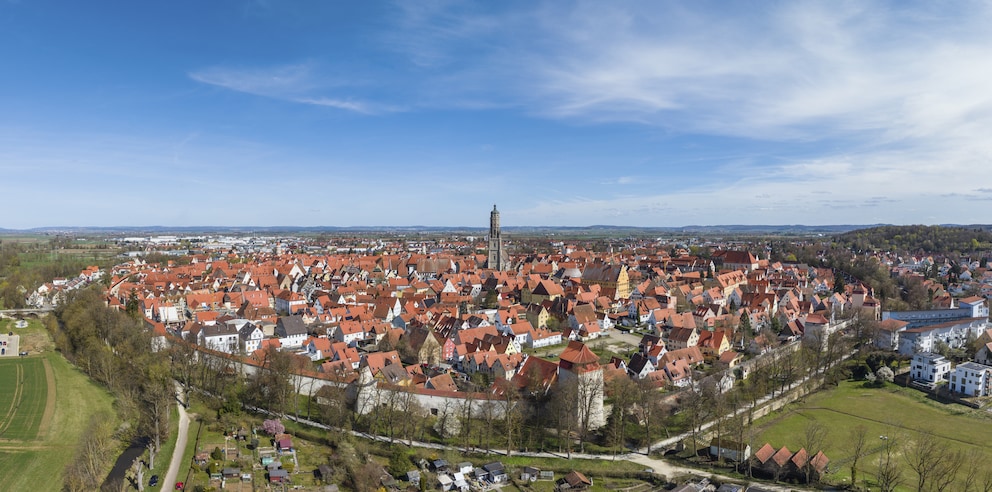
Strolling through the old town of Nördlingen, you’ll also discover beautifully restored half-timbered houses and many well-preserved buildings from the Renaissance and the Middle Ages.
Nördlingen has reportedly appeared in several major film productions. According to the website of the Allgäu/Bavarian Swabia Tourism Association, it served as a backdrop for the films “Willy Wonka & the Chocolate Factory” from 1971 and “Bibi Blocksberg” from 2002.
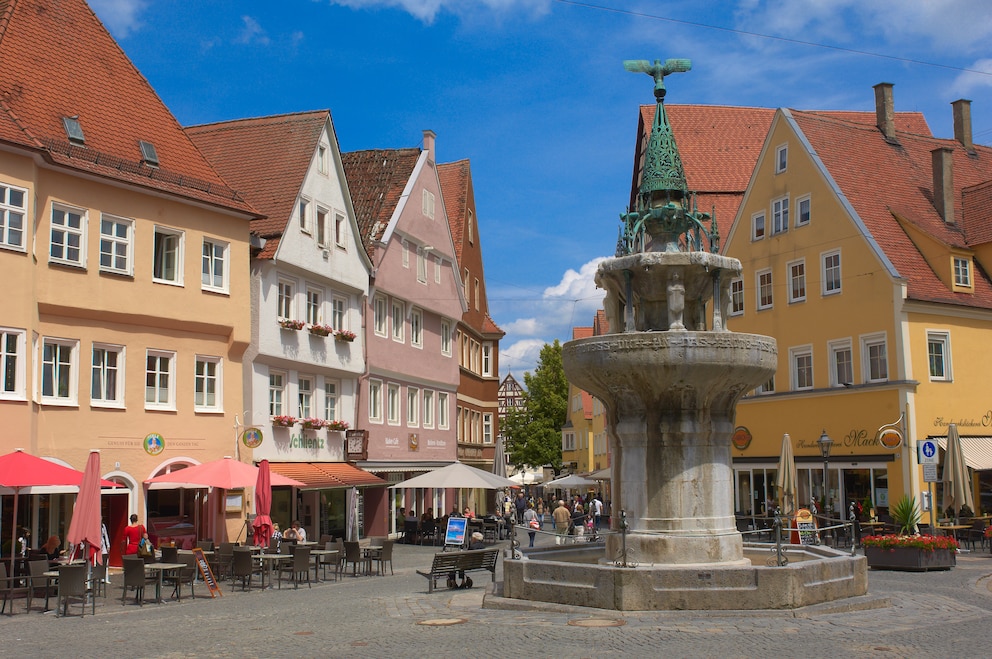
Rothenburg ob der Tauber
While not exactly a hidden gem anymore, the old town of Rothenburg ob der Tauber in northern Bavaria is definitely worth a visit. Picturesquely perched above the Tauber Valley, it exudes medieval charm thanks to its characteristic half-timbered houses.
A walk along the old city wall is particularly beautiful. It is completely preserved, with large sections accessible around the clock, and there is the so-called Rothenburg Tower Trail to follow. Over four kilometers, you can learn a lot about the city’s 46 historic towers.
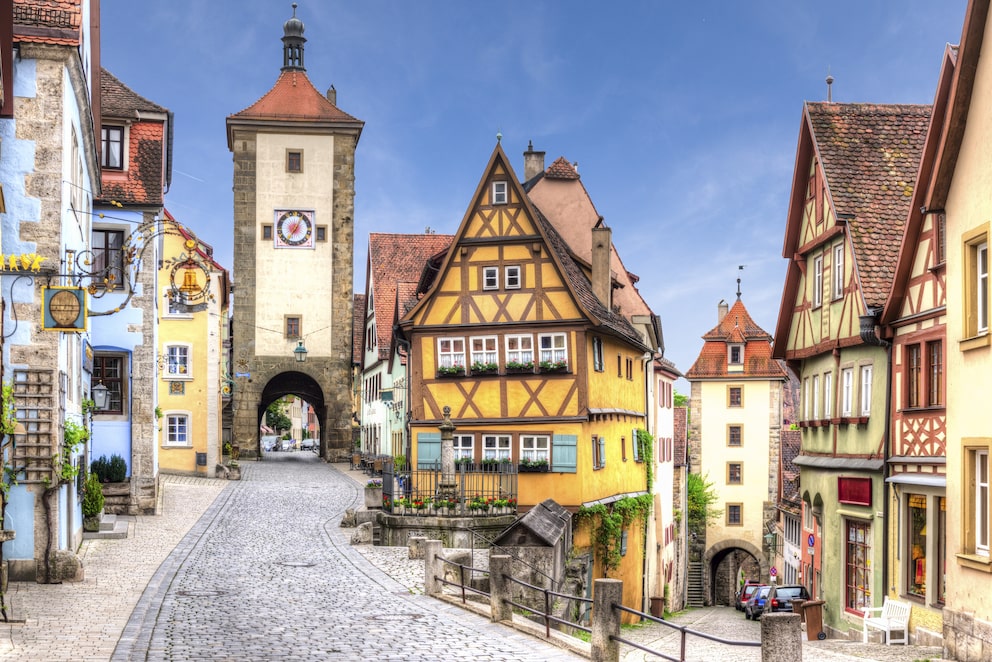
Anyone strolling through the old town of Rothenburg ob der Tauber will also come across the so-called Plönlein. Rothenburg’s most famous photo motif. Plönlein means “Little Square at the Fountain,” and it includes a yellow, crooked half-timbered house, a fountain, and two towers of the old city wall.
The half-timbered house at Plönlein has been copied for films over the years whenever medieval European settings were needed. This was also the case in the Disney classic “Pinocchio” from 1940, according to the local tourism website.
A German City Included! The Most Beautiful Cities in Europe
This Small Town in Bavaria Is a True Hidden Gem!
Lindau
The special thing about the old town of Lindau is not only that it is located directly on the beautiful Lake Constance but also that it is almost entirely on an island. This results in a mix of historical charm, harbor flair, and Alpine panorama.
Lindau’s harbor entrance is also special–it is considered the most beautiful on Lake Constance. On one side stands the six-meter-high Bavarian Lion, and on the other, the 36-meter-high New Lighthouse. The latter can be climbed via 139 steps and offers a wonderful panoramic view from the top.
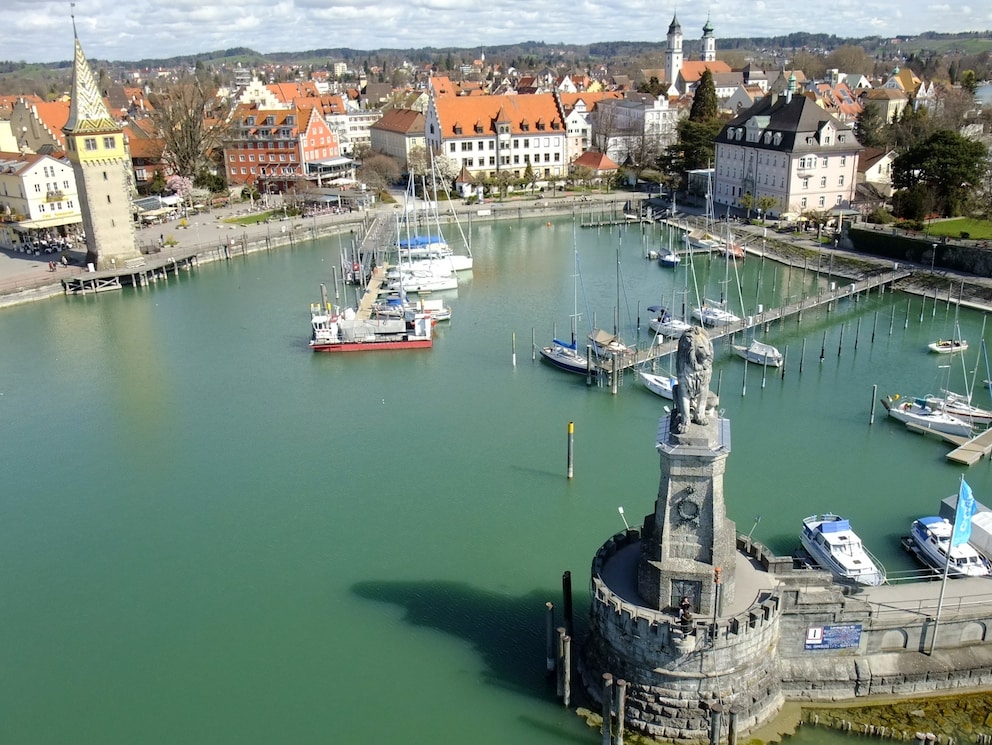
Like many other old towns, this one offers a variety of narrow alleys and lovingly restored half-timbered houses. One of the most famous motifs is the Mangturm with its square shape and strikingly colorful roof. It used to serve as a watch and signal tower, and today it can be visited during selected events.
During a city stroll, you can also admire Lindau’s Old Town Hall from 1422 with its colorful facade. The former monastery church from the 13th century is also part of the old town. Today, it houses the Lindau City Theater, the largest on Lake Constance.
Also interesting: 6 of the most beautiful old towns in Baden-Württemberg
Bamberg
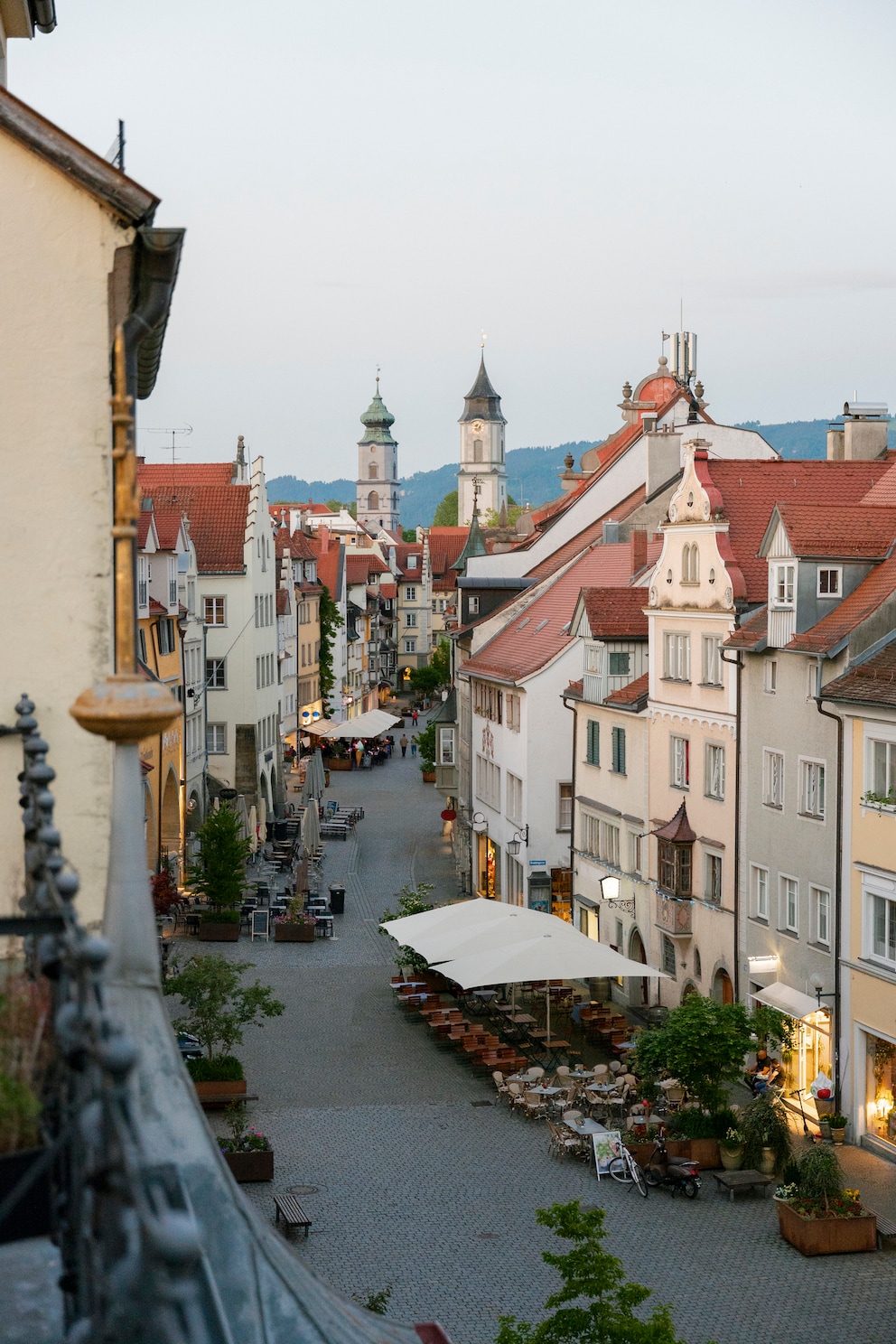
The entire old town of Bamberg has been a UNESCO World Heritage Site since 1993. This is justified by the fact that the old town is a unique and very well-preserved urban architectural masterpiece, a synthesis of architecture from the High Middle Ages and Baroque.
The Bamberg old town comprises three historical districts: the mountain, the island, and the gardener’s town. Many old buildings are still preserved today, and more than 1,000 houses are protected as historical monuments.
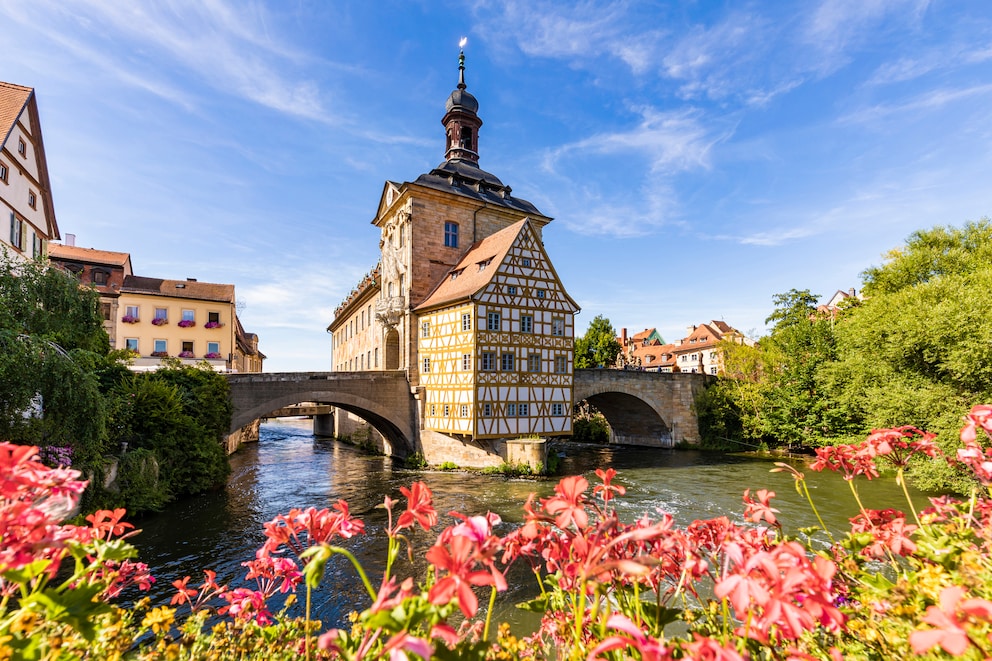
So if you truly want to walk on historic ground and through romantic alleys, Bamberg is the place to be. Particularly beautiful is the former fishing settlement in Bamberg’s island town, called “Little Venice.” There, charming half-timbered houses with small gardens crowd along the water.
A real eye-catcher is also the Old Town Hall in Bamberg. According to the local tourism website, legend has it that the Bishop of Bamberg refused to grant the citizens a place for a town hall. In response, they simply drove stakes into the water and created an artificial island on which they then built the town hall.