

November 18, 2022, 4:11 pm | Read time: 5 minutes
Each year, the EU selects the European Capital of Culture. However, the term “city” doesn’t quite fit this time: In 2023, the spotlight is on the entire region of Balaton in western Hungary.
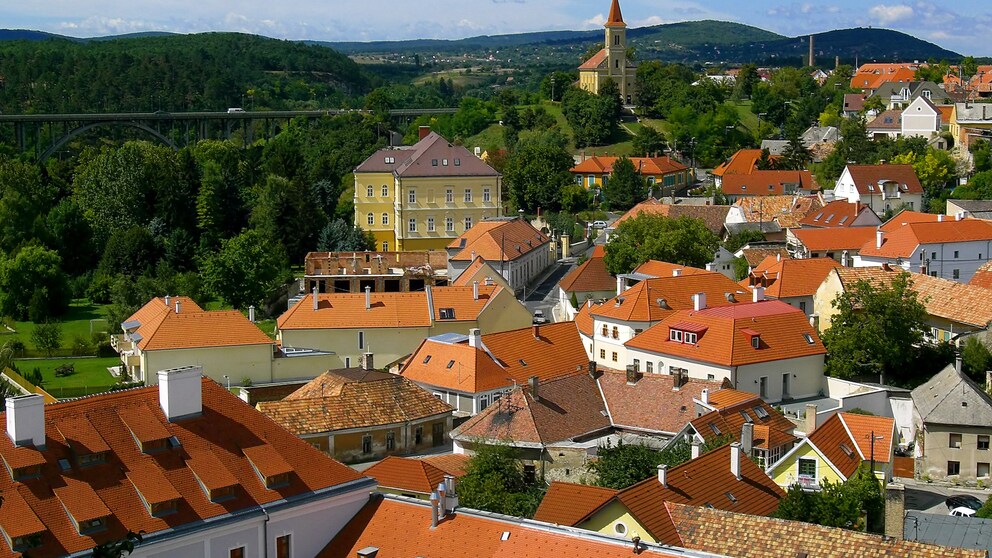
Veszprém by Lake Balaton (known as Plattensee in German) in Hungary attracts visitors with its churches, museums, a castle district, and provincial charm, and can officially call itself the 2023 Capital of Culture. Culture manager Can Togay is already looking forward to welcoming guests from around the world, practically in his own living room, next year. “I love sharing the experience and the love for the region,” says the Hungarian, who once acted alongside stars like Isabelle Huppert and taught as a professor of film development at the Film University of Babelsberg. Today, he is the artistic and creative chief advisor for the Hungarian Capital of Culture project, with which the European Union is once again honoring a region in 2023: the city of Veszprém and the expansive area around Lake Balaton, a familiar name to many summer vacationers.
Also interesting: Vajdahunyad – the Hungarian castle originally made of wood and cardboard
Overview
Capital of Culture 2023: Provincial Charm in Veszprém
Veszprém, a city of 60,000 residents, is a blank spot on the tourist map and is mainly known to sports enthusiasts. The local handball club competes at the top European level and has won multiple championships and cups in Hungary. Otherwise, the charm of the province prevails here.
In the castle district, a classic castle is nowhere to be found. Flower pots stand in front of yellow and pink facades. A viewpoint offers a view of the Bakony Mountains. Stops during a city stroll include St. Michael’s Basilica, the Trinity Column, the old fire tower, and a bronze statue depicting Michael defeating the devil. Like many cities before, Veszprém hopes for a boost from the EU title: Since the announcement of the Capital of Culture region, initiatives against vacancies in the city have been underway, and new restaurants and wine bars have opened.

What the Three 2023 European Capitals of Culture Offer Visitors

Top Tips for a Vacation at Lake Balaton in Hungary
Lake Balaton: A Sea-Like Inland Lake
Ten kilometers south of Veszprém–a short drive through hills and mixed forests–lies Lake Balaton. The body of water is larger than Lake Constance. Standing on its shore, one feels as if at an inland sea. “All Hungarians have a deep connection to Lake Balaton, including myself,” says culture manager Togay.

He recalls the historical culture of bathing, villas, and steamships. And the fact that “East and West met here during the Cold War.” Since Lake Balaton is relatively shallow and benefits from a microclimate, it warms up easily in the summer. Among the bathers, the southern shores are particularly popular.
Also interesting: The best ice cream in the world comes from Hungary
Wine Production at Lake Balaton
In the area around Lake Balaton, wine production has a long tradition, dating back to Roman times. Basalt soils give the wine a mineral aroma, especially the white wine variety Kéknyelü, which can hold its own in international comparisons. The same goes for the regional sparkling wine made from Furmint grapes.
The “fresh feeling of sparkling wine” suits the lifestyle around Lake Balaton, says agricultural engineer Bence Laposa, who runs the family winery. “Sparkling wine is trending, but it will take a few more years to really catch on.” Loud tones and aggressive advertising campaigns are not his style. Laposa quietly mentions that he considers Hungarian wines, especially the white ones, to be underrated. He says, “Rhine, Wachau, Tuscany: Our wines can compete.” Bence Laposa himself prefers a fruity Welschriesling. Culinary companions to the wine in local restaurants include pike-perch, duck liver, sauerkraut soup, goulash, and Mangalica ham, which melts in the mouth.

Baroque Castle and Healing Mud to Go
On the northern shore, in Keszthely at the northwestern edge of the lake, you’ll find the Baroque Festetics Castle with a carefully maintained park. A highlight of the castle is the lavishly equipped library, over 200 years old, with more than 90,000 volumes. A separate entrance leads to a carriage museum.
Just beyond Keszthely, in the small town of Héviz, it’s bathing season year-round. Here, there’s a thermal lake whose water naturally refreshes several times a day. The healing mud is also sold to take home, in, no joke, five-kilogram buckets.
Program of the Capital of Culture Year
According to the organizers, up to 2.5 million visitors are expected to come to the region during the Capital of Culture year. The opening ceremony in Veszprém is planned for the weekend of January 21 and 22. The main events will kick off in spring and summer 2023. All information about the program can be found on the official website.
With material from dpa