

February 11, 2026, 3:43 pm | Read time: 4 minutes
The German Economic Institute (IW) has conducted a recent study to determine which metropolitan regions in Germany are particularly livable–and which are not. Key factors included distances to airports, as well as to cultural institutions or daycare centers. The last place among the twelve metropolitan areas studied is surprising.
The Least Attractive Metropolitan Region in Germany Is …
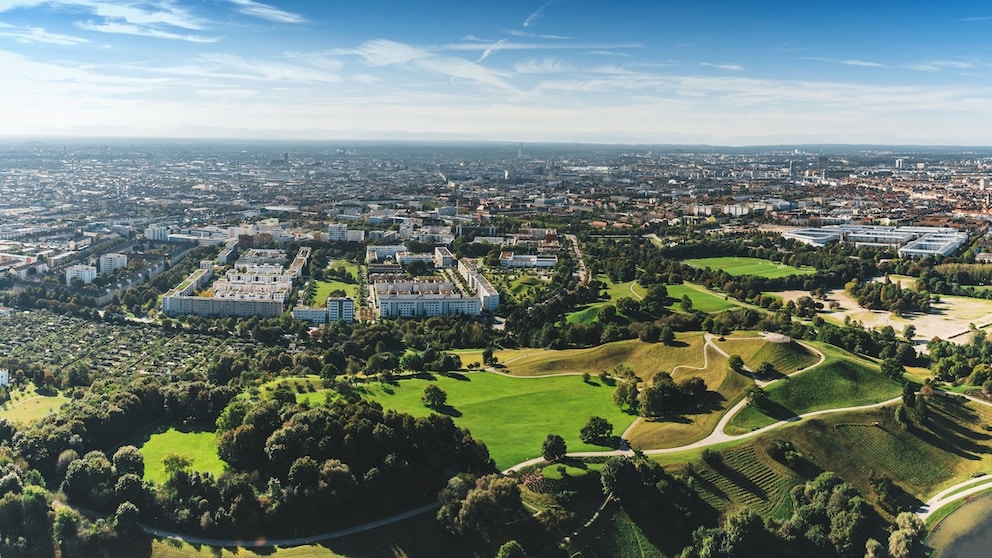
… Munich! This may sound surprising to some. While high rental prices in Munich are well-known, the fact that this metropolitan region ranks last and is thus the least attractive in all of Germany might be unexpected. The authors of the study attribute this result mainly to poor infrastructure. Munich and Hamburg (ranked 10th) often achieve excellent results as core cities–but the metropolitan regions are vast and include large, rural areas.
Those living in the surrounding areas must endure long commutes to access city amenities. In the least attractive metropolitan region of Munich, distances to hospitals and doctors, museums, daycare centers, and schools are often very long. Real estate prices are high not only in the city but also in the surrounding areas. The Munich metropolitan region is unattractive not only for residents but also for travelers.
Rental prices or the accessibility of elementary schools are not crucial for tourists–but the accessibility of airports, proximity to public transportation, and the density of events are of great importance. Munich ranks poorly not only in housing but also due to limited sports, leisure, and recreational spaces, large distances to the nearest public transport stop, and few LGBTQI+ communities. Overall, the Munich metropolitan region scores 46.5.

Surprise! Germany Has the World’s Best Airport

Germany is Home to the Most Affordable City in Europe for Singles
Ruhr Area and Rhineland at the Top
Particularly livable and thus at the top of the study is the Ruhr area with 55.7 points. According to the study, the region benefits from its polycentric structure. There is not just one center where everything happens, but many. Long-distance train stations, highways, and hospitals are quickly accessible. The leisure and cultural offerings are also widely available. Combined with moderate real estate prices, the Ruhr area takes first place.
The Ruhr area consistently shines in individual categories. On average, it takes 11.7 minutes by car to reach the nearest long-distance train station. Nowhere else in Germany can you reach your destination faster. The same applies to distances to the nearest public transport stop: With a distance of 212 meters, the Ruhr area is at the top. For comparison: In the Munich metropolitan region, it’s 611 meters, ranking tenth. Behind it are the Northwest metropolitan region with 637 meters and the Nuremberg area at 784 meters.
The Ruhr area also ranks at the top in the number of events, nightclubs, and cinemas.
The Rhineland comes in second with 53 points. It is similarly structured to the Ruhr area and also performs well in many categories. It scores particularly well in the number of bars and LGBTQI+ communities. Additionally, it is the fastest region to reach the nearest airport–on average, it takes 25.5 minutes by car. In Munich, it’s about 42.4 minutes.
The study focused primarily on distances to important facilities and centers. In summary, good accessibility and less travel time mean more life time or quality of life. In the Ruhr area, it takes about 26 minutes less travel time compared to the national average to reach schools, daycare centers, and leisure activities. The example calculation is based on a family with two children.
Study Methodology
Using 23 indicators, the IW closely examined twelve major metropolitan regions in Germany. Key factors included proximity to public transportation, accessibility of airports, cinema density, accessibility of schools and daycare centers, theater density, and rental or purchase prices for apartments. To make the collected data comparable, the study assigned scores from 0 to 100. The data collection used statistics from federal and state offices as well as the German Economic Institute’s own analyses.