

March 1, 2026, 6:56 am | Read time: 5 minutes
In September 2007, a disaster struck the small town of Staufen in Baden-Württemberg, casting a long shadow to this day. Since then, the ground has been dramatically rising, especially under the old town, threatening to literally break many of the houses apart. TRAVELBOOK spoke with the mayor of Staufen about the catastrophe and how the locals manage to stick together despite all odds.
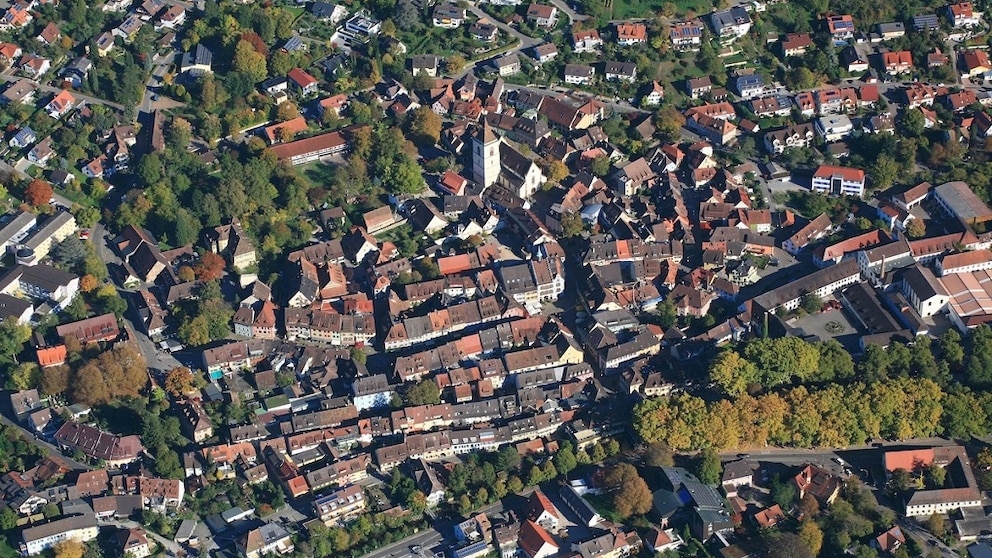
Visitors to Staufen in the southern Black Forest will find an idyllic small town at first glance. Nestled at the foot of Mount Belchen, it boasts a 1,250-year history and is the heart of a region popular with hikers, cyclists, and tourists in general. Each year, 170,000 people stay overnight in Staufen to admire the picturesque old town. However, many now likely come to witness the miracle that Staufen still exists at all. Nearly 20 years ago, a disaster occurred here, the extent of which initially seemed incalculable.
TRAVELBOOK reached Michael Benitz, the mayor of Staufen, by phone. The friendly and fast-talking man has been in office for 24 years. He experienced the crisis in his hometown firsthand and helped lead it out of trouble. It all began one day in September 2007, as he recalls: “We had just completed the two-year renovation of our two town hall buildings. The question was how to heat them environmentally in winter and cool them in summer.” The city council eventually approved an idea that led to the tragedy: geothermal energy.
Awakening a Sleeping Giant
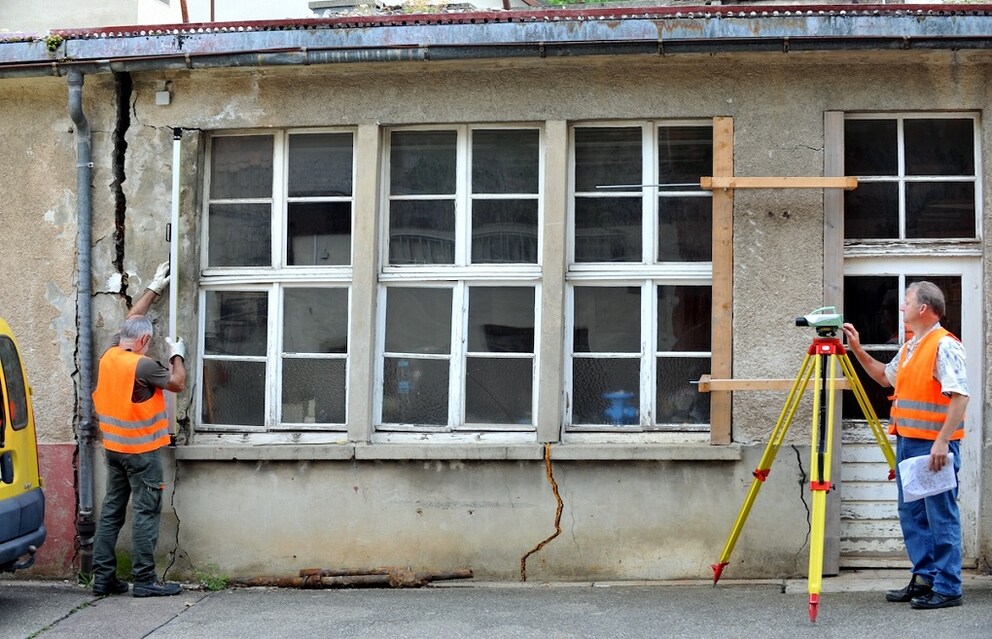
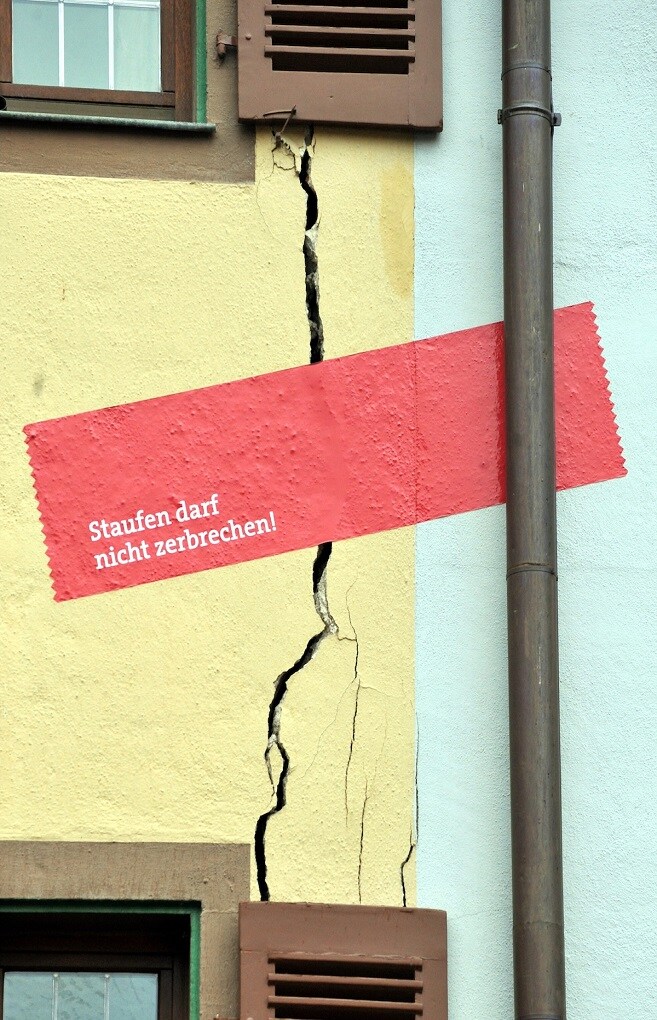
The buildings were to be supplied with geothermal energy. Six boreholes, each 140 meters deep, were drilled, inadvertently awakening a sleeping giant. Literally: “When the heating was finished, the first, initially fine hairline cracks appeared in some buildings in the town 14 days later. Then it was alarm.” But what had happened? “During our drilling, we hit a groundwater-bearing layer. This water then seeped unchecked into the rock layers beneath the town.” Specifically, a rock called anhydrite, which transforms into gypsum upon contact with water and expands significantly.
Also interesting: Swiss mountain village Brienz slides one meter per year
The tragic consequence: The swelling rock began to push buildings in the town upward and sideways at a geologically breathtaking speed. “We’re talking about an initial movement of 11 millimeters per month. And this in our old town, which has been a protected monument since the 1960s, a huge catastrophe.” Yet Staufen managed to avert the worst-case scenario. “We quickly sealed the boreholes and set up so-called defense wells with pumps.” These have been extracting five and a half liters of water per second from the ground ever since, preventing further swelling of the rock.

Radical Plans! Venice to Be Saved by Elevation

This German city sits on 72,000 tons of diamonds
Horror Scenario
Now, the movement under Staufen has slowed to one millimeter per month. Previously, measurements were taken every 14 days; now, it’s only necessary once a year after the frost period in spring. The major collapse seems to have been averted. “Initially, we faced the horror scenario that the old town could have risen by several meters. The consequences would have been incalculable.” Today, Staufen is “only” 72 centimeters higher than in 2007. The buildings have shifted 50 centimeters sideways. In total, 270 houses in the town are affected, with damages amounting to 50 million euros.
Also interesting: Ozyorsk: The most contaminated city in the world
You can hear the pride in Mayor Benitz’s voice as he talks about how his town fought its way out of the crisis. “We managed to reach an agreement for this damage case with the state of Baden-Württemberg and all other municipalities without any lawyers.” The result: The state will cover 40 percent of the first 30 million euros, and all other municipalities will jointly pay another 40 percent. This leaves the town of Staufen with a payment of six million euros. “For us, that’s still an enormous burden.”
A Town Rebuilds Itself

His town hall still receives a whole file folder of reports on the cracks running through the town every month. Since 2010, a mediation office, run by two retired, volunteer judges, has been helping the citizens. “For many people, it’s about nothing less than their entire existence. And that is fortunately secured.” If the judges decide that a plaintiff is entitled to compensation for crack-related damage, Staufen advances the sum and later settles it with the state of Baden-Württemberg. “Additionally, 100 measurement points are regularly checked. Our vigilance must not wane.”
Also interesting: Yungay: The story of Peru’s buried city
Mayor Benitz apologizes, saying he’s running out of time before his next appointment. “With united efforts and great commitment, we managed to pull through together. Back then, the slogan ‘Staufen must not break’ was coined. It wasn’t just about the buildings, but also the community.” He will remain connected to the town even when he likely retires in the first quarter of 2026. Yes, numerous buildings in Staufen have had to be demolished over the years due to irreparable damage. But some are also being rebuilt, such as the technical town hall and an archive. “That’s a signal.”