

October 1, 2026, 1:39 pm | Read time: 2 minutes
Popular tourist destinations quickly reach their limits. Then, visitor numbers often significantly exceed those of the residents. According to a recent analysis by Holidaycheck, one place in southern Germany stands out in particular.
On vacation, it’s usually crowded with other tourists unless you travel to a completely unknown place. Otherwise, you share the experience with many other travelers. The ratio between guests and residents can quickly become unbalanced. In a study by Holidaycheck, however, a small town tops the list of disproportion: In Rust, there are about 200 tourists for every resident.
Europa-Park is a Visitor Magnet
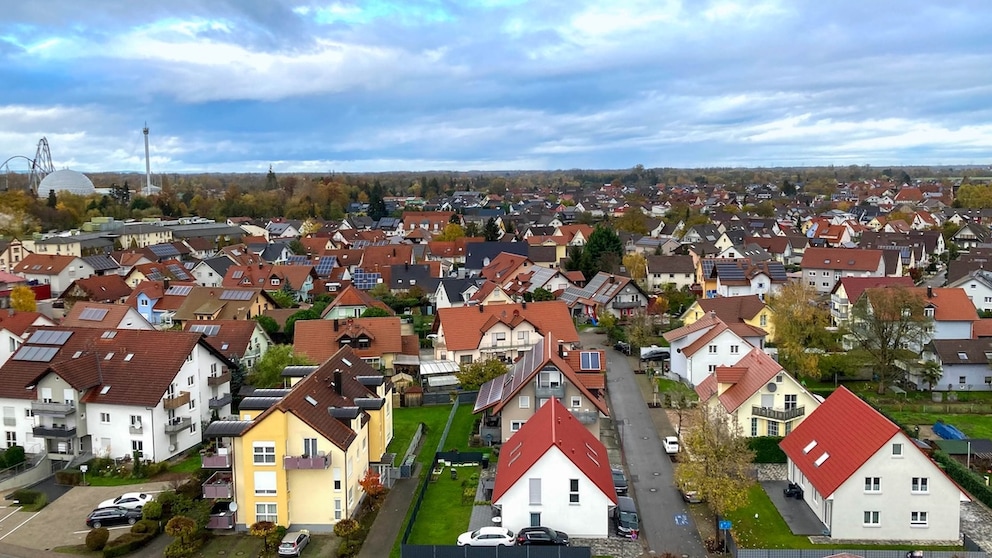
Rust in Baden-Württemberg is likely familiar to many. However, not because of special sights, a beautiful old town, or other attractions. Rust is primarily known for Europa-Park, Germany’s largest amusement park.
Related: “I visited Germany’s largest amusement park – here’s how it was”
Last year, Europa-Park celebrated its 50th anniversary and, for the first time, surpassed the 7 million visitor mark. This, of course, also impacts Rust, the town where the amusement park is located. According to Holidaycheck, Rust recorded about 200 guest arrivals per resident in 2025. A distant second in the ranking is the Baltic Sea resort of Binz with about 80 tourists per resident, and in third place is another Baltic Sea resort, Heringsdorf, with about 70 tourists per resident.
More Guests, Fewer Overnight Stays
For the analysis, Holidaycheck evaluated tourism data from the regional database for 2025 and compared it with 2024. The data from more than 80 major cities and around 2,000 municipalities in Germany were considered. The evaluation set the annual guest arrivals in relation to the population.
It also revealed that there were about 2.2 million more guest arrivals in 2025, totaling around 192 million. This increase of 1.2 percent contrasts with a rather modest rise of only 0.3 percent in guest overnight stays. This means that while there are more guests, they are staying for shorter periods.
In large cities, there is also an imbalance in growth: While Lübeck, Heidelberg, and Hamburg are seeing significant increases, fewer guests are arriving in Berlin and Dresden.