

November 10, 2025, 1:44 pm | Read time: 4 minutes
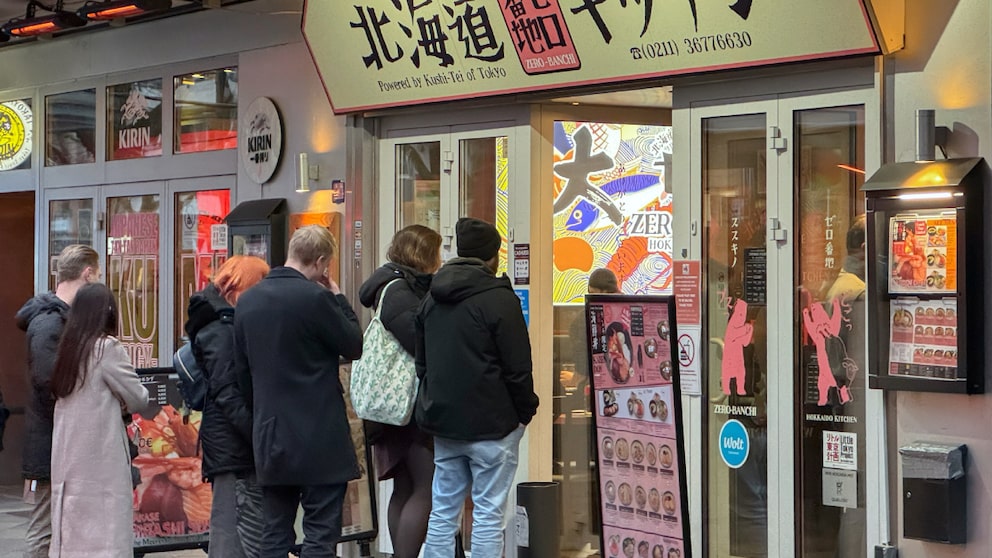
Do you also associate Düsseldorf with the opportunity to enjoy excellent Japanese cuisine? No wonder: It’s estimated that there are about 80 authentic Japanese restaurants in the city on the Rhine, most of them in the Little Tokyo district. Including gastronomic businesses, around 600 Japanese companies have their headquarters or European offices in Düsseldorf. In short, nowhere else in continental Europe is there such a large Japanese community. But why is that? TRAVELBOOK explains why Düsseldorf became the center of Japanese life in Europe.
According to the official website of the city, it is home to more than 8,400 Japanese people—”making Düsseldorf the number one Japanese location in continental Europe,” it states. Accordingly, the city’s infrastructure is aligned. There are Japanese educational institutions, a consulate general, the Japanese Chamber of Commerce and Industry, as well as numerous cultural institutions and associations. Among them is the famous Buddhist cultural center EKŌ-Haus. For more than ten years, the Japanese airline All Nippon Airways (ANA) has also offered a direct connection between Düsseldorf and Tokyo-Narita, further highlighting the economic and personal networking. But where does this actually come from?
Why so many Japanese live in Düsseldorf
The significant presence of Japanese life in Düsseldorf has its origins in the post-World War II era. At that time, heavy industry became the focus of many nations, as it was crucial for rebuilding destroyed cities. Düsseldorf proved to be an attractive location for companies due to its proximity to the Ruhr area, Germany’s largest industrial center. As a result, Japanese companies, which had previously been primarily active in Berlin and Hamburg, increasingly relocated there. As a research project by Heinrich Heine University Düsseldorf (titled “The History of the Japanese Economic Location Düsseldorf”) shows, these economic conditions laid the foundation for the later emergence of a large Japanese community in the city.
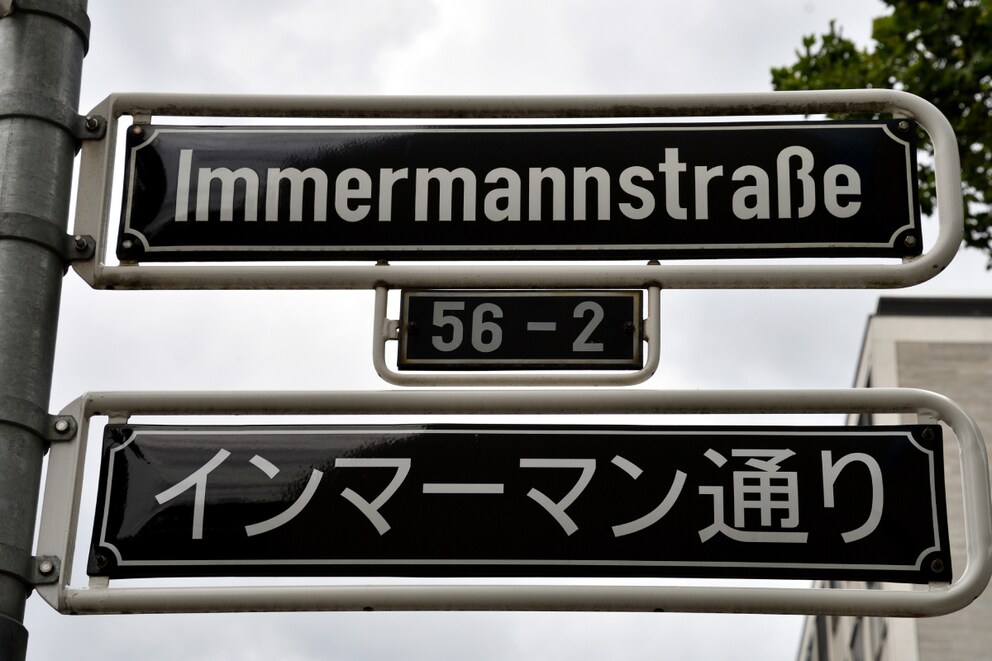
Düsseldorf recognized the potential of this development and responded with targeted measures to attract even more Japanese companies. The city made specific offers for offices and supported companies in establishing themselves. Over time, it also began expanding the aforementioned infrastructure, which is naturally necessary for the lives of the Japanese. In 1963, the idea of a Japan Center on Immermannstraße was conceived, completed in 1978—”a place to eat and drink,” as described by the Düsseldorf municipal utilities, and equally “a paradise for shopping enthusiasts looking for authentic products.” Japan Day—a festival of Japanese culture throughout Düsseldorf—was first discussed in 1966. There have been various Japan-related events in the meantime, but the annual Japan Day in its current form was only fully realized in 2002.
Japanese in Düsseldorf—and Düsseldorf in Japan
Many of the Japanese living in Düsseldorf are expats, professionals who live in the city for a few years for work and then return to their home country. To maintain contact, Düsseldorf simply comes to them. More precisely, the city, together with the state of North Rhine-Westphalia and Messe Düsseldorf, regularly hosts the “Düsseldorf Evening” in Tokyo. Numerous former Düsseldorf expats, company representatives, and diplomats are invited. According to the city’s website, the large gathering is “in the spirit of networking,” serving both to maintain existing business contacts and to acquire new business partners. Above all, it aims to revive memories of the time in Germany. The main program point: enjoying Rhenish specialties. This year, around 800 liters of Altbier from a family-run Düsseldorf brewery were brought to Tokyo for the popular festival.