

January 25, 2022, 11:35 am | Read time: 6 minutes
Iceland is small and also isolated–which is why the land and its people have their quirks. One thing is certain: Both the people and the island are very popular. TRAVELBOOK has gathered some amazing facts about the country.
1. The Most Peaceful Country on Earth
Iceland has one of the lowest crime rates in the world and has been considered the most peaceful country on Earth since 2008, according to the Global Peace Index. Ordinary police officers in Reykjavik carry only pepper spray and batons.
2. Probably the Funniest Police in the World
Speaking of Icelandic police–they are probably the funniest in the world. If you don’t believe it, just follow their official Instagram account to see what the officers do all day: feeding geese, putting their feet up, building a snowman with a mask. But what else can you do as a police officer in a country with virtually no crime?

3. Ex-Soccer Player Opens Hotel
The Icelanders not only know how to play soccer, as they showed at the 2016 European Championship, but they also know tourism. Former national player and coach Hermann Hreidarsson proved this by opening his Stracta Hotel in Hella, southern Iceland, along the “Golden Circle” route in June 2014–featuring hot tubs, saunas, and 122 rooms.
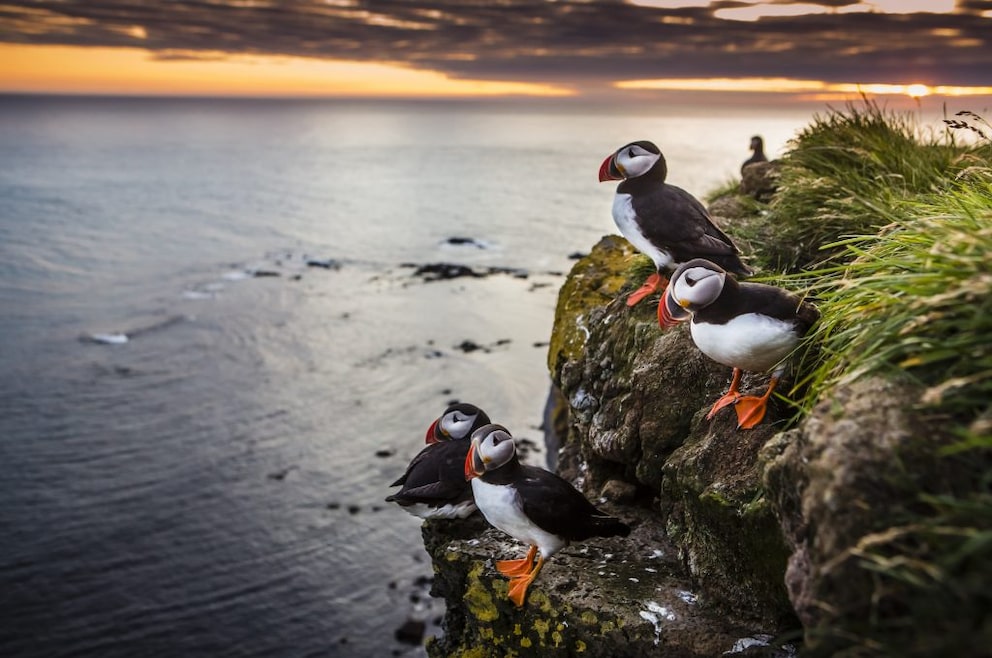
4. More Sheep and Puffins Than Inhabitants
Three hundred sixty-six thousand people live in Iceland. For a country of this size (about 103,000 square kilometers), that’s quite few. There are more sheep (500,000) and puffins (6 million) than residents.
The best deals & stories: Sign up for the TRAVELBOOK newsletter now!
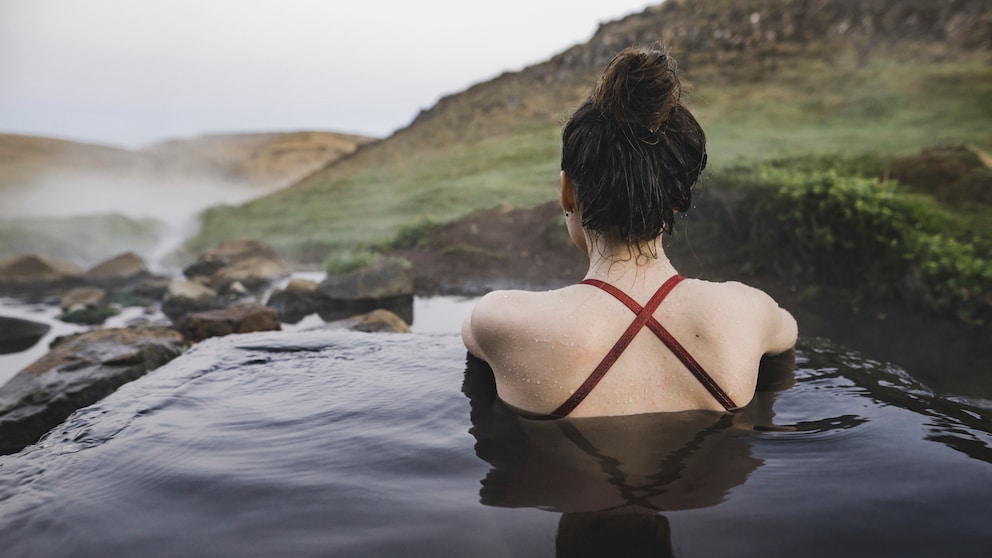
5. 170 Hot Springs
A must for all tourists is a dip in one of the hot springs. There are 170 of them in Iceland.
6. Shoes Unwelcome
When entering a house or apartment in Iceland, you should never keep your shoes on, as this is considered extremely rude and is only allowed if explicitly invited to do so.
Also interesting: Where and when can I see the Northern Lights and how do they form?
7. Sometimes Light, Sometimes Dark
In Iceland, there are long summer nights, such as in June, when it stays light for up to 22 hours. Correspondingly, the days are short in winter: On December 22, there are only about four hours of daylight.
8. Specialty: Fermented Greenland Shark
Gammelhai is the Icelandic traditional dish known as Hákarl. It consists of fermented meat of the Greenland shark. What makes it special is that, unlike most other creatures, it has no kidneys, so toxins from metabolism accumulate in the flesh. During fermentation, the toxins can break down, making the meat edible. Caution: Consuming large amounts can cause diarrhea.
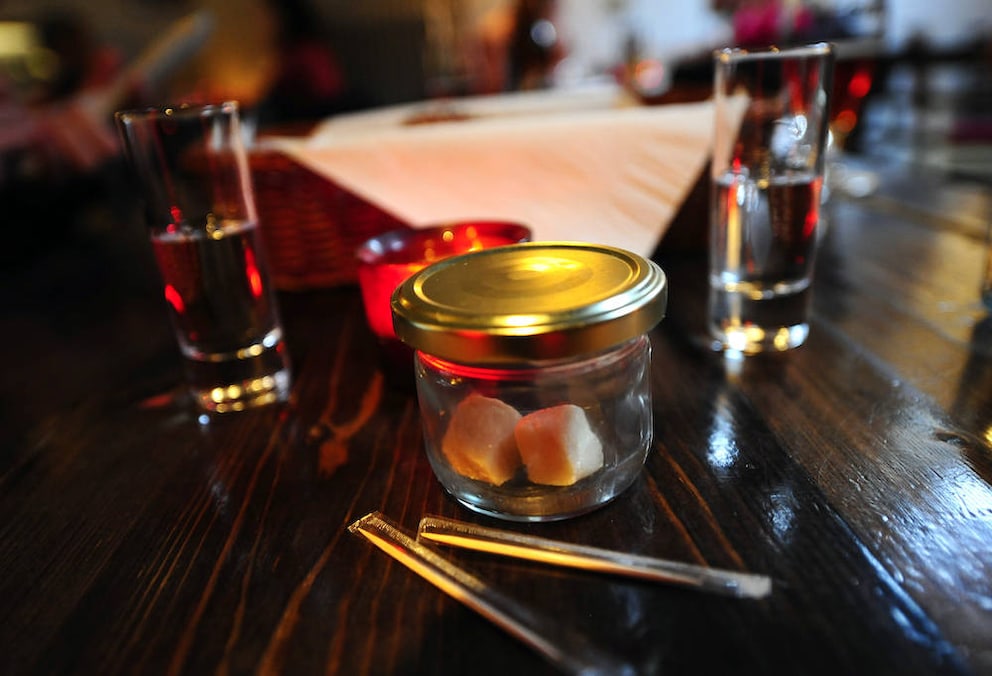
9. Other Icelandic “Delicacies” Include…
… braised sheep’s head, sweet and sour ox testicles, and seal meat.
Also interesting: Westfjords–Iceland’s Fish Paradise in Danger
10. Weather Changes Constantly
“If you don’t like the weather, just wait five minutes,” is how people in Iceland describe the peculiarities of their climate zone. Due to the Gulf Stream, weather conditions can change at any time.

11. Maximum Temperature: 12 Degrees
If you complain about the summer in Germany, you should visit Iceland. Here, the average maximum temperature in August is just 12.3 degrees Celsius. The winter, however, is relatively mild with average temperatures around freezing–also thanks to the Gulf Stream.
12. The “Black Death”
That’s the nickname for the Icelandic schnapps “Brennivín.”
13. 33,000 Soccer Players
According to their own data, there are currently that many in Iceland. Given the population of 360,000, that’s almost 10 percent.
14. Icelanders Live Long
With an average life expectancy of 83 years, Iceland has one of the highest in the world. For comparison, in Germany, the average life expectancy for boys and girls born in 2020 is about 80 years.
15. Largest City Has 120,000 Inhabitants
… and that’s Reykjavík. Thus, more than 60 percent of the population lives in the capital. It is followed by Kópavogur with 38,000, Hafnarfjördur with 30,000, and Akureyri with 18,000 inhabitants.
16. Iceland Has a Women’s Day
… on which all women do nothing–or only what they feel like. This also means that nothing happens in Iceland on this day because the men have to do everything and therefore cannot go to work.
17. Phone Books Are Sorted by First Name
And not by last name as is common elsewhere. Another peculiarity is that last names seem hardly necessary in Iceland. Everyone–whether doctor, teacher, or politician–addresses each other by first name. Incidentally, even the president is said to be listed in the phone book.

18. Why Last Names End in -son or -dóttir
Former soccer player and model Rúrik Gíslason or actor and World’s Strongest Man 2018 Hafþór Júlíus Björnsson are just a few of the most famous Icelanders. But why do they all end in -son? The reason is that Icelandic last names are derived from the father’s first name, with -son meaning son; women have the ending -dóttir, meaning daughter.
19. There’s an Anti-Inbreeding App
“Islendinga” is the app co-developed by Icelander Alexander Annas Helgason. By entering some data, it immediately checks the degree of kinship between two Icelanders–so you can avoid dating someone too closely related.
20. The Speed Limit
The lack of speed limits on some highway sections impresses many tourists in Germany. On Iceland’s roads, you can drive a maximum of 90 km/h, and that’s only on paved country roads. Otherwise, the speed limit is 50 km/h in towns and 80 km/h on unpaved gravel roads, of which there are many.
Also interesting: Is there a sunken continent under Iceland?
21. The First International Match…
… Iceland played was against Denmark in 1947–and they lost 0-3.
22. What the Colors of the Flag Mean
Blue, red, and white are the colors of the Icelandic flag. They represent the mountains, volcanic fire, and snow and glaciers.
23. Movies Are Shown in the Original
All films in Iceland are shown in the original language with Icelandic subtitles. Tourists who speak English can therefore easily watch Hollywood movies while on vacation.
24. Languages
In addition to Icelandic, Icelanders also speak English and Danish. The latter is taught as a compulsory subject in school.
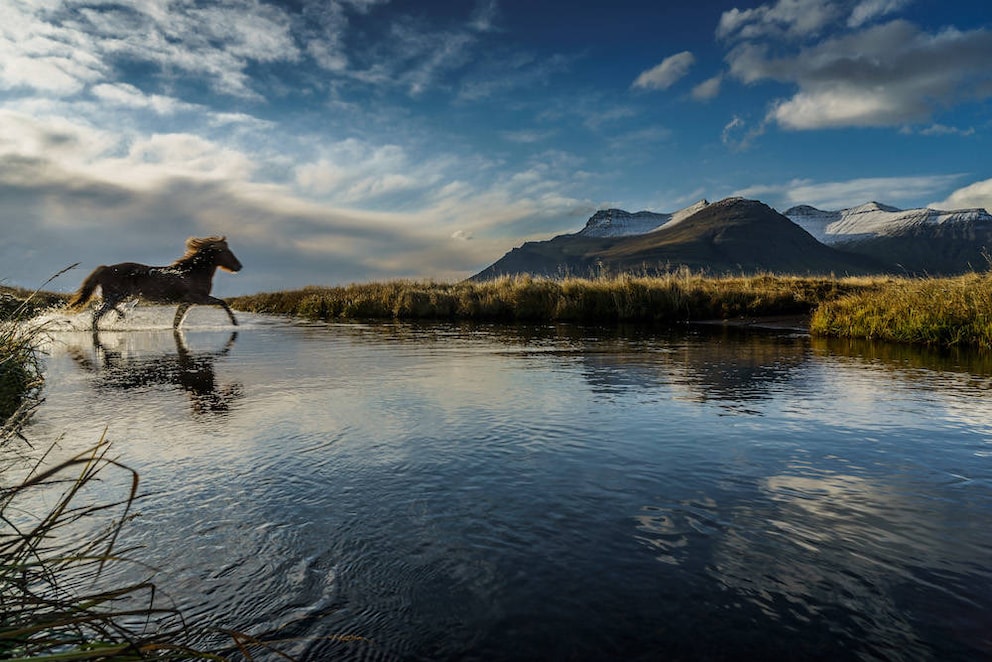
25. What Can Be Called an Icelandic Horse
Only animals whose lineage can be traced back without gaps are recognized as Icelandic horses or ponies. Therefore, horses born in Iceland that have left the island cannot be reintroduced.
26. There’s a Penis Museum
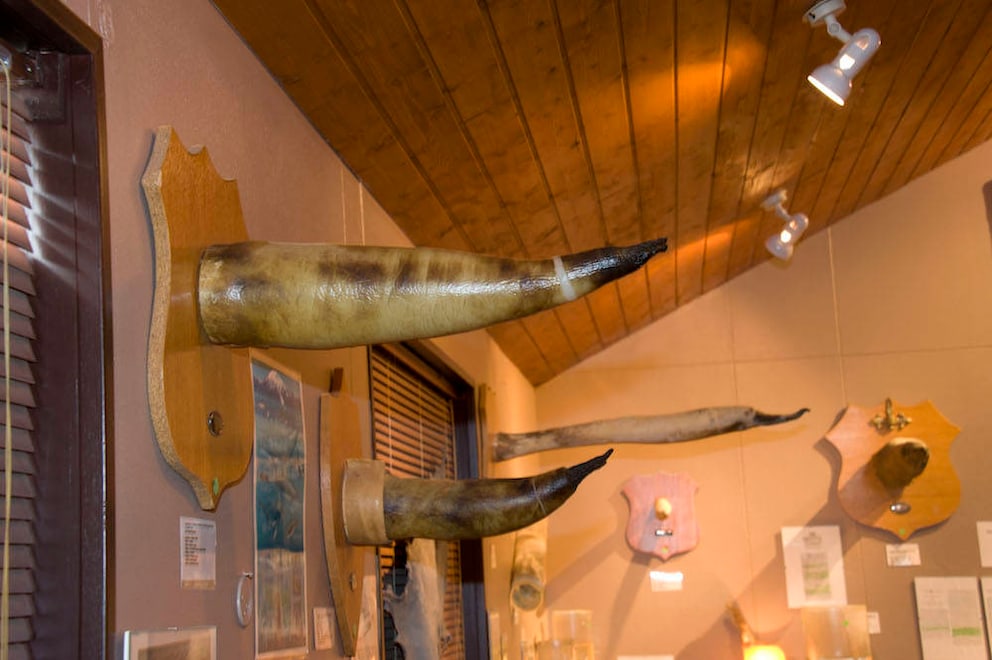
In Reykjavík, there is the Icelandic Phallological Museum, which currently exhibits more than 280 phalli and phallic parts from mammals of all kinds, including: 55 specimens from whales, one from a bear, and 36 from seven species of seals and walruses. Since 2011, a human penis has also been on display in the museum.
27. Father and Son on the Same Team
Arnór Guðjohnsen and his son Eiður Smári Guðjohnsen played simultaneously on the Icelandic national team in 1996–a unique occurrence worldwide.