

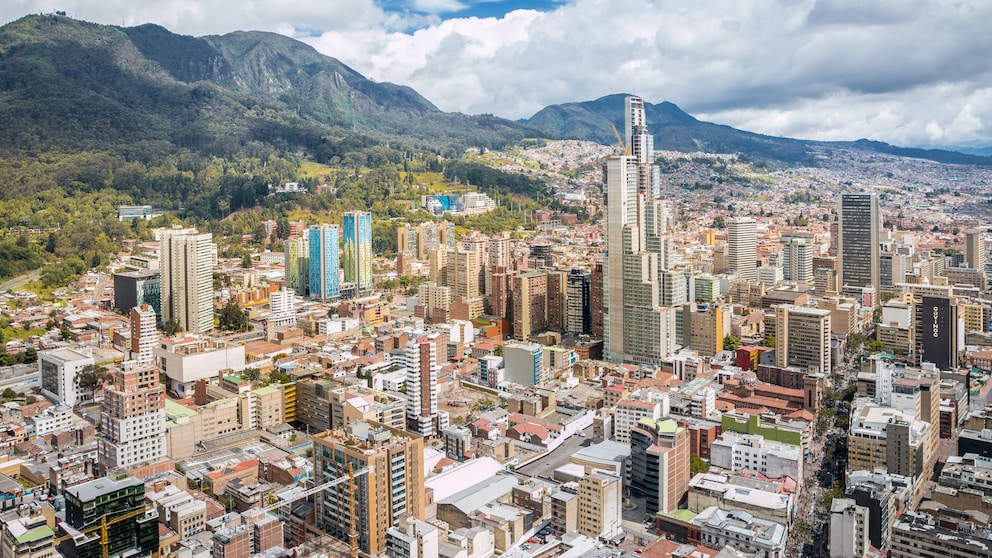
August 23, 2022, 4:12 am | Read time: 10 minutes
You want to go on vacation but don’t know where to go–to the beach, the mountains, or a trendy city? Or maybe something exotic like the jungle and exploring sunken cities? Why not do it all together? In Colombia, that’s possible. TRAVELBOOK author Robin Hartmann reveals what you absolutely must see in Colombia.
If you’ve been considering a vacation in Colombia for a while, decide as soon as possible. The country is many things, but no longer a hidden gem. And there’s a reason for that. Colombia is as diverse as almost no other country in South America, offering landscapes from tropical beaches to deep jungles, wild mountains, and exciting cities that leave nothing to be desired. Additionally, Colombia scores with relatively affordable prices and a well-developed tourist infrastructure.
Moreover, Colombians regularly rank among the happiest nations worldwide. This joy of life is palpable everywhere and very contagious. Add to that the exceptionally rich and partly exotic cuisine, and the result is an extraordinary vacation that will meet all expectations. Here are our TRAVELBOOK tips for an unforgettable vacation.
More tips and inspiration about Colombia are provided by Nina Röber (Instagram: ninarober) in the following podcast episode of In 5 Minuten um die Welt:
Top Destinations in Colombia
Cartagena
Personally, Cartagena is the most beautiful city I’ve seen in South America so far. This is partly due to its colonial charm with many colorful houses, but also to the Caribbean weather, proximity to the sea, and unique nightlife. Cartagena’s old town is very well preserved and invites you to stroll through its alleys. Many of the houses there are painted in bright colors like sky blue, yellow, and red. In Cartagena’s old town, bars line up one after another, and restaurants follow suit. In the midst of it all, countless shops and street vendors sell souvenirs like hats, handmade jewelry, and the obligatory soccer shirts of the Colombian national team.
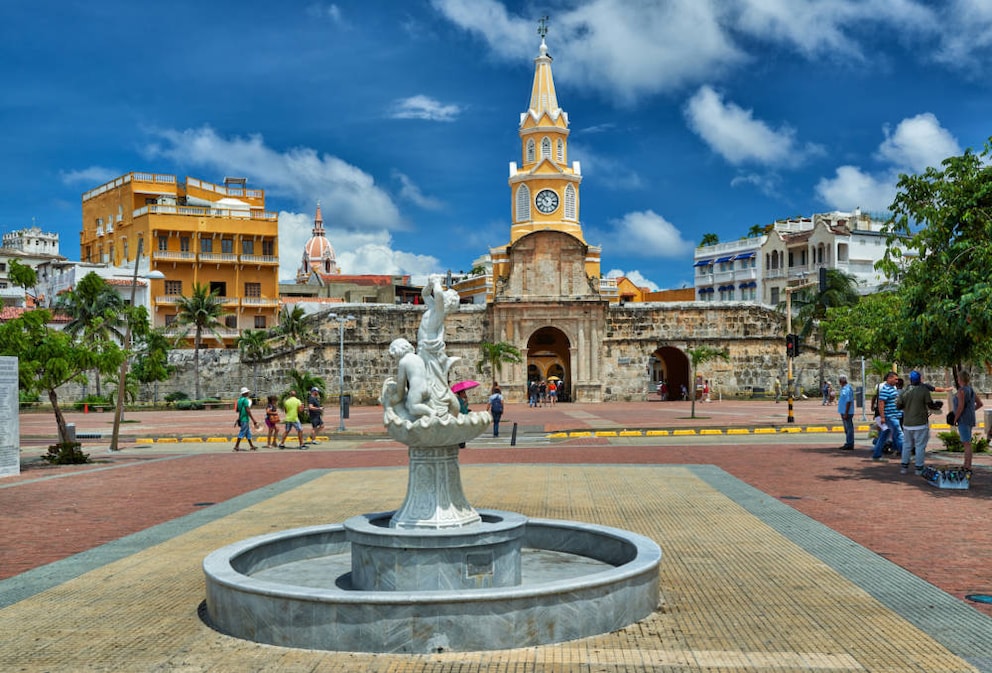
With its numerous hostels, Cartagena offers perfect conditions for backpackers from all over the world. Many hostels are located in the trendy Getsemani district, which also features breathtaking street art.
If you want to take it easy in Cartagena, you can visit the beach in Bocagrande or take a boat to Barú Island or the Rosario Archipelago. There, you can marvel at the underwater world during a snorkeling tour–but you’ll also get an impression of what mass tourism can do. The once thriving corals are now mostly dead. A truly unique experience is a bath in the El Totumo mud volcano, which was once active and whose mud is now used for therapeutic purposes due to its mineral content. I could probably write a small book about Cartagena’s charms alone–but it’s time to move on.
Also interesting: Caño Cristales in Colombia–The Most Beautiful River in the World
Santa Marta
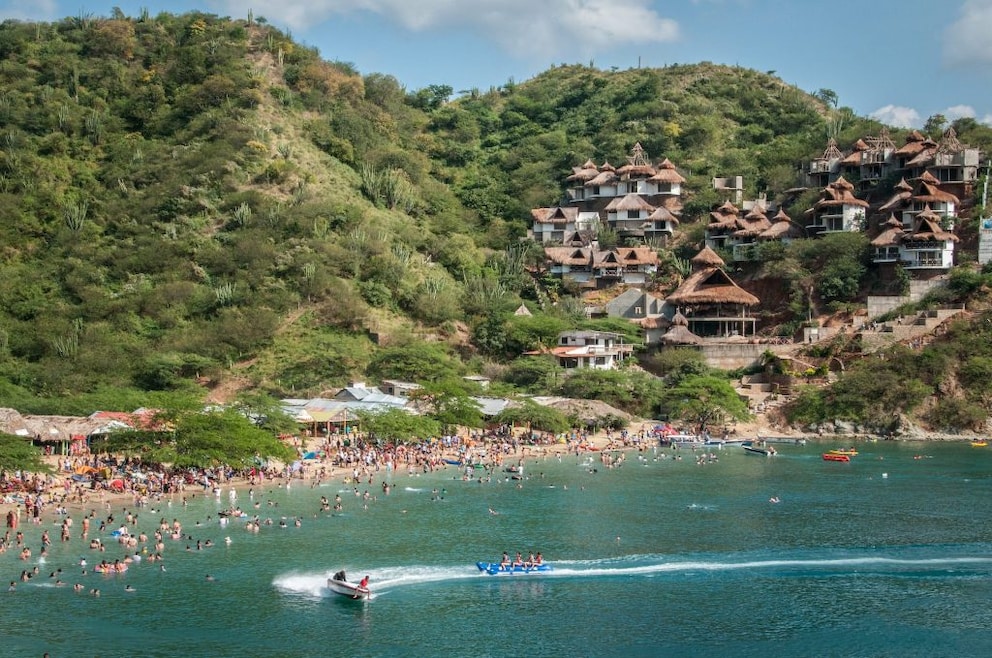
A few hours north of Cartagena is the small town of Santa Marta, near which are some of the country’s most beautiful beaches. Only about 40 minutes away by bus is the Tayrona National Park with postcard-perfect beaches like Cabo San Juan de Guia.
The panorama here is reminiscent of images from the Seychelles. Huge stones rounded by the sea are piled between palm trees, powdery sand, and crystal blue water. The park also offers other bays that can be easily reached by boat from the fishing village of Taganga. Backpackers will want to stay in Taganga rather than Santa Marta. Here, there are affordable hostels and a somewhat dusty but all the more genuine charm.
It’s quirky that there isn’t a single paved road in the whole village, yet tourists can find burgers, pizza, and increasingly vegetarian and vegan cuisine everywhere. A real alternative is cooking, especially since you can buy the catch fresh from the boat from the fishermen. This means, among other things, lobster for just a few euros.
If you prefer an active vacation to a beach one, you’ll also get your money’s worth. Here, you can get your diving certification very cheaply or go hiking. The most famous multi-day tour leads through the jungle of the Sierra Nevada de Santa Marta to the Ciudad Perdida, a trek of more than 50 kilometers to the ruins of the ancient Tayrona civilization that once settled here. The journey is the destination here, but the “Lost City” is unique and very impressive. There’s probably nothing more exciting than spending a night or several nights in the jungle.
Convenient: A shuttle bus runs between Cartagena and Santa Marta/Taganga, taking you between the two cities once a day for a fair price and dropping you off directly in front of the respective hostel.
Medellín
Medellín is also called the “City of Eternal Spring” due to its mild climate and is nestled in the Aburrá Valley surrounded by mountains. The city, once ruled by drug lord Pablo Escobar, has undergone a remarkable transformation. For example, the murder rate has dropped by 95 percent since his death in 1993, and poverty by 66 percent. In 2016, Medellín won the Lee Kuan Yew World City Prize, one of the most important urban development awards. This is partly due to the good and safe public transportation and the generously expanded infrastructure for cyclists.
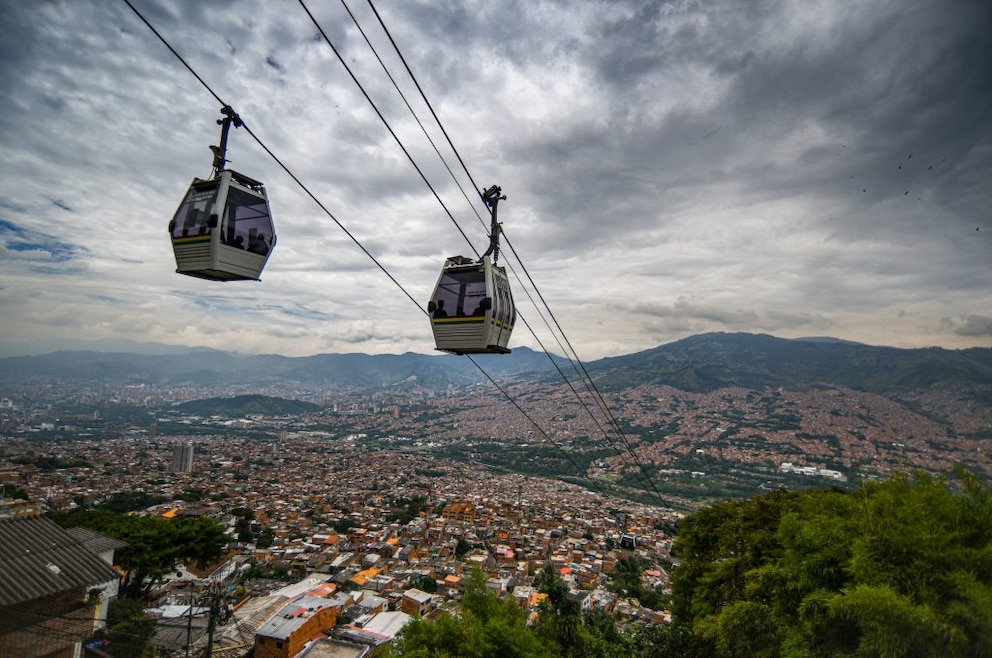
The “Metrocables”–cable cars that take you to the hills around the city and, for example, to the Arví National Park–are spectacular. The Arví National Park is a 10,000-hectare area where you can go on great hikes, both on your own and on guided tours that cost only about 1.50 euros. If you wish, you can also camp here; some public places with barbecue facilities are set up in the beautiful nature.
Within the city, the Parque Berrio with numerous sculptures by the famous sculptor Fernando Botero is particularly worth seeing. The thick statues are simply quirky and lovable. On Cerro Nutibarra, you have a great view over the city. Here, there is also an authentic miniature replica of a typical colorful Colombian village and the Medellín Museum.
In Parque Explora, you can learn about many scientific areas and even conduct some amazing experiments yourself. Additionally, it houses one of the largest aquariums in South America, as well as the Botanical Garden and a planetarium. Of course, the numerous hostels centered around the party district of El Poblado also offer tours to the sites of Pablo Escobar’s “activities,” including his grave at the Montesacro Cemetery.
Visitors to Medellín should know that suburbs of the city, like the picturesque Guatapé, are also worth a visit. In the small town, there is a gigantic rock with a lookout tower on its summit. From there, you can look down on the surreal beautiful lake landscape of Guatapé. You can sit for hours and simply can’t take your eyes off the magic of nature.
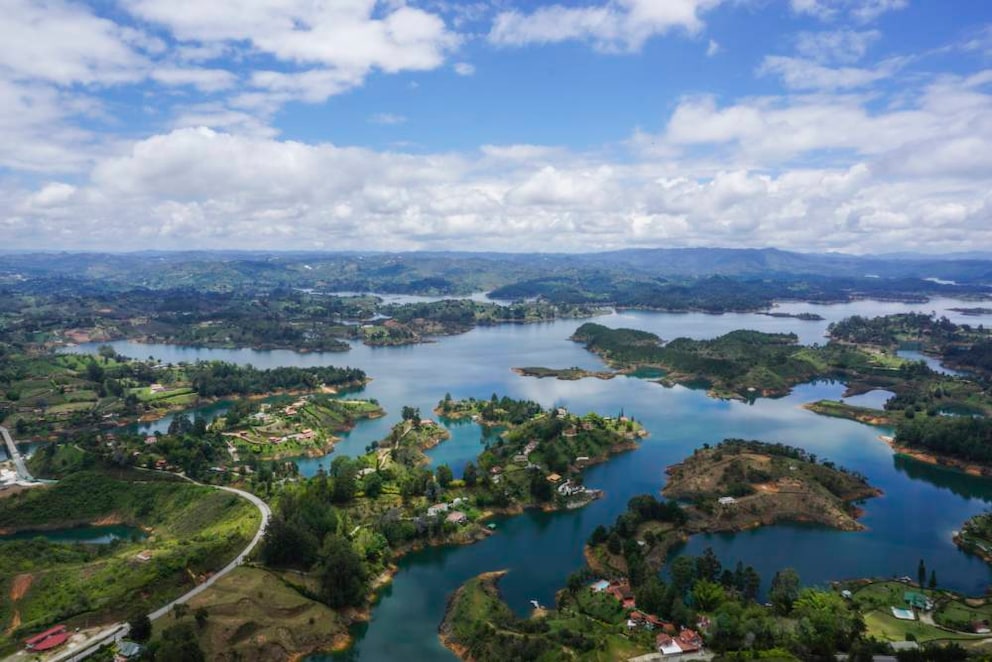
Guatapé itself is a sleepy but colorful village that seems to have fallen out of a fairy tale book. The lakes around the area can be explored on a boat tour. And, of course, you encounter traces of the eternal Escobar here again–in this case, a villa that his enemies from the Cali cartel bombed.
Also interesting: Teyuna–Colombia’s “Lost City” in the Jungle
Bogotá
To be honest, the capital of Colombia didn’t really leave a lasting impression on me. Yet, there are some things worth seeing here. First and foremost, the Montserrate mountain at over 3,000 meters high, from which you have an unforgettable view over the bustling metropolis.
Visitors are drawn to the colorful Candelaria district, where many artists have settled and you can buy souvenirs in countless colorful shops or simply eat well and cheaply. Bogotá’s street art scene is also one of the most exciting in all of South America. At almost every corner, you can admire huge, sometimes even legally painted artworks.
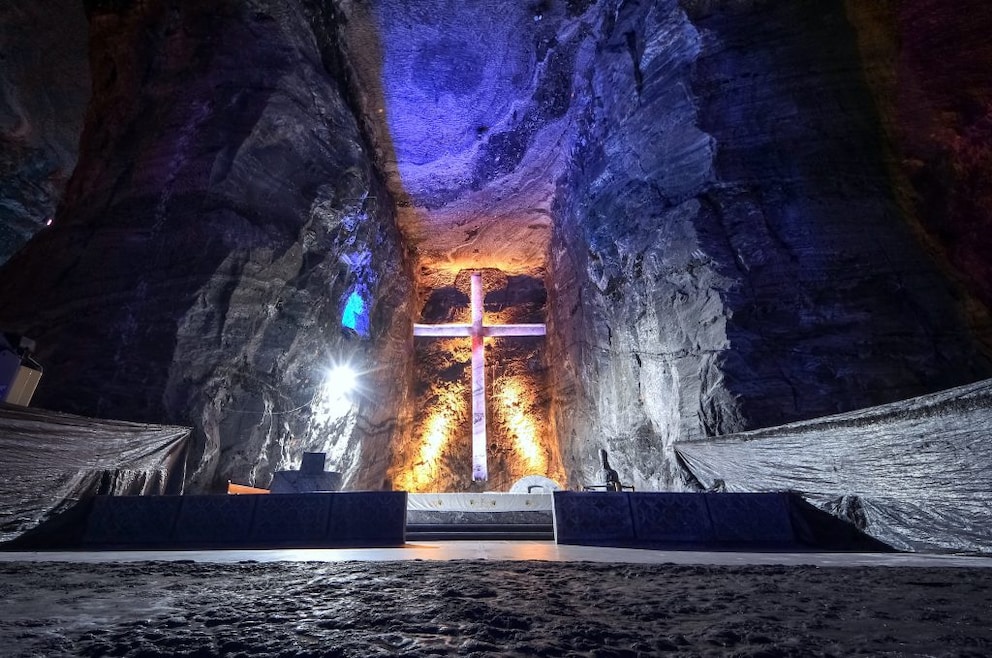
Near Bogotá is the church of Zipaquirá in an old mine. On the way to the underground cathedral, the stations of the cross of Jesus Christ are recreated in various mine shafts. The whole thing is bathed in a ghostly light that also changes color. However, the visit here may not be for everyone. On the one hand, it is often very narrow in the old mine, and on the other hand, you sometimes feel like you can’t breathe well. This may also be because you have to acclimate to Bogotá’s altitude, which is well over 2,000 meters.
The Ideal Travel Route Through Colombia

How I Almost Got Arrested in Colombia–Due to a Small Oversight
Salento
This dreamy small town is located in the heart of the world-famous “Eje Cafetero,” the main growing area for the famous Colombian coffee. Fortunately, modernity has largely passed by Salento. Instead, around the beautiful market square, you’ll find many colorful old houses that make up the charm of the place.
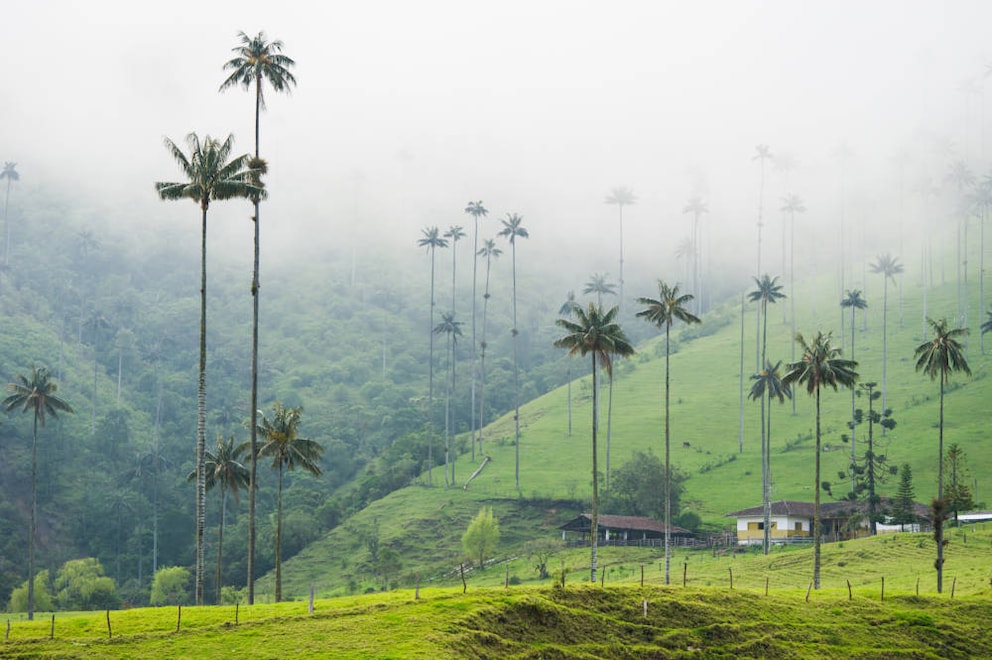
Around Salento, you can undertake numerous beautiful hikes. The most spectacular leads to the Valle de Cocora, a valley lined with wax palms up to 60 meters high, Colombia’s national tree. You hike along a river into the often misty, evergreen hills, through dense forest, and over shaky suspension bridges.
One of the highlights is a kind of mountain hut where you can watch countless colorful hummingbirds attracted by nectar feeders while enjoying a cup of hot chocolate. The colorful play of the birds, which never seem to stand still, captivates everyone. And so you probably spend most of the hike trying to take a decent photo of these little wonders of color.
The river is also an excellent area for trout fishing. But for beginners, there is a small breeding farm at the entrance to the Valle de Cocora where you can catch salmonids fresh from a small pond.
Near the town, there are also some coffee plantations where you can take educational tours about the brew and buy coffee. You won’t find it fresher and more natural than here in Colombia. If you’re looking for entertainment in the evening, you’ll surely find some companions for a game of Tejo. In Tejo, the goal is to explode small bags filled with gunpowder using a throwing stone. A loud and very drink-heavy evening pleasure, and alongside soccer, Colombia’s national sport.

Also interesting: Where “Narcos” Was Filmed: What Cali in Colombia Can Offer
You Probably Can’t See Everything
One thing I want to share with you before your trip to Colombia. The country is more than three times the size of Germany, making it more or less impossible to see everything during a visit. So unless you’re planning a multi-month backpacking trip, you’ll definitely need to put together your own personal highlights.
Note: Detailed information on entry requirements, the current COVID-19 and security situation in Colombia can be found on the website of the Federal Foreign Office.