July 30, 2023, 4:49 am | Read time: 11 minutes
A journey through Bosnia and Herzegovina might be one of the last great adventures on the European continent. In this country, almost entirely covered by forests and interspersed with rivers and lakes, nature takes center stage. In the cities, tourists enjoy the best of a centuries-old culture, shaped by Catholic, Orthodox, and Muslim influences. And in many other ways, this young state surprises. TRAVELBOOK author Robin Hartmann spent a week traveling through the Balkan country and shares his best tips.
When was the last time you returned from a vacation with an inner sense of happiness and the thought, “Wow, this trip far exceeded all my expectations”? These are exactly the emotions that still move me after I recently spent a vacation in Bosnia and Herzegovina, almost by chance. I admit, the initial reason was the incredibly cheap flight price. But the more I read about the small, young state, the more curious I became. And I ultimately experienced a trip that I can unhesitatingly call one of the most beautiful of my entire life.
Also interesting: Why I will never forget my visit to Sutjeska National Park in Bosnia
This was my vacation in Bosnia and Herzegovina
From Berlin, I first headed to Banja Luka, though some airlines also offer flights to the capital, Sarajevo. For me, this small, seemingly unremarkable city was the ideal starting point for my road trip through Bosnia and Herzegovina. The local airport is about the size of a shoebox–I’ve seen shopping centers on the way that were probably ten times larger. A shuttle bus awaits passengers upon arrival and takes them directly to the city center at Krajina Square for five euros or 10 Bosnian Convertible Marks, the local currency. There, you’ll also find the tourist information and a kind of shopping street.
Hot Springs and Fireflies
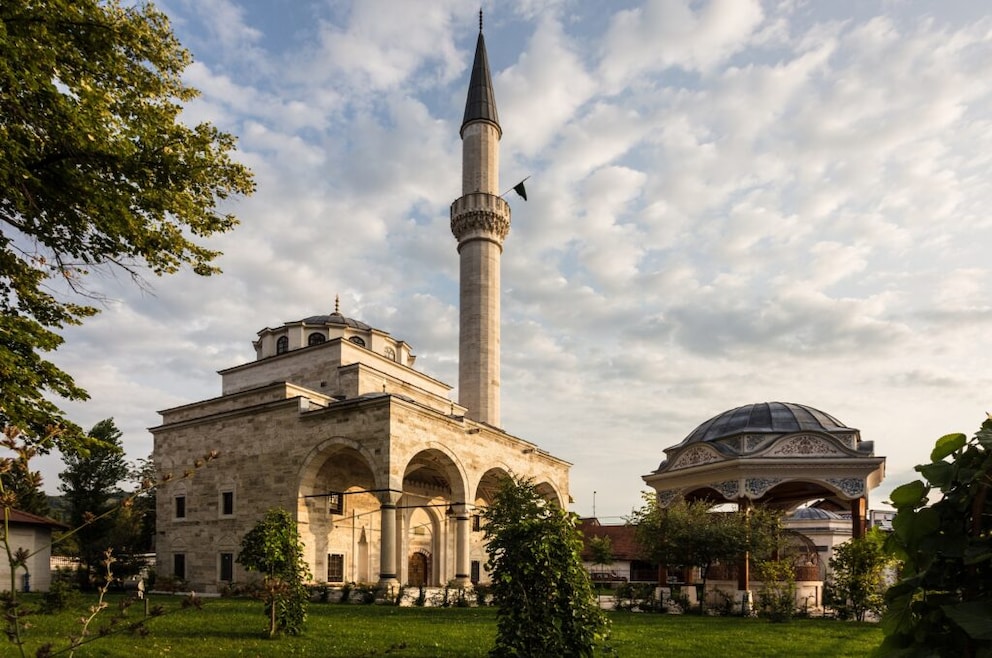
Although Banja Luka is the second-largest city in Bosnia and Herzegovina, all the sights are within walking distance. And indeed, the only obvious place in the center that, in my opinion, deserves this designation is an old, very well-preserved fortress that dates back to the 14th century. A few beautiful churches and mosques, a colorful market that takes place mainly in the mornings, and after a maximum of two hours, you’re practically “done” with the city and feel like you could move on. But that would be a mistake, as Banja Luka is a beauty that only reveals itself to those who are willing to search.
For example, there’s the climb to Banj Brdo, the city’s local mountain. On a road that cars can also use, mainly locals and a few tourists like to walk up here, especially in the evenings, because the view at sunset is truly spectacular. Banja Luka lies like a model landscape, nestled in lush, forested green hills, and with a view into the distance, you can already sense something of the wild beauty of Bosnia and Herzegovina. If you wish, you can then descend through dense forest to the Srpske Toplice, natural hot springs where you can bathe. When I walked the route in early July, countless fireflies lit my way like ghostly fairy lights. The first of countless magical moments on the trip.
Also interesting: The history of the Olympic ruins in Sarajevo
Magically Beautiful Rivers and Lakes
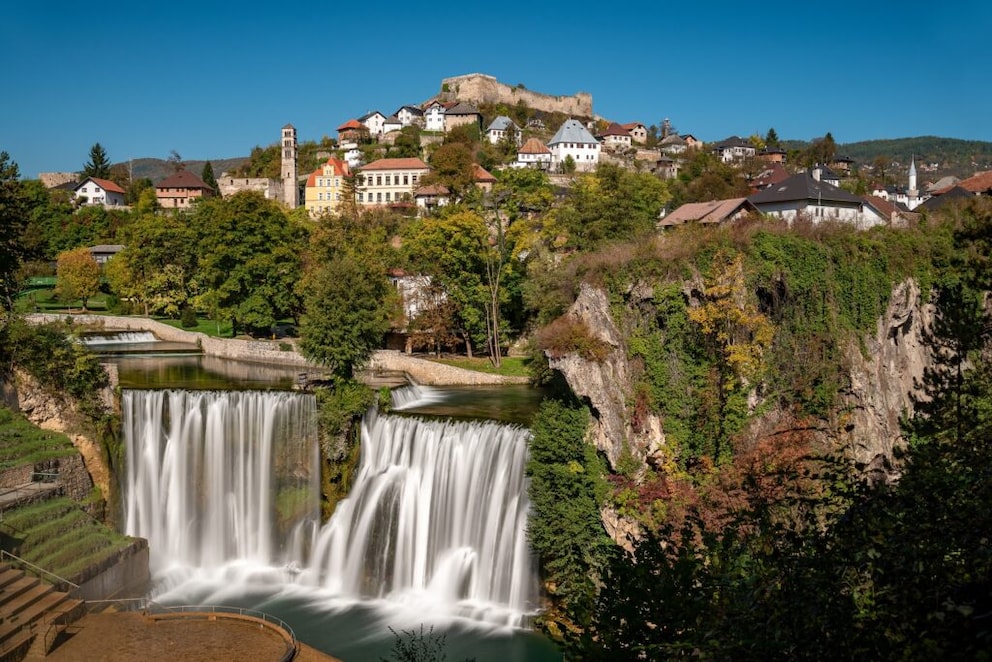
The next day, I continued by bus into the interior of the country. Please check the departure times to your destination carefully before leaving. In my experience, the buses do not always depart reliably at the same time, and even train schedules can vary depending on the day. However, traveling by bus here is comparatively very cheap; you pay about eight euros for a trip to Jajce, about an hour and a half away. A small town that enjoys great popularity thanks to its medieval charm. But the biggest attraction here is a natural wonder, a waterfall that plunges into the depths right in the middle of the town. It is fed by the Pliva River, which flows through Jajce from the mountains.
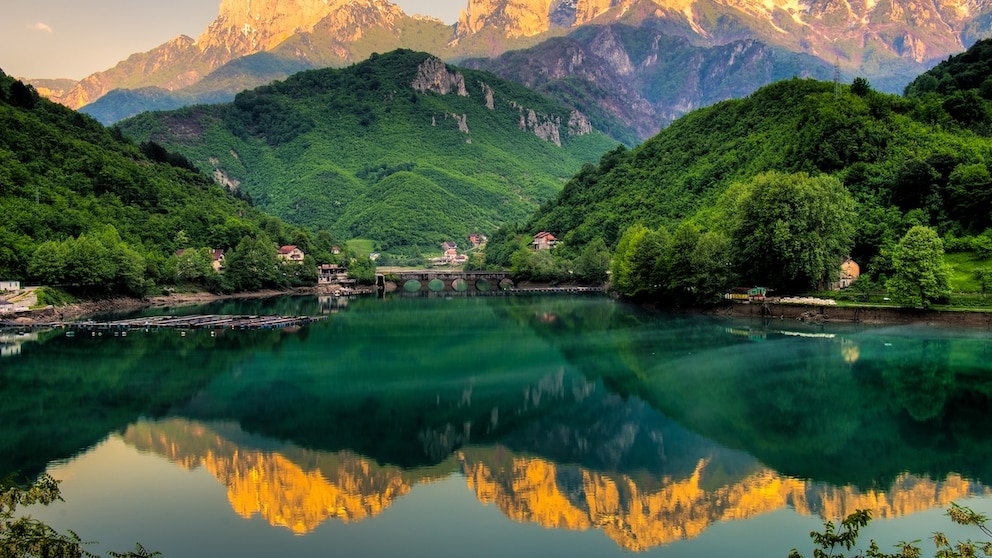
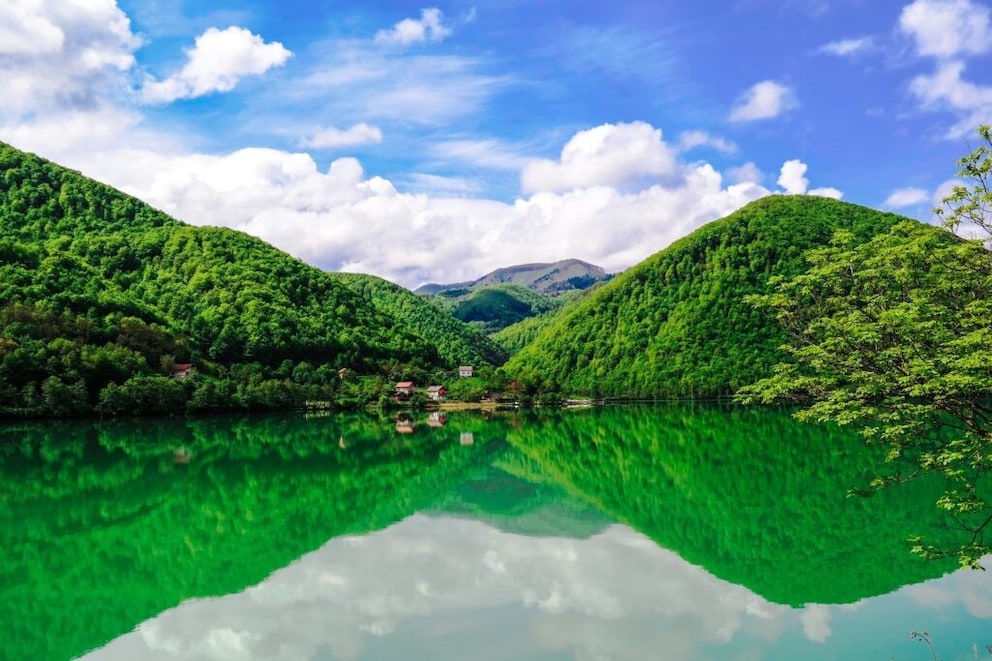
About a four-kilometer walk away are the Great and Small Pliva Lakes, which are undoubtedly among the most beautiful bodies of water in Bosnia and Herzegovina. Like the river itself, they are magically turquoise-green, and the water is a wonderful refreshment, especially in high temperatures. All along the way, it cascades into the densely forested landscape, so you hardly notice that the path runs directly along a fortunately not very busy road. Moreover, there are sidewalks almost everywhere. A must-stop after a wonderful day of hiking and swimming is the sensationally located restaurant “Konoba Slapovi,” where you dine at tables set on a meadow in the middle of the river. The prices here are almost double those of comparable places, but at about 10 euros for a main course, they are still more than affordable for German wallets.
The Hottest City in the Country
On the piazza of Jajce, you can fully indulge in the coffee culture, which is highly valued in Bosnia and Herzegovina. If you want it authentic (and particularly strong), order a “Bosanska Kava,” which is still served in brass pots in some cafes. Accompany it with a sweet treat or a burek (börek) from one of the countless pekaras–the ubiquitous bakeries throughout the country that can satisfy any sudden appetite for incredibly little money. But be careful, outside of restaurants, it’s really hard to find anything else for a small snack in between. So I spent a week more or less on a total burek diet during the day.
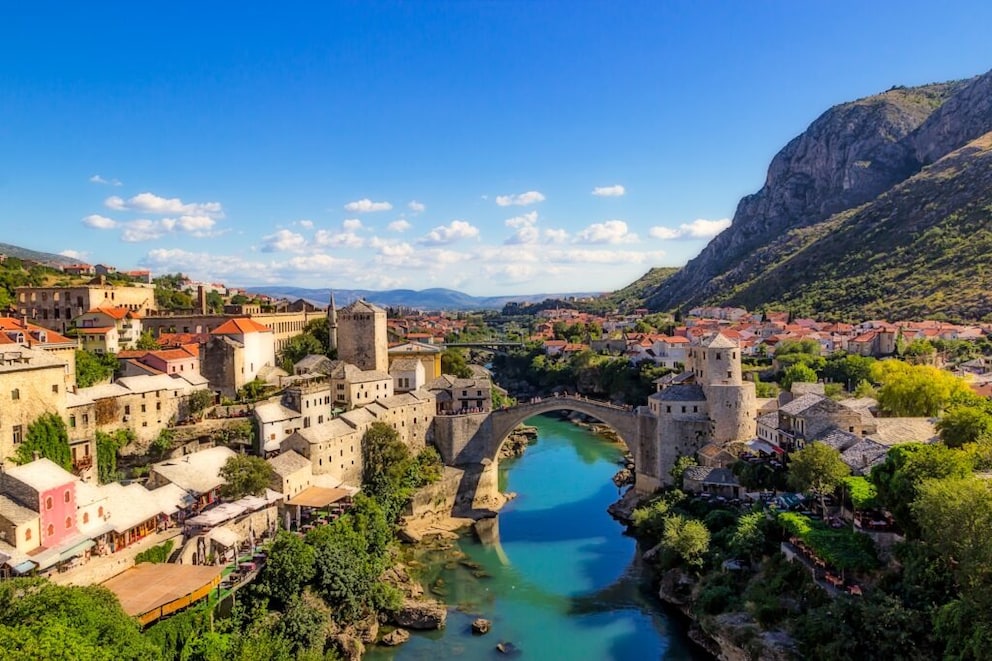
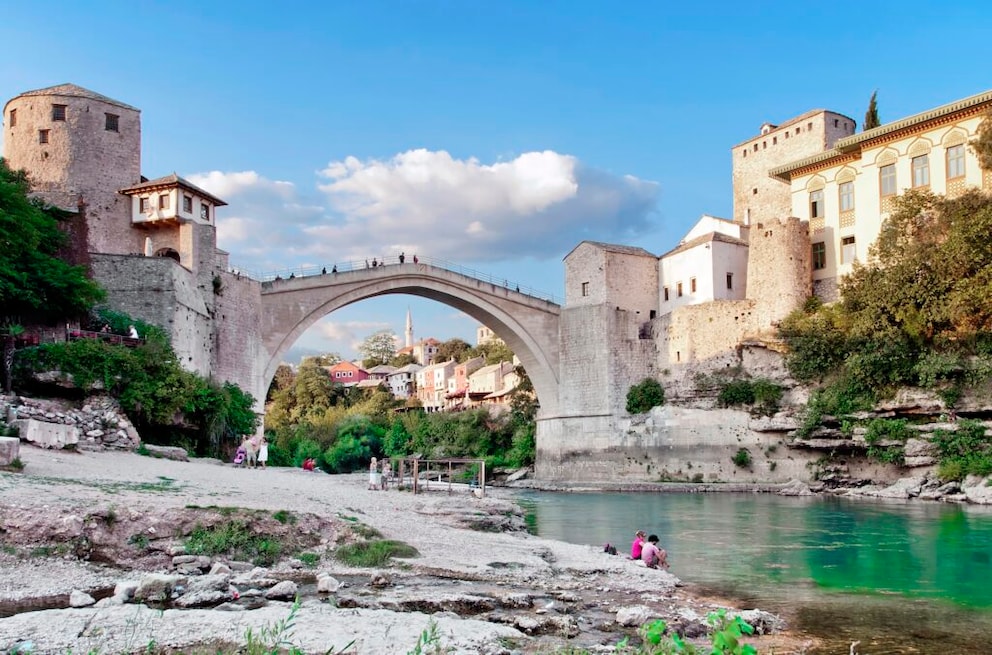
Next, it’s on to Mostar, probably the liveliest and most popular city for tourists in all of Bosnia and Herzegovina. The drive here from Jajce alone is an attraction, as the road winds through an evergreen landscape where gentle hills soon give way to the first barren peaks of the Dinaric Alps. Mostar, located in a basin, is considered the hottest city in the country, where summer temperatures around 40 degrees are not uncommon. You can find relief in the city center at a stone beach on the Neretva River. From here, you also have the best view of the famous bridge of Mostar, the town’s main attraction.
Also interesting: Sarajevo: The best tips for vacation
Even More Beautiful at Night
Like something straight out of a Game of Thrones episode, small cobblestone alleys wind through the picturesque old town of Mostar. The crowds of tourists who shuffle from shop to shop here are a medium-sized shock after the previously quiet days. If you want to maintain the illusion that Bosnia and Herzegovina is still a completely undiscovered paradise for adventurers, you should avoid Mostar during a vacation. At least during the day. Because around 10:30 p.m., many of the guests have already disappeared to their beds or elsewhere. And then Mostar unfolds an almost magical charm. Now you can move at your own pace, perceiving the wonderful, Muslim-influenced old town in a completely different way. There was even a moment well after midnight when I stood alone on the bridge and once again marveled at the fortune of having come to this wonderful country.
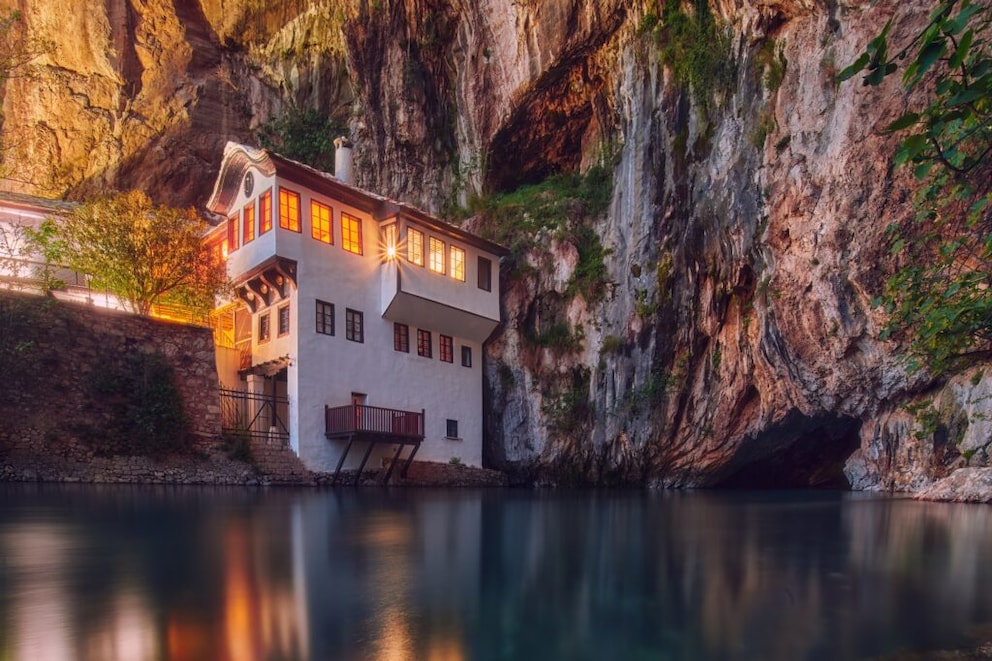
From Mostar, you can also take city lines 10 and 12 to nearby Blagaj. Here, the Blagaj Tekija, a former monastery, attracts true masses due to its unique location. It seems to be carved directly out of a steep rock face. Swallows and other bird species nest here, and the source of the Buna River springs from a nearby cave. The monastery itself can be visited in ten minutes. Unfortunately, the magic of the place is desecrated by a veritable amusement park of restaurants and souvenir stalls surrounding the building. Additionally, especially in summer, up to a thousand people come here daily.
Quirky Sarajevo
Then it’s on to Sarajevo, on a route described in countless blogs and travel forums as one of the most beautiful in Europe. It leads along the water through wonderfully green, mountainous terrain. If possible, take the train. It not only arrives about an hour faster than the bus but is also significantly cheaper. However, I barely noticed Sarajevo itself outside of the old town. I spent only one evening here, to then go on a tour to Sutjeska National Park early the next morning. It is the oldest in all of Bosnia and Herzegovina.
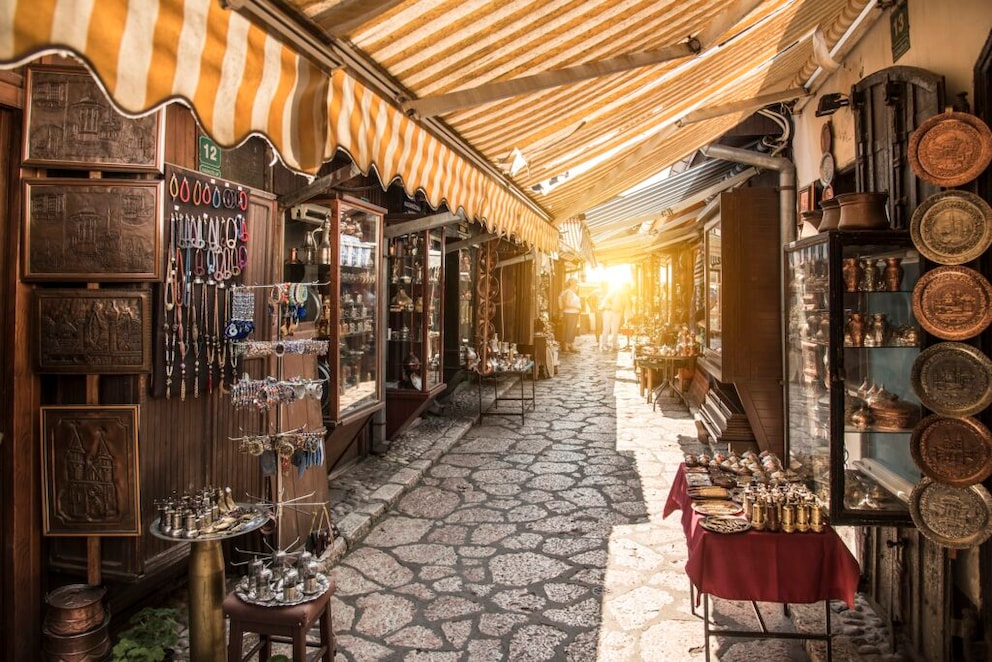
What remains in my memory, however, is the hopelessly overcrowded, Muslim-influenced old town. Like in Mostar, it seems to consist only of souvenir shops and restaurants. Additionally, there’s the so-called Latin Bridge, where the assassination of Archduke Franz Ferdinand and his wife triggered World War I. But only an inconspicuous plastic sign reminds of the tragedy. It almost seems as if the city would rather hide the place. It was also in Sarajevo that I almost spent two hours looking for accommodation due to my own fault. But that wasn’t because there weren’t any, but because of a quirk of mine. After having stayed incredibly cheaply the whole week, sometimes paying just 15 euros for a single room in a good hostel, 35 euros in a hotel in the middle of the old town suddenly seemed utterly utopian to me.
Also interesting: The best travel routes for the Balkans

Why I Almost Never Plan My Trips
Europe’s Most Beautiful Natural Paradise You’ve Likely Never Heard Of
Only for Experienced Mountaineers
But almost all adventure agencies start their trips into the truly wild nature of the country from Sarajevo. That’s why I let myself be picked up in front of my hotel here. Sutjeska National Park is located right on the border with Montenegro near the small town of Tjentište and boasts several superlatives. For one, it is home to Maglić, the highest mountain in the country at 2,386 meters. For another, it has the Perućica rainforest, the oldest of its kind on the entire European continent at 20,000 years old. Caution: Sturdy footwear is absolutely essential for visiting both natural wonders if you don’t want to recklessly put yourself in potentially life-threatening danger.
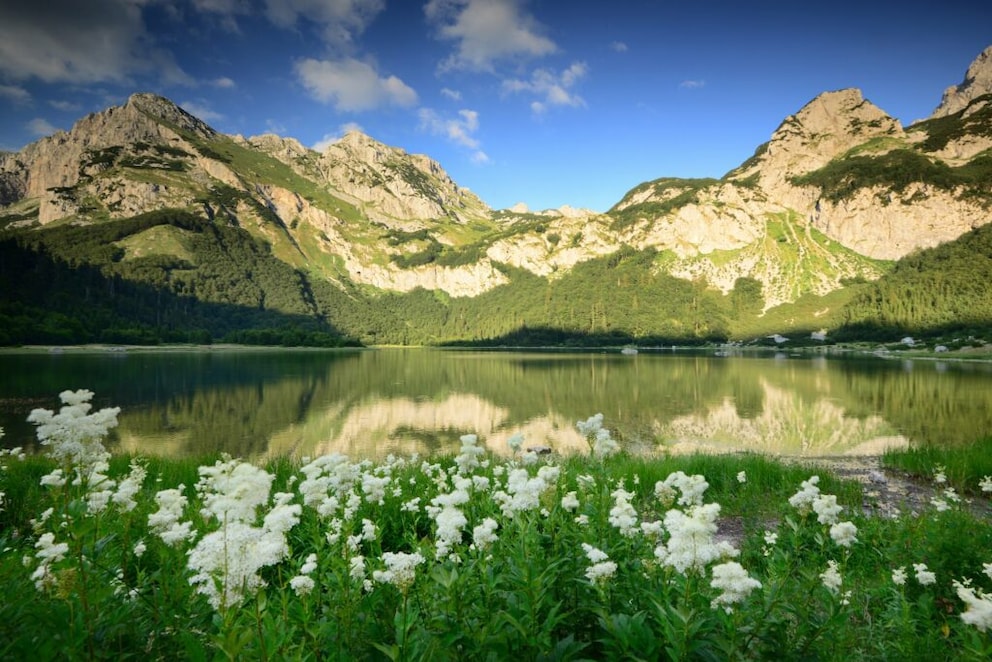
However, those who come prepared and with good physical condition will experience a magical weekend here. The ascent to the summit of Maglić is very short at about two and a half hours but technically very challenging. Locals told me in the evening after the tour that the mountain is an eight on a scale of ten. There are some sections secured only with a steel cable. Here, you go more or less vertically uphill in one direction, while in the other, just a foot away, yawning abysses several hundred meters deep await. Those with no or little experience in hiking or even mountaineering really have no business here.
Where Wild Bears Still Live
The view from the summit, however, rewards all the hardships. An incredible panoramic view of mountains, some of which are in nearby Montenegro. The descent begins moderately with a hike over a plateau covered in wildflowers. The last hour, however, is down a scree slope so steep that members of my group had to slide down on their backsides. The only motivation is that the day’s destination, Trnovačko Lake, shimmering like a blue diamond in the mountain landscape, is already visible from afar.
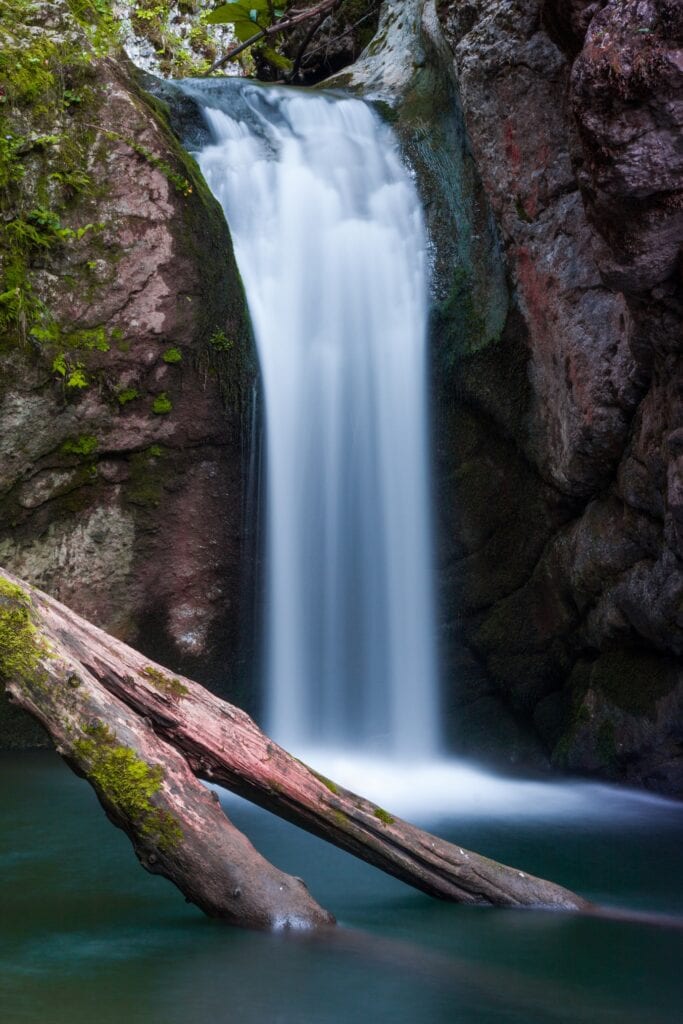
A starry night by the campfire at the relatively warm mountain lake is one of those memories you’ll never forget. Just like an early morning hike towards the Perućica forest when the landscape is still shrouded in ghostly mist. Here, a very steep path leads to another natural highlight, the nearly 80-meter-high Skakavac waterfall. Entering this forest, where bears still live, is only allowed with a guide. With these impressions in mind and heart, I then set off from Sarajevo back to Banja Luka the next day. I had an incredible week. And I want to see so much more in Bosnia and Herzegovina that it should be enough for numerous more vacations. I’m already looking forward to coming back soon and say from the bottom of my heart Hvala. Thank you for this unique adventure.