

December 28, 2022, 5:09 am | Read time: 8 minutes
Andalusia’s “Sun Coast,” the wild Costa Brava, or Galicia’s “Coast of Death”: Spain’s coasts sometimes bear peculiar names. Often, tourism plays a role in this–but not always.
From the vast Mediterranean beaches of Andalusia to the rocky Costa Brava and the green fjords in the north on the Atlantic: The Spanish mainland alone boasts 4,000 kilometers of coastline. Most coasts in Spain have tourist fantasy names. An overview from north to east to south.
Find more inspiration about Spain and specific places from this article in our special podcast episode In 5 Minutes Around the World:
An Overview of Spain’s Coasts
Overview
Galicia’s Stormy “Coast of Death”
In Galicia, in the far northwest of Spain, the rough Atlantic shapes the flat, wooded rocky coast. It is repeatedly interrupted by powder-white sandy beaches. Deep sea inlets, formed from flooded river valleys, cut into the land.
Thus, the westernmost part directly above Portugal is called Rias Baixas (lower river mouths) and the northernmost section Rias Altas (upper river mouths). Tens of thousands of mussel beds lie in the fjords there. Between the two Rias coasts stretches Spain’s legendary Costa da Morte: Galicia’s “Coast of Death.”
It earned its grim name due to the countless shipwrecks in the 18th and 19th centuries. In 2002, the oil tanker “Prestige” broke apart here, causing a devastating oil spill.
The fierce storms that repeatedly drove ships on the busy sea route onto the offshore islands and reefs already worried the Romans. So, in the early 2nd century, they built the Tower of Hercules in A Coruña to secure the Roman trade route with ancient Britannia.
However, the name “Coast of Death” comes from the British, whose many merchant ships wrecked on the dangerous coastal section. The name first appeared on an English nautical chart in 1907. The coast stretches from Cape Finisterre, the end of the medieval world, up to Malpica.
The Coasts in Northern Spain
Galicia’s neighbors on the northern coast were less creative in naming their coastal sections. Asturias attempted to distinguish itself from the dry Mediterranean region starting in 1969 for marketing purposes. It sought tourists’ attention with the label “Green Coast.” Unfortunately, the reason for the overwhelming greenery of the Costa Verde also deters many vacationers–it’s the rain.
Yet the beautiful sandy beaches are nestled in a picture-perfect landscape of gentle, green hills. A highlight of the Costa Verde is the famous sea geysers between Llanes and Pendueles, which inevitably remind one of Iceland.
Cantabria’s creativity was limited with the Costa de Cantabria. The Basques also simply called their coastal section on the Cantabrian Sea the Costa Vasca, the Basque Coast.
Yet there are emblematic places here: The shell-shaped bay of San Sebastián is considered Spain’s most beautiful city beach. And between Zumaia and Deba, bizarre cliffs and rock formations dominate, making the coastal section a film set for the highly successful fantasy series “Game of Thrones.”
Catalonia’s Wildly Romantic Costa Brava
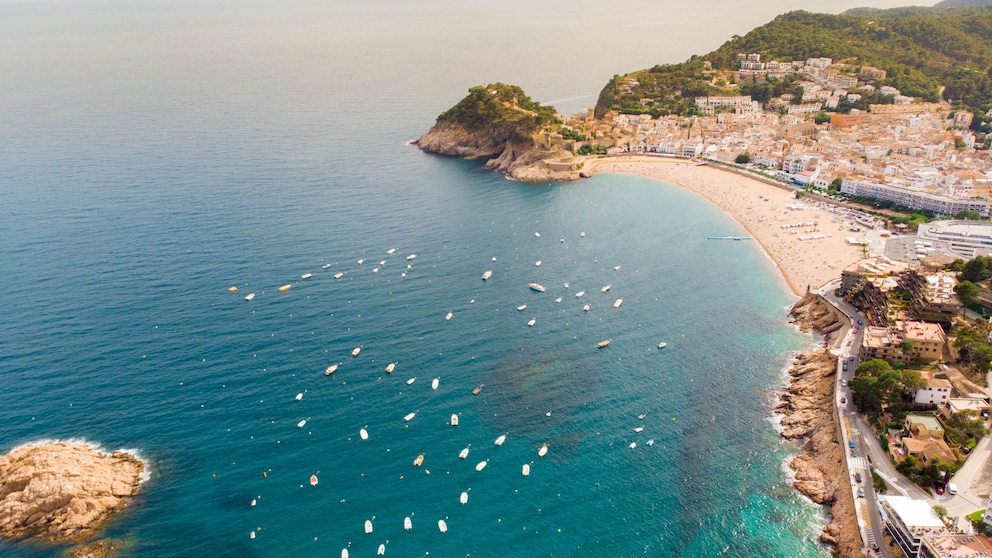
Right behind the French border begins Catalonia’s “wild coast,” the Costa Brava. Steep cliffs, sandy beaches, and partly medieval coastal villages like Calella de Palafrugell, Tossa de Mar, or Cadaqués characterize this Mediterranean section.
Most young vacationers know the Costa Brava more for the party hotspot Lloret de Mar. Yet artists, poets, and writers like Marc Chagall, Picasso, or Rusiñol were fascinated by the wildly romantic coast. In the fishing village of Portlligat at Cap de Creus, the easternmost point of the Spanish mainland, painter Salvador Dalí lived and immortalized the unusual rock formations in many of his surrealist masterpieces.
However, it was the local writer Ferran Agulló who first referred to the nearly 200-kilometer-long coastal section north of Barcelona as Costa Brava in the magazine “La Veu de Catalunya” in 1908. By 1965, with increasing tourism, the name was also used as an official designation and brand label.
Spain’s “Gold Coast”
South of Barcelona stretches the Costa Dorada, Spain’s “Gold Coast.” The name comes from the golden sand of the long beaches, first used by a tourism provider in 1958 for a brochure to promote the region.
The coastal city of Tarragona attracts visitors with Roman city walls and amphitheaters. To the south is the Ebro Delta nature and bird sanctuary. However, it is the amusement parks Port Aventura and Ferrari Land that draw most visitors.
Valencia’s “Coast of Orange Blossoms”
What a name: Costa del Azahar, the “Coast of Orange Blossoms.” Naturally, the marketing strategists of the Valencian tourism office had it easy here. The mountainous hinterland of the coastal section between Valencia and Denia is Spain’s main producer of oranges. Besides the coastal metropolis of Valencia, the charming coastal village of Peñiscola with its medieval fortress is a tourist magnet in the region.
White, Crowded, Built-Up: the Costa Blanca
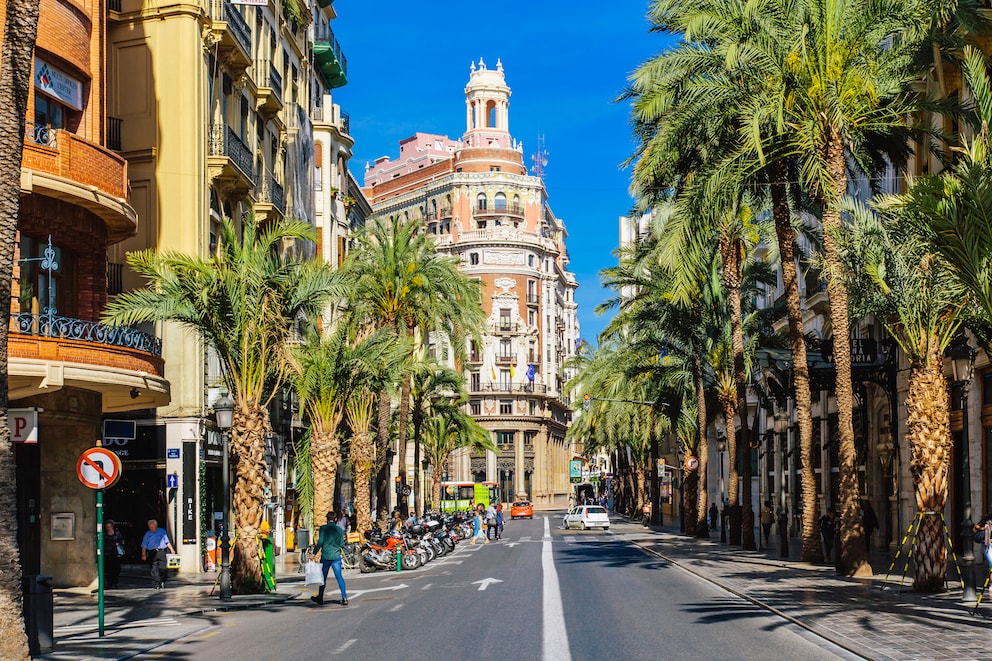
The origin of the name Costa Blanca is unclear. The “White Coast” was not named for the color of the beaches. Rather, it was due to the snow-white houses in many towns. Another theory suggests British Airways invented the slogan in 1957 to sell flights to Benidorm. Even then, high-rise hotels were sprouting between Denia and Alicante. The beaches are grand and long, but also very crowded and built-up.
The “Warm Coast”
Further south: On the Costa Cálida in the province of Murcia, we find ourselves in a particularly hot and dry coastal region of southern Spain. The name “Warm Coast” was given not only because of the average annual temperature of 18 degrees Celsius. The water is also five degrees warmer year-round than at other Mediterranean beaches. The region attracts visitors with the remarkable Cartagena and Europe’s largest saltwater lagoon, Mar Menor.
The Costa de Almería, on the other hand, does not bear a name crafted by tourism authorities. However, it features one of the most unspoiled coastal sections, especially in the Cabo de Gata Natural Park. Dunes, steppes, and cactus fields characterize the natural beaches. Nearby lies Europe’s only desert.
Sergio Leone filmed his spaghetti westerns there, in the Tabernas Desert. Sean Connery appeared as secret agent James Bond in “Never Say Never Again” on the Mónsul desert beach, and Arnold Schwarzenegger fought there as “Conan the Barbarian.”
The “Tropical Coast”
Costa Tropical–the tourism strategists may have exaggerated a bit with this name. Nevertheless, the coast of Granada between the Sierra Nevada and the Mediterranean indeed has a subtropical microclimate. Fruits like pineapples, papayas, bananas, mangoes, and avocados thrive there. The coast is dotted with lively coastal villages like Calahonda, Almuñécar, or Salobreña. Small coves like Cala Rijana entice with crystal-clear water.
Granada’s “Tropical Coast” has always been overshadowed by the world-famous neighboring Costa del Sol. Originally, it was part of the “Sun Coast” itself. It was the Austrian hotelier Rodolfo Lussnigg, living in Almería, who first used the term Costa del Sol in 1928 to attract tourists to the Mediterranean coast between Almería and Gibraltar. The name was justified by 320 sunny days a year.
However, from the 1960s onwards, the region around Málaga, Marbella, Torremolinos, Estepona, and Nerja attracted tourist masses. It became internationally associated with the term “Sun Coast.” So, about 30 years ago, the communities on Granada’s coast decided to adopt the name Costa Tropical.
The “Coast of Light”
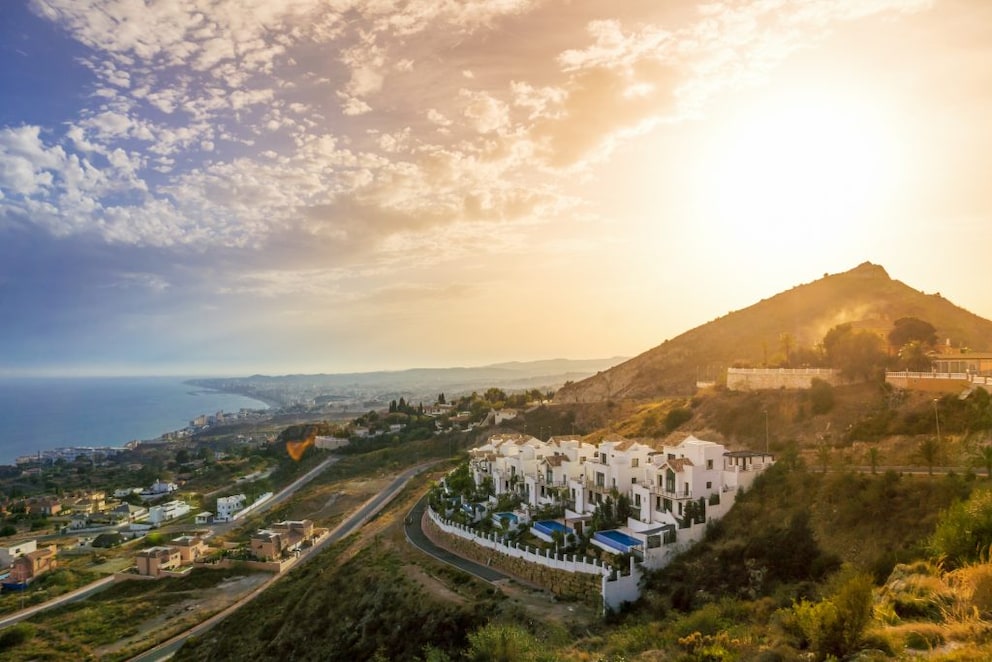
Andalusia’s Atlantic coast from Gibraltar to the border with Portugal has just as much sun as the “Sun Coast” on the Mediterranean. But since the term was already taken, it was simply called Costa de la Luz. The “Coast of Light” boasts the longest, most beautiful, and unspoiled sandy beaches in Spain.
They are repeatedly interrupted by picturesque, whitewashed coastal towns like Conil de la Frontera or Tarifa. The area around Tarifa is a world-renowned surf hotspot. Here, the wind always whips through the Strait of Gibraltar. Africa and Morocco are only 13 kilometers away and feel within reach.
Further east lie Cádiz, Spain’s oldest city, and the famous Doñada Natural Park. In the monastery of La Rábida near Huelva, Columbus unknowingly prepared his discovery of America. The miles of natural sandy beaches have likely changed little since then.
With material from dpa