

December 30, 2024, 1:02 pm | Read time: 7 minutes
In 2024, our author had the fortune of visiting Ethiopia twice. The southern part of the country particularly enchanted him: barren, horizon-spanning solitude, unique nature, and fascinating people who, in some cases, still live as their ancestors did. However, he also saw a region whose charm is threatened by tourism like few other places.
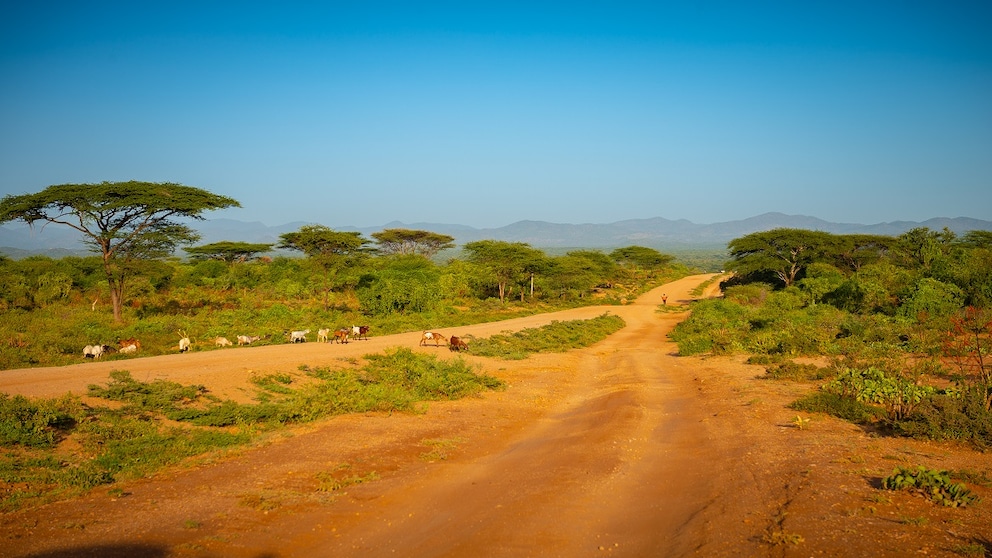
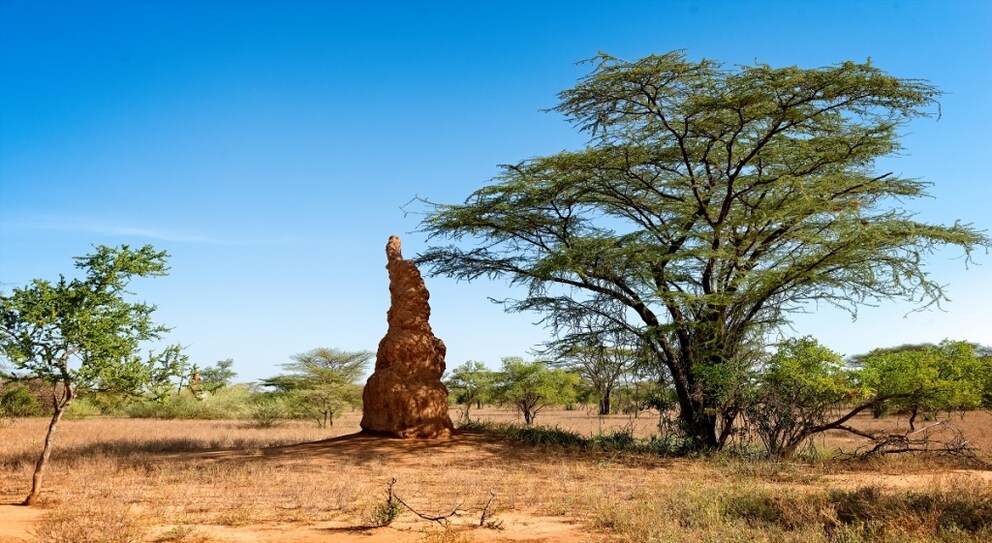
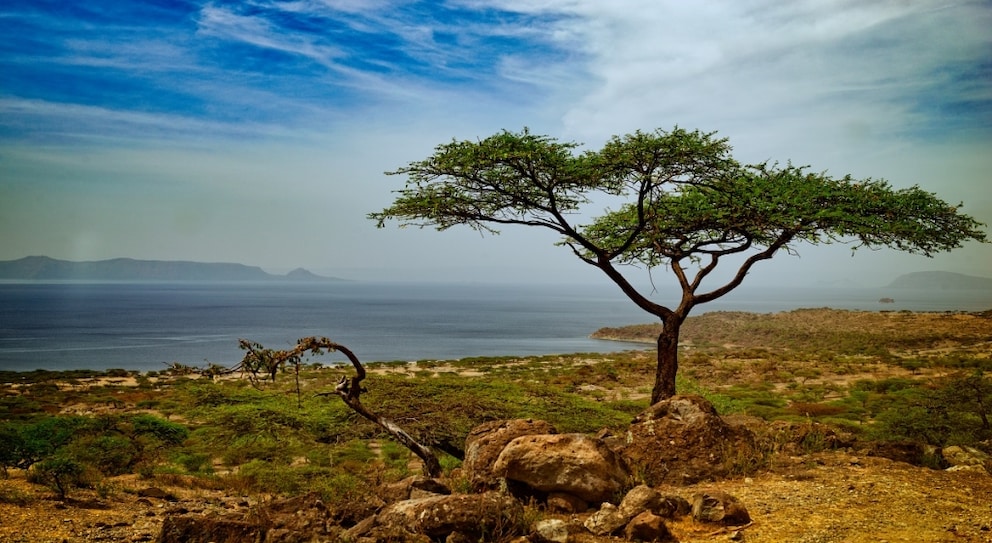
For what feels like an eternity, our vehicle has been bouncing and jolting along an unpaved sand track that one would only call a road here, and outside, there’s simply nothing. Nothing, in this case, also means not the slightest sign that people live here. Or that humans exist at all. Otherwise, the archaic, flat landscape seems to explode with life. Umbrella acacias and thorny bushland as far as the eye can see. Termite mounds as large as obscure factory chimneys, and far on the horizon, the mighty mountain ranges that border the African Rift Valley like a wall erected by God himself. And yet, there are a few people here. My travel group and I, in what feels like the most unlikely place in the world, in southern Ethiopia.
Overview
While the northeastern African country can be confidently described as one of the last great unknowns on the map for even many seasoned travelers, its south is truly absolute terra incognita. Even today, in a world where everything seems discovered, it remains a vast blank spot.
Places Like Film Sets
Southern Ethiopia presents unimaginable distances even for travelers accustomed to long drives. The entire country is as large as Spain and France combined. With 120 million inhabitants, it is the most populous in all of Africa after Nigeria. A number, by the way, that seems completely unimaginable in the south. Here, one rarely encounters people or even signs of civilization along the way. Places like Weito, Key Afer, Dimeka, Turmi, or Omorate would likely not be considered cities anywhere else in the world. The rest are a few scattered huts that sometimes look like a film set depicting how Europeans imagine “real” Africa. And nothing, absolutely nothing, can prepare you for meeting the people who live here.
And they are, in fact, one of the main reasons European agencies offer trips to southern Ethiopia. The numerous different ethnic groups that have inhabited this inhospitable area for millennia are among the most apparent anachronisms of our modern, hyper-technological world. The conditions in which these proud people live–without electricity, running water, or other privileges we take for granted–may seem so simple to us that one might not even realize what one is encountering. Although the mind and heart are aware that these situations are being experienced, they sometimes feel like a beautiful, vibrant daydream.
Also interesting: What You Should Know Before Traveling to Ethiopia
First the Smile, Then the Camera
And while a visit to southern Ethiopia may feel like stumbling through a magical portal from modernity directly into the Neolithic era, it does not seem backward or impoverished. Instead, it is simply astonishing, overwhelming, in the best sense utterly overwhelming. It is nothing but admiration for people who appear so happy and content in such simplicity. And for visitors from the foreign world, they often have so much more than they could actually give. I take individual language fragments of the respective ethnic groups as precious treasures, and that’s exactly what they are. “Good day,” “How are you?” or simply “Thank you.” These seemingly tiny insights into a culture are like keys, door openers to the hearts of the locals. The moment you first hesitantly and probably completely mispronounce such a phrase, bringing an entire village to beam, is something you will never forget.
Just as unforgettable is the unconditional friendliness of the people in southern Ethiopia. The almost childlike curiosity of even adult people, which often blurs the boundaries between the locals and us visitors. Herein lies a unique opportunity for cultural exchange. As a guest, the first thing the locals should see from you is a smile. And certainly not a camera drawn like a paparazzi storming a movie star. When a whole group of children surrounds you, laughing with big eyes, and countless little hands cling to individual fingers, the heart does somersaults. And it has serious trouble staying in the chest out of joy and emotion.
A Disappearing World

Apart from the encounters, it is the solitude and the endless expanse of the landscape that touch the soul in a strange way. So much space for such small people like us, something especially unfamiliar for city dwellers like me. Thoughts suddenly take a completely different direction. They can truly be free, flying in all directions. This is, of course, also due to the tranquility, the complete absence of hustle and noise. The night sky is a unique cosmic ballet, as if one could look directly into the billions of galaxies. Back to the beginning of time itself, which seems to play no role here in southern Ethiopia. Only the calls of exotic birds, monkeys, or hyenas cut through the silence. Otherwise, there is inner peace like on the first day of creation.
Gradually, one realizes that even as a visitor, one leaves a more lasting impression in this archaic landscape than initially apparent. For nothing changes southern Ethiopia as quickly as the influences of modernity and the outside world. Namely, social media and tourism. Through the former, many get a glimpse for the first time that other realities are possible than those lived according to traditions for generations. The latter, tourism and the money of visitors, suddenly bring these seemingly enticing alternative realities within reach for many. If the internet shows a Western-influenced image of supposed modernity, who could blame especially young people for wanting to be part of it?
Also interesting: My Unforgettable Visit to the Ethiopian Kingdom of Konso
What you should definitely know before traveling to Ethiopia

Why I Still Enjoy Staying in Hostels Even in My 40s
Wish for the Future
An ethnologist I spoke with during my first visit about this dilemma said something shocking to me. In her estimation, it may only be a few years before the traditional life of the people in southern Ethiopia is completely gone under the influence of the aforementioned factors. I can hardly imagine that I, as a tourist, apparently bear some responsibility for this. And yet, or perhaps precisely because of this, I will travel to Ethiopia again, for as a journalist, one is ideally also a chronicler. This world, which is apparently undergoing such a radical change, simply must not be lost forever. And it won’t be if it can at least live on in hearts one day.
Of course, I would wish even more that it never has to come to that. That future generations of travelers can still experience the exhilarating feeling of strolling among locals through one of the colorful markets in southern Ethiopia. To feel the same wonder as I did when passing a herd of cattle numbering in the hundreds, trailing a kilometer-long dust cloud. When children wave cheerfully from a waterhole as you drive by, or they run after your car, screaming. May the people here forever inhabit and cultivate the same cracked red earth as they have always done.