

March 22, 2026, 1:44 pm | Read time: 4 minutes
It stretches a few hundred miles—and those miles are intense: The Dalton Highway is considered the most dangerous road in the U.S. Anyone planning to drive this route, which is rarely paved but often covered in ice, should be well-prepared.
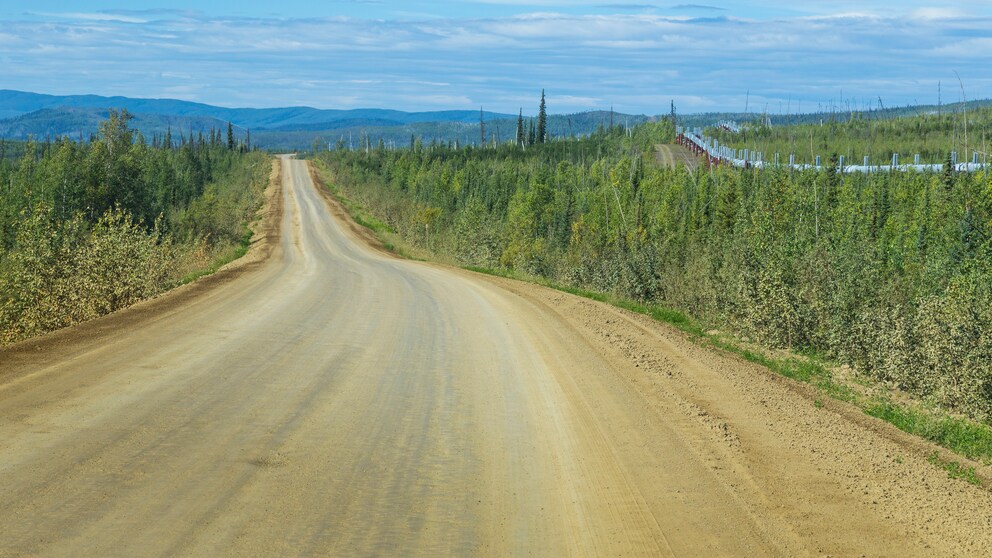
There’s hardly anything that isn’t warned about on the Dalton Highway: rockfalls, potholes, wildlife crossings, sudden winds, ice, dangerous animals, tight curves, and more. What confidently calls itself a highway is largely an unpaved road, far from any human habitation and mostly traveled by daring truckers. The Dalton Highway in northern Alaska is one of the most dangerous roads in the world—and has thus become a legend.
Three-quarters of its 414 miles (666 kilometers)—a number that might already raise eyebrows—lie beyond the Arctic Circle. The highway was built in the 1970s as a service road for the massive Trans-Alaska Pipeline and was named after an engineer. Along the way, there are only two places: Coldfoot—a name that is no coincidence—and Wiseman. They are inhabited by 10 and 14 residents, respectively. After that, there’s almost nothing for nearly 250 miles (400 kilometers) until Deadhorse at the Arctic Ocean. Deadhorse, with its roughly 20 residents—not counting hundreds of oil workers—is a “dry” place, without alcohol. Among Dalton veterans, there’s a saying: “All that far and still no bar,” meaning “Finally here and then no beer.”
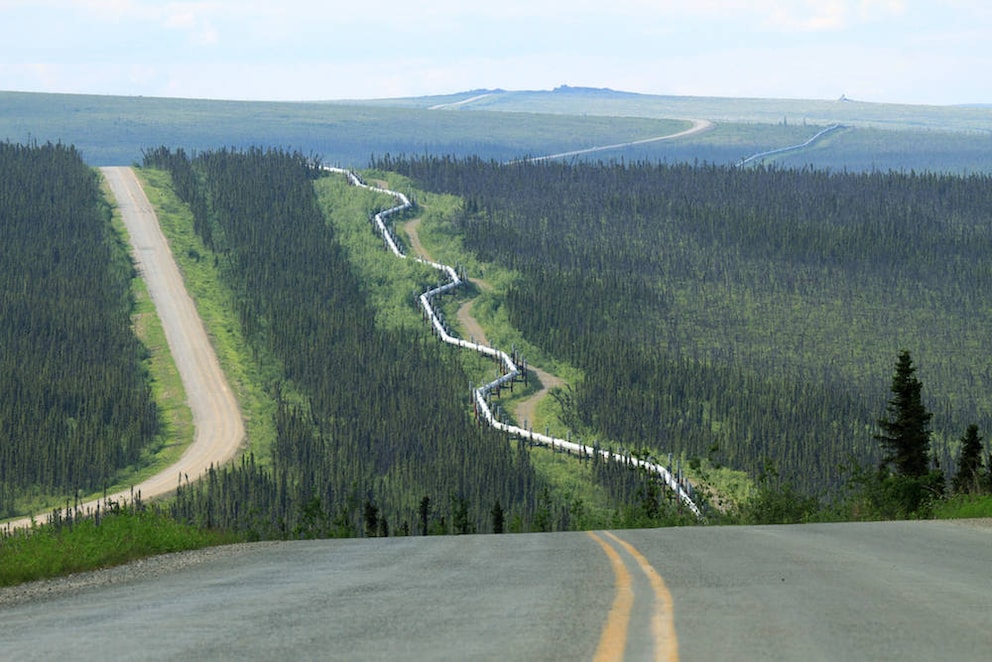
The Dalton Highway Is Mostly Unpaved and Unfortified
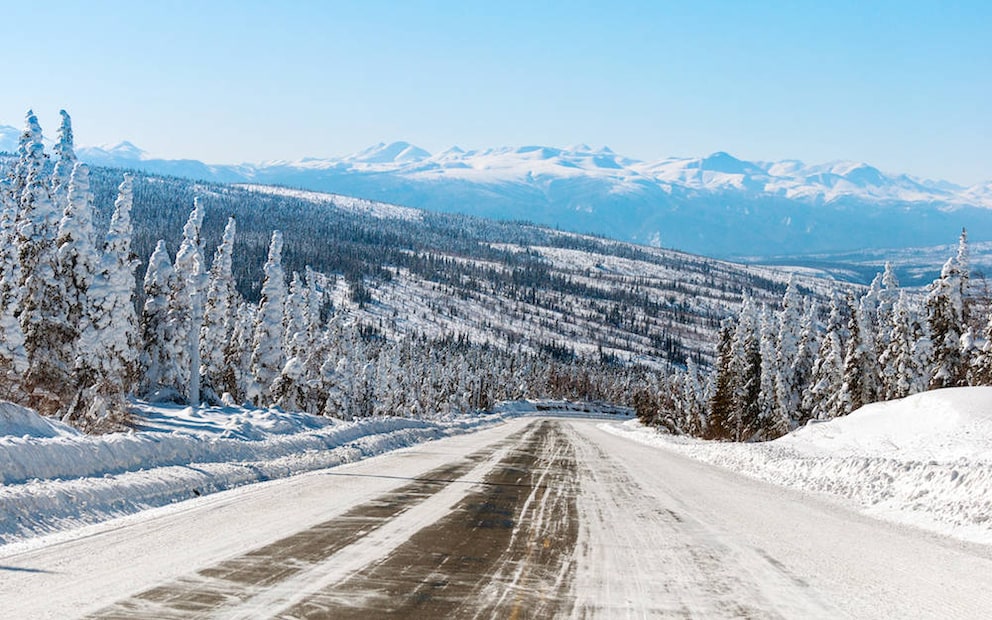
Anyone who makes it to Deadhorse has already been through a lot. The majority of the road, which proudly calls itself a highway, is neither paved nor otherwise fortified. The northern part is often covered in ice, while the southern part is muddy, dirty, rocky, and gravelly for a few weeks each year. It’s no wonder the road has become a TV star. It has been featured in the reality TV series “America’s Toughest Jobs,” as well as in the BBC’s “World’s Most Dangerous Roads,” and has appeared four times in the popular U.S. series “Ice Road Truckers.”
“The road is so dangerous because it’s made only for professional drivers who travel it constantly,” says Kamau Leigh. He is a state trooper from Alaska, responsible for the highways. “Tourists who come to us are used to asphalt roads. But on the Dalton, there’s hardly any asphalt, just clay—and pretty much all other elements of nature. Driving here is an adventure. But one that can end badly.” Anyone who insists on driving the road should do so. “But be prepared. And that includes several spare tires.”
Also interesting: With Map! The Perfect Road Trip Through the USA
The Southern Part of the Dalton Highway Is More Dangerous Than the Northern Part
Dustin Reyna has been driving the route for a long time and rates it as “pretty dangerous.” “You always see car wrecks lying around. The southern part is more dangerous than the northern part. The north is relatively flat. The south is steep and winding. When rain or ice is added, it’s hell.” So why does he do it anyway? “Simple: good money and a lot of fun.”
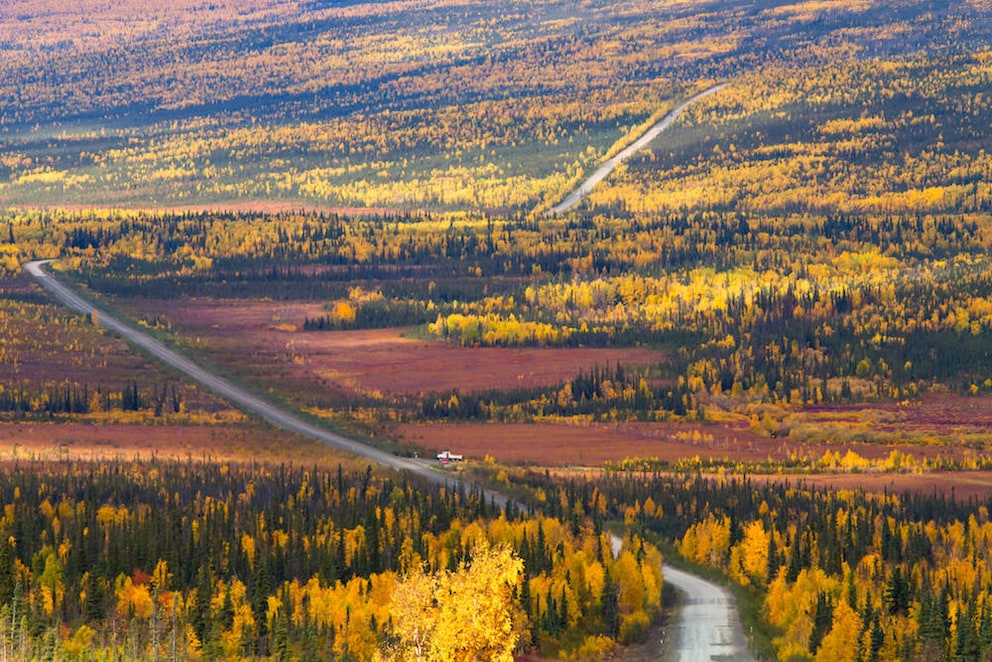
Reyna’s cement truck is called an “18-wheeler” in driver lingo. When a “4-wheeler,” or a regular car, appears in front of him, he is considerate—but he doesn’t slow down. He barrels down the dirt road at nearly 70 miles per hour (110 kilometers per hour), which has no guardrails or shoulders. The drivers earn good money for the nerve-wracking, dangerous job.
So why do tourists, such as motorcyclists, keep venturing onto the Dalton? “Because it’s there,” says Tom Snyder. He just rode the 414 miles on his BMW, with “Chief,” his dog, in the sidecar. “It’s a fascinating route. On one hand, the nature is breathtaking. But the road is, of course, also a challenge. It’s basically a lousy road where it can even snow in June,” he says. “But it’s fascinating.”