

September 3, 2025, 9:03 am | Read time: 3 minutes
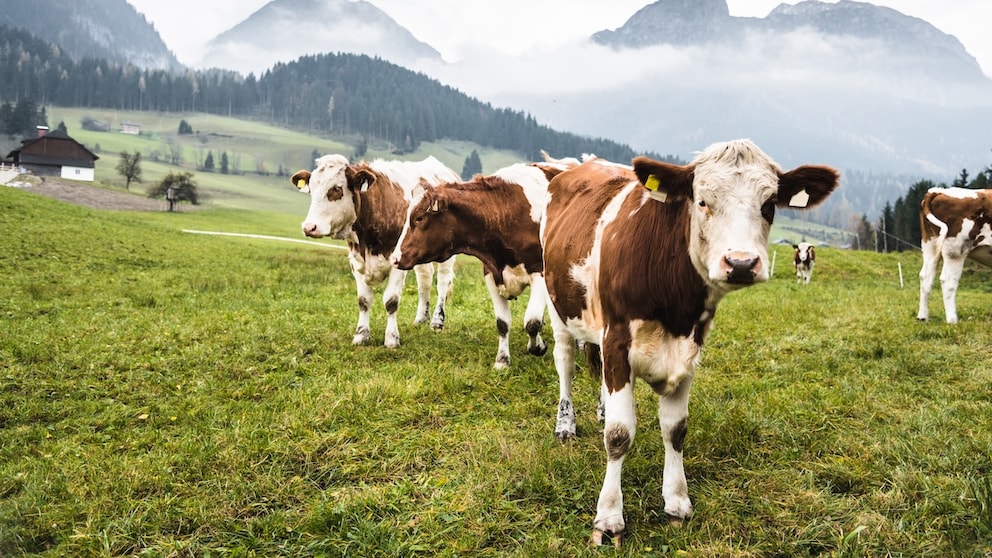
A hike through blooming mountain meadows and tranquil landscapes sounds like pure relaxation. However, on many routes, humans and animals share the same space, and especially in the summer months, numerous hiking trails lead directly over managed pastures. It’s important to know how to behave properly when encountering cows while hiking.
Encounters with animals on hikes are almost unavoidable and usually harmless, but they can become dangerous in the worst-case scenario—especially when dogs or calves are involved. The Kurier reported on an incident where an 85-year-old hiker with a dog was fatally trampled by a herd of cows. To prevent critical situations, the Munich and Oberland sections of the German Alpine Club (DAV) offer five clear tips for safely dealing with livestock.
Overview
1. Keep distance and leash dogs consistently
The most important principle when crossing pastures: maintain sufficient distance from the animals and stay on marked paths as much as possible. Dogs should be leashed before entering the pasture. If the herd becomes agitated, the DAV advises a clear exception: “If the cows become aggressive, dog owners should let their dogs run free.”
2. Use body language consciously
Avoid direct eye contact with cows while hiking. According to the Alpine Club, it’s crucial to exude calmness and not startle the cows. It’s also important to recognize warning signals from the animals early. The DAV suggests that aggressive behavior can often be identified from a distance.
3. Never touch or feed calves
Young animals often appear particularly cute to many people—but restraint is essential here. The DAV warns: “Even if they look nice and fluffy, cows are not cuddly animals.” Petting or feeding should be strictly avoided—especially with calves. Mother cows can quickly feel threatened and may attack to defend their offspring.
Also interesting: 6 Tips for Safe Hiking and Choosing the Right Route
Despite all precautions, an attack can occur. In such a case, calm behavior is crucial. “If a cow approaches and actually attacks, remain as calm as possible. Do not turn your back on the animal and leave the pasture quickly and orderly,” advises the DAV. Only in the most extreme emergency should you defend yourself—such as using a hiking stick on the animal’s sensitive nose.
4. Stay calm in an emergency
5. Observe animal behavior early
Potentially dangerous situations can often be avoided in advance. Those who are attentive can recognize aggressive behavior early. Typical threatening gestures such as a lowered head, pawing the ground, bellowing, or audible snorting are serious warning signs that require special caution. In such cases, it is advisable to bypass the animals at a generous distance—about 20 to 50 meters. Other hikers should also be warned in time.
With material from dpa