

October 16, 2025, 3:19 pm | Read time: 6 minutes
Mass tourism threatens the popular vacation spots Balos, Elafonisi, and Falassarna on Crete. How the island is now trying to save its natural paradises.
Crete is one of the most popular vacation destinations in Greece. And not without reason: The island boasts some of the most beautiful beaches in the Mediterranean. Balos, Elafonisi, and Falassarna regularly rank at the top of international lists. However, increasing tourism threatens the island’s beauty.
Why Balos is reaching its limits
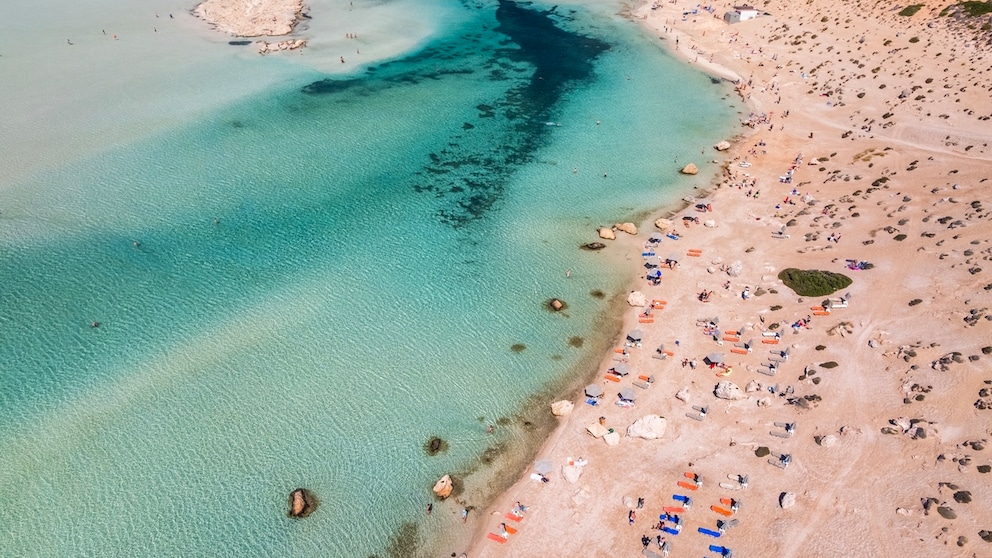
The Balos Lagoon in northwest Crete is considered one of Europe’s most spectacular coastal landscapes. White and occasionally pink sand, shallow turquoise water, and a small offshore island: The largely untouched, natural environment with rocks is reminiscent of Caribbean dream beaches. That’s why the beach is visited by numerous tourists in the summer. And that’s exactly its problem.
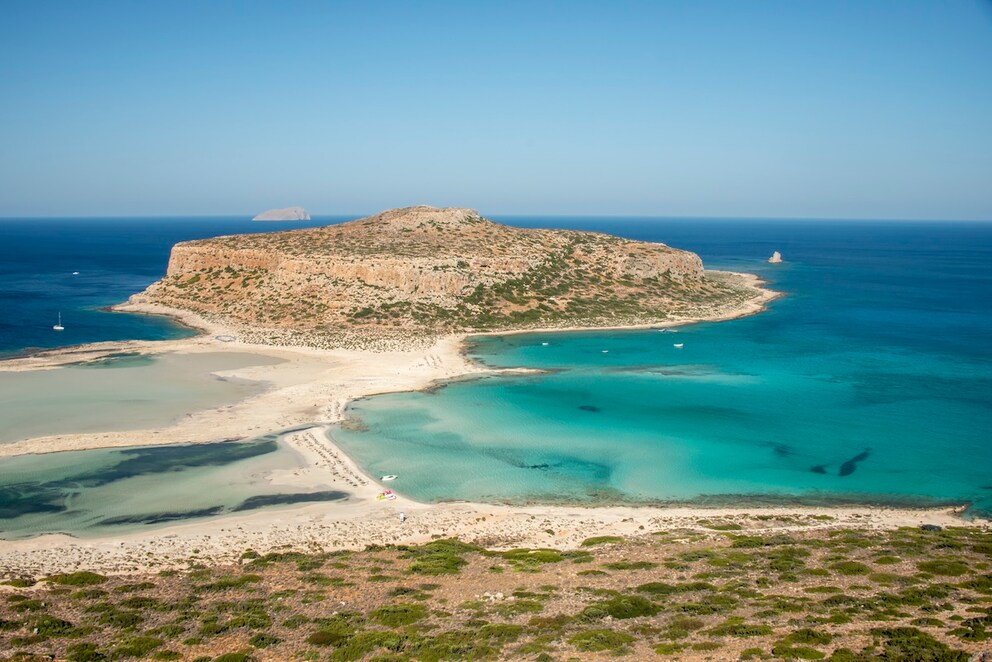
According to a study by the Technical University of Crete, the allowable visitor capacity was recently exceeded by about 1,000 people per day during the peak season. As a result, contamination with increased levels of Escherichia coli (E. coli) and enterococci in the water and sand, as well as pollution from microplastics, was detected. Additionally, an inadequately developed road infrastructure and an excessive number of cars burden the area, even though the bay is relatively remote and only accessible by footpath or boat.
In May, Balos ranked 8th in an evaluation by the travel platform TripAdvisor for 200 of the world’s most popular beaches–but not in a positive sense. Almost every second respondent criticized the lack of cleanliness.
To preserve the impressive landscape, authorities are now taking action: Cars must be parked in a lot behind the village of Kaliviani. Minibuses take visitors from there to the hiking trail, while boat arrivals from Kissamos are limited to 2,000 people per day, spread over two or three time slots.
How authorities plan to save Crete’s most famous beach
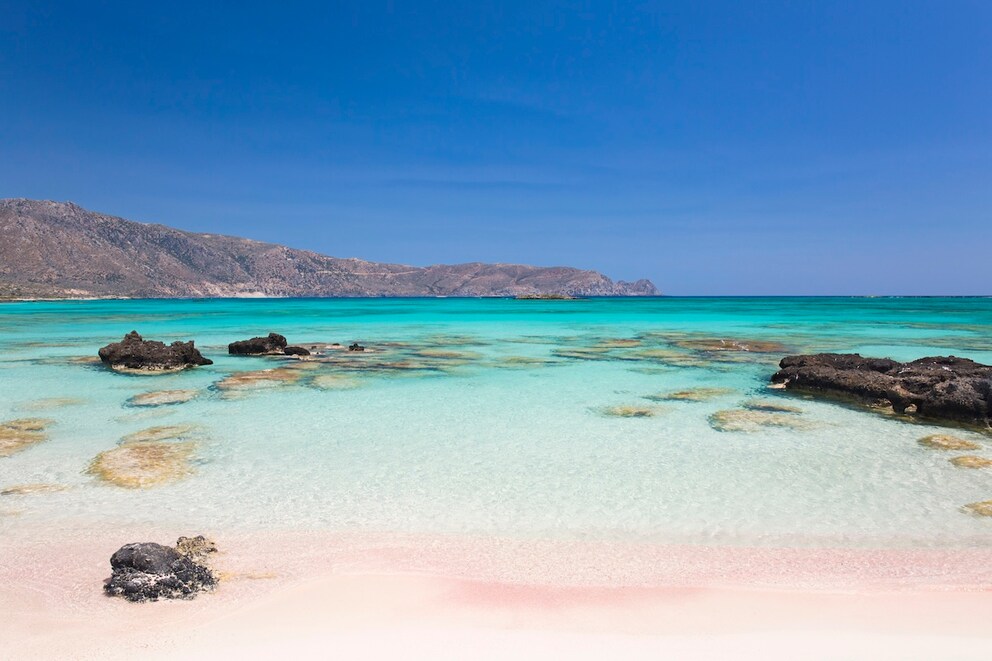
A bit further south lies Elafonisi, another flagship of Crete. The pink shimmering sandy beach with the island of the same name, located about 150 meters off the coast, is part of the Natura 2000 protected area. The beach is also considered one of the most beautiful in Europe. But the reality is often different: In summer, people crowd the area, making it difficult to find a spot by the sea.
In TripAdvisor’s evaluation, Elafonisi ranked 7th among the beaches with the most complaints worldwide. Over 70 percent of the criticisms concern overcrowding, nearly 10 percent cleanliness, and about 14 percent waiting times for parking or beach access.
To reduce the pressure, authorities are now taking action. Cars are no longer allowed to drive up to the beach, and the number of sunshade permits has been reduced. Additionally, a digital booking system is planned, allowing visitors to make reservations at the beach in the future.
Vehicles, RVs, and illegal structures have already been removed, leading to improved environmental conditions. A project is also underway to educate visitors, as announced by Kostas Koukourakis, former mayor of the village of Innachori and environmental advisor to the responsible municipality of Kissamos, to the portal “News247”: Visitors will only be allowed to enter the beach after watching a short documentary on the ecological and cultural significance of the region.
To avoid destroying the impressive landscape, taking the pink sand is strictly prohibited. It is created by finely crushed seashells and coral fragments. Without these, the characteristic color would not exist.
“If we don’t treat these natural treasures properly, we risk losing what makes them so unique,” warned Maria Koziraki, Secretary of the Decentralized Administration of Crete, in an interview with the portal “Cretalive.”
Falassarna Beach: Natura 2000 area in danger
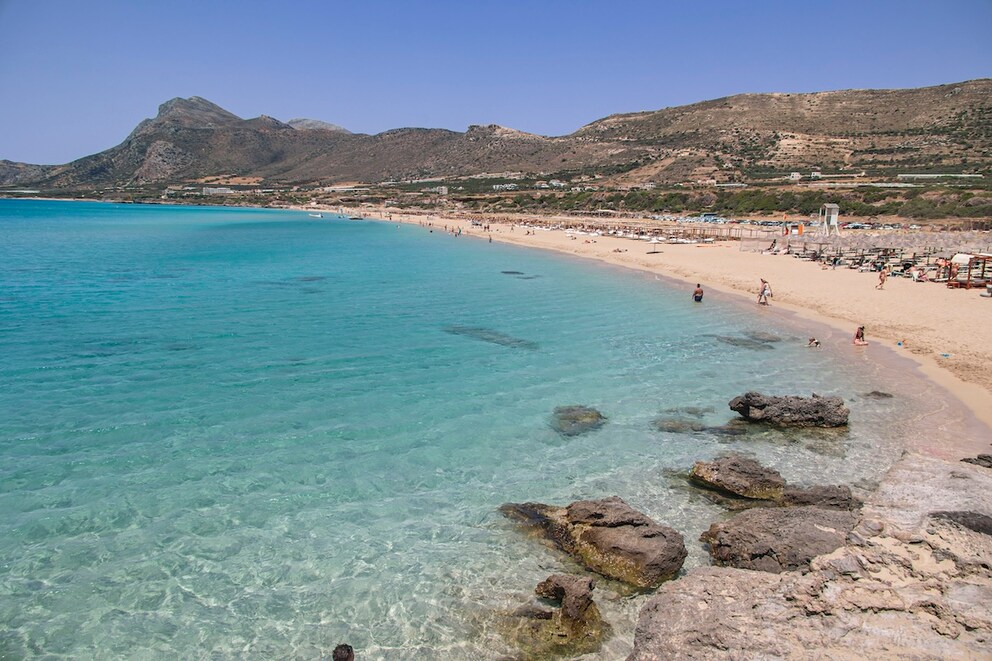
Falassarna Beach, a several-kilometer-long sandy beach in western Crete, is also under the pressure of mass tourism. With its wide area, impressive natural surroundings with sand dunes, and clear turquoise water, it attracts numerous visitors each year. Taverns, showers, and sunshades make the beach comfortable, but this infrastructure threatens the delicate ecosystem, which is also part of the Natura 2000 network.
As in Balos and Elafonisi, too many cars are the main issue. They must now be parked before the barrier. Additionally, the two responsible municipalities have decided to issue fewer permits for sunshades on the beach. A private property that belongs to the protected area is to be expropriated or acquired. The measures are ultimately intended to protect the area with its rich flora and fauna.
This Is the Best Beach in the World
Famous Travel Guide Advises Against These Destinations in 2026
From overuse to recovery
How sustainable protection can work is shown by Chrysi, south of Crete in the Libyan Sea. The small island with its white sandy beaches, sand dunes, and centuries-old cedar forest was closed to visitors in 2021 due to massive ecological damage. At that time, authorities counted over 2,000 day visitors in the summer–too much for the fragile ecosystem.
As part of a four-year action plan, the Greek Ministry of Environment banned all tourist activities, including entering the forest and using groundwater. The cedar forest was partially destroyed, with more than half of the vegetation dried out.
Four years later, progress is now visible on Chrysi. “This period has put an end to decades of uncontrolled exploitation and dramatic devaluation of this rare and valuable element of natural heritage,” recently stated Kaloust Paragkammian, coordinator of the committee and director of the Institute of Speleology of Greece.
Visitors are now only allowed to approach Chrysi by boats that depart daily from the port city of Ierapetra. However, docking is prohibited. Maria Koziraki emphasizes: “After years of complete protection, we are seeing signs of recovery for the first time.”
Tourism boom in Greece continues
While nature breathes a sigh of relief on Chrysi, the tourist pressure on Crete continues to rise. According to the Institute of the Greek Tourism Confederation (INSETE), 28.5 million international flight seats are planned for the current season until the end of October–an increase of five percent compared to 2024.
Crete alone accounts for about 5.4 million seats, with the airports in Heraklion and Chania recording increases of 4.6 and 4.1 percent, respectively. This makes Crete the most flown-to destination in the country after Athens–and the strain on nature continues to grow.