

November 13, 2022, 11:39 am | Read time: 3 minutes
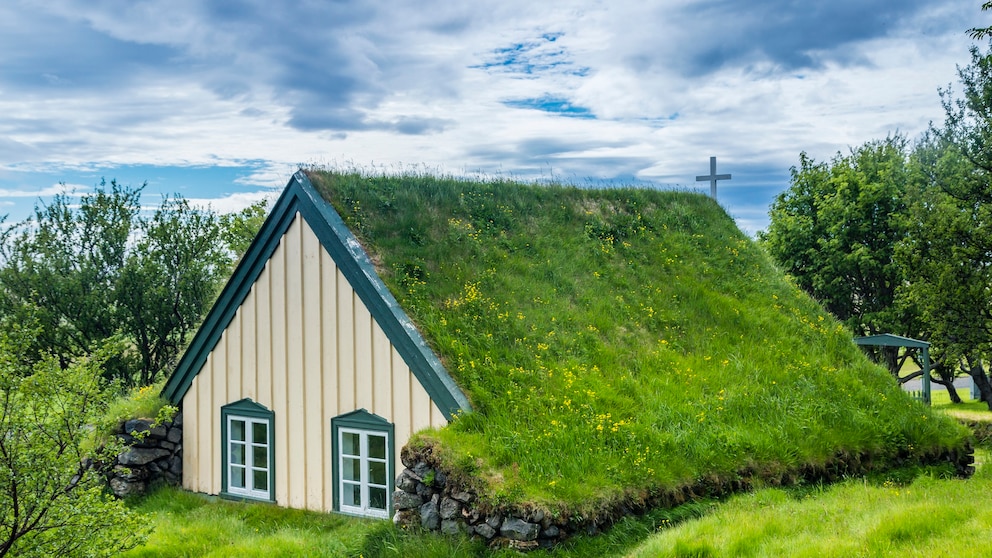
In the southeast of Iceland stands the island’s most peculiar and charming church. The Hofskirkja, with its unusual construction, looks as if it is “growing” directly out of the ground. Just 50 years ago, it was hardly accessible to visitors, but today it has become a small tourist attraction.
Especially on a sunny spring day, when the grass is lush and green on the meadows of southeast Iceland, the sight must be simply magical. In the Öræfi region, near the small town of Hof, lies what is probably the most beautiful church on the island. The Hofskirkja, as it is called, seems to “grow” directly out of the ground. It is a rare testament to a once widespread architectural style.
As a so-called turf church, the Hofskirkja is particularly rooted in nature. Its roof is covered with earth and turf, making the building appear inviting and cozy. It almost resembles a modern hobbit house as it stands in the landscape. As one of only six churches built in this style, it is a culturally valuable unique piece that speaks of a long-gone era in Iceland. Today, thanks to its beauty, it is also a small tourist magnet.
Built Beautifully Out of Necessity
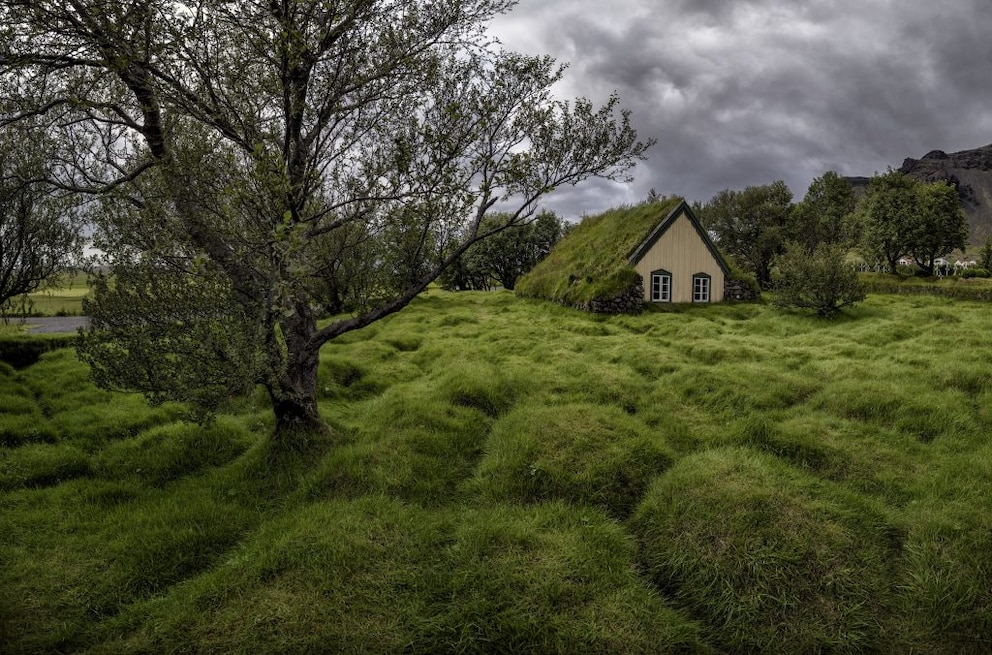
As reported by “Guide to Iceland,” the Hofskirkja was built between 1883 and 1885. This refers to the charming version we see today. A church was first mentioned at this site in 1343. The famous local carpenter Páll Pálsson took on the current construction. He built the church room out of wood on a stone foundation before the roof was greened in the manner typical of early Iceland.
Also interesting: In this church, you are very close to heaven
The small building seems to sink into the ground, clearly recessed into the surrounding earth. This construction method serves to insulate it against the cold Icelandic winter. According to “Atlas Obscura,” the grass-covered houses were not created for aesthetic reasons. Rather, building wood was very scarce on the island, as the early Nordic and Celtic settlers had already cut down most of the trees. Thus, roofs, like that of the Hofskirkja, were covered with turf.
Accessible for Just Under 50 Years
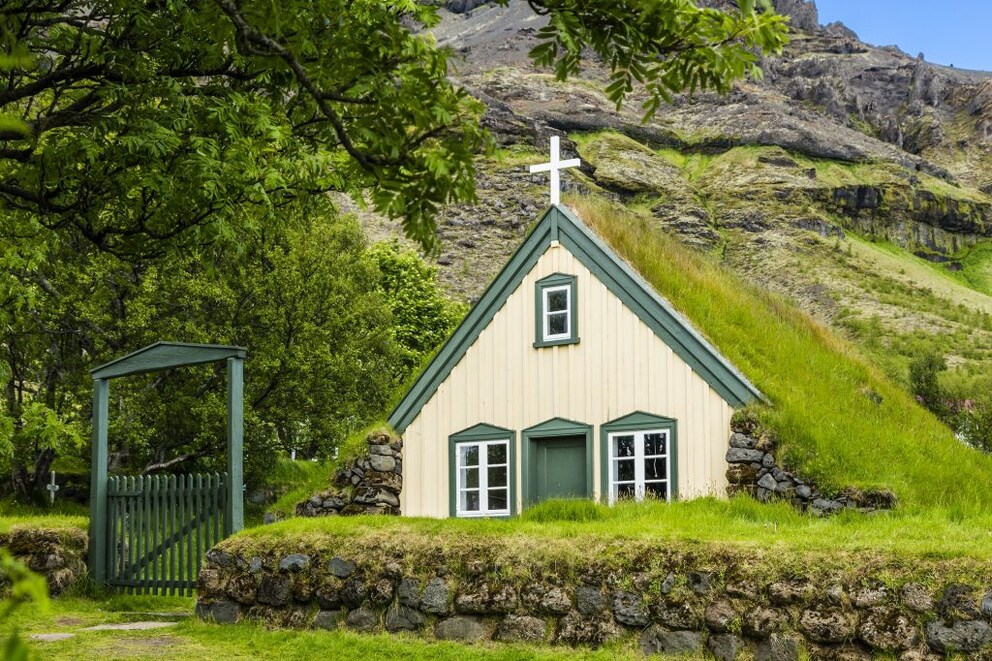
A fascinating detail of the church is the surrounding burial mounds, also densely overgrown with grass. When the Hofskirkja was in danger of falling into disrepair last century, the Icelandic National Museum purchased the building. The church was renovated in 1953-54 and newly consecrated shortly before reopening. It still serves as a parish church for the Öræfi area, where services are held.
However, the increasing number of tourists finding their way here is a relatively new phenomenon. Until 1974, the Hofskirkja was extremely difficult to reach, even for Icelanders. At that time, the region was not yet connected to the road network, and the town of Hof was completely isolated. Only when bridges were built over the rivers in the Skeiðarársandur plain could the unusual church be accessed via Ring Road 1.
Also interesting: The church where cannabis is revered
The Hofskirkja is located about 340 kilometers from Iceland’s capital, Reykjavik, near the Vatnajökull glacier. Due to its spectacular appearance, more and more tourists are making the relatively long journey, knowing that along the way, Iceland offers spectacular sights almost everywhere. However, the church can only be entered during a service; it is not open for tourism. But it is most impressive from the outside anyway.