

October 14, 2026, 12:40 pm | Read time: 5 minutes
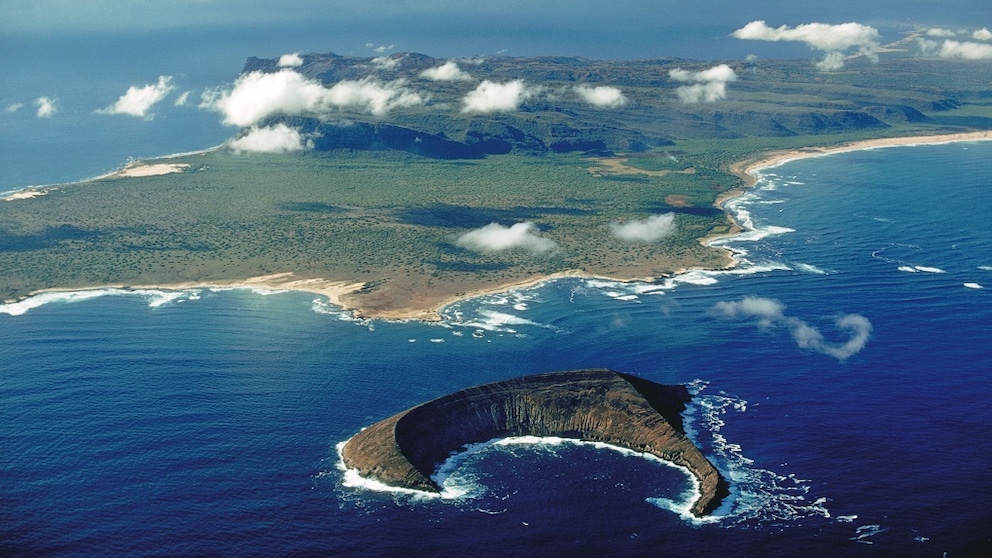
Just a few kilometers off the coast of the Hawaiian island of Kauai lies perhaps the most mysterious island of the archipelago: Ni’ihau, also known as the “Forbidden Island.” Untouched by any form of mass tourism to this day, the fewer than one hundred residents still live traditionally without any modern comforts. Precisely for this reason, a unique culture has been preserved here, which the island’s owners have wanted to protect from the beginning. Therefore, almost no one is allowed to enter. However, there are ways to visit Ni’ihau.
Close your eyes for a moment and imagine a world without an electrical grid, running water, or the internet. A world where paved roads are as nonexistent as hotels and stores that carry everyday goods. Where there is no police force, and residents make all important decisions collectively. A place with few people but a much richer wildlife, where centuries-old traditions are still passionately maintained. Well, such a lost paradise does exist, and it’s on the Hawaiian island of Ni’ihau. There’s just one small problem: It is nicknamed the “Forbidden Island,” and almost no one is allowed to set foot on it.
According to the official tourism website of Hawaii, Ni’ihau is unlike its seven sister islands. It is small, just 18 miles long and 6 miles wide, and the climate is rather dry. At the last census in 2020, 84 residents lived there. There is no significant economy on Ni’ihau; its residents live off agriculture, fishing, and hunting. It is one of the few places in the archipelago where the old Hawaiian language is still spoken as the primary language and taught in schools.
A Family Buys the Island
Thousands of years ago, Ni’ihau, like all other Hawaiian islands, was settled by Polynesians. The island’s fate changed in 1864 when Scottish entrepreneur Elizabeth McHutcheson Sinclair purchased it from King Kamehameha V for the equivalent of $10,000 in gold. Even today, more than 160 years later, the island remains privately owned by Sinclair’s descendants, fittingly named Robinson. They do not see themselves as typical landowners but wanted to preserve the unique way of life on Ni’ihau from modern influences. This is how it came to be known as the “Forbidden Island.”
From the beginning, the Sinclair-Robinsons severely restricted access to Ni’ihau, and it remains so today. Back then, only members of the U.S. military, politicians, and guests with explicit invitations were allowed to enter the island. The residents, however, can move freely, traveling to other Hawaiian islands for work or medical visits. The limitation on visitors is not only to preserve the traditional lifestyle of the locals but also to protect them from the outside world, particularly its diseases. The nickname “Forbidden Island” became especially popular when a polio epidemic swept through Hawaii in the early 1950s. To prevent it from spreading to Ni’ihau, the island isolated itself even more than before.
Also interesting: Do you know what the Macaronesian Islands are?
Strict Access Restrictions
Even today, the island remains highly restrictive toward outside visitors. This is to preserve the traditional Hawaiian way of life in harmony with nature, which is also taught at the island’s school. Residents do not pay rent for their homes and land but must follow some strict rules. Alcohol and drugs are banned on Ni’ihau, and the entire island gathers for church services on Sundays. All important decisions are made collectively, with the Robinsons as owners having no greater voting rights. Even the livestock on the island is free; there are no fences for the cattle, pigs, and chickens.
The access restrictions for Ni’ihau also continue to protect the island’s unique wildlife. There are some rare bird species here. In the crystal-clear waters off the island lives the Hawaiian monk seal. Ni’ihau is also famous for its intricately handcrafted necklaces made from certain small shells found only there. These unique artworks, each a one-of-a-kind piece, fetch thousands of U.S. dollars from collectors. They are also the only way for many residents of the “Forbidden Island” to earn extra income for daily life. Otherwise, they sustain themselves through subsistence farming, such as growing taro.
Also interesting: The 9 best tips for a vacation in Cape Verde
Since the 1980s, Ni’ihau has slowly become more accessible. Today, there is a strictly limited opportunity to fly over the island with Ni’ihau Helicopters, a company owned by the Robinson family. This includes a landing on the island with a snorkeling excursion. Another provider also offers boat trips. Additionally, hunting parties are available. However, none of these activities bring visitors close to the island’s residents unless they wish it. The visit does not include a tour of the area inhabited by the locals. Thus, Ni’ihau remains, more than 160 years after the Sinclair-Robinsons’ purchase, what it is: Hawaii’s “Forbidden Island.”