

June 12, 2026, 8:32 am | Read time: 7 minutes
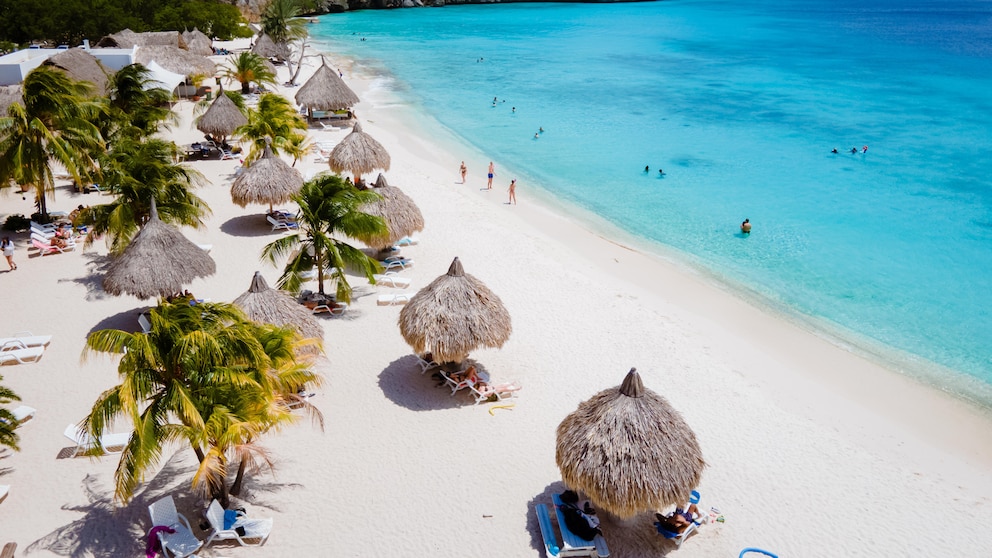
Germany’s first opponent at the 2026 World Cup doesn’t come from a soccer powerhouse but from a Caribbean paradise: Curaçao. The island is known to many only for the blue liqueur of the same name. However, the island offers much more than a famous drink. With stunning beaches, crystal-clear waters, a fascinating underwater world, and a surprisingly European atmosphere, Curaçao is one of the most attractive destinations in the Caribbean. TRAVELBOOK shows what awaits travelers on the island.
The island of Curaçao in the Caribbean is the “C” of the so-called ABC Islands, which also include Aruba and Bonaire. All three are autonomous parts of the Netherlands. The origin of Curaçao’s name is not entirely certain. Some say it comes from the Spaniards, who called the island “Corazon” (meaning heart). Portuguese cartographers are said to have then turned it into Curaçao.
The Spanish connection is not far-fetched, as the island, located 60 kilometers north of the Venezuelan coast and between the islands of Aruba and Bonaire, was discovered in 1499 by Spaniard Alonso de Ojeda. The consequences for the indigenous population were dire: The people living on the island were made into forced laborers. In 1634, the “Dutch West India Company” claimed the island, and Peter Stuyvesant became its governor. It wasn’t until 2010 that the Netherlands Antilles dissolved, and Curaçao became an independent country within the Kingdom of the Netherlands. Dutch remains the official language, but English is also widely spoken. Among locals, the language Papiamentu, a mix of Spanish, English, Dutch, and Portuguese elements, is prevalent.
Tourism plays an important role for Curaçao, as it does throughout the Caribbean. Connections from Europe are good, with daily flights from Amsterdam. The climate is pleasant, but there are no lush jungles because it rains too little on Curaçao. In some places, the landscape appears barren, but a closer look reveals life everywhere. There are 450 plant species on the island, as well as animals like the iguana, the Curaçao deer, and nearly 200 bird species. Equally fascinating is the underwater world. There are 70 dive sites on the island from which you can dive to the reefs.
Overview
Profile
| Region | Caribbean |
| Capital | Willemstad |
| Time Difference | – 5 hours time difference; UTC-4 |
| Area | 444 km² |
| Population | 152,369 |
| Languages | Dutch, Papiamento, English |
| Currency | Netherlands Antillean guilder (ANG) |
| Visa & Entry | A digital entry card is required for travel to Curaçao. |
Top 10 Destinations in Curaçao
Curaçao is particularly popular for its stunning beaches, but there are also some exciting cities and villages that travelers should not miss. Chief among them is the colorful capital, Willemstad. Click through our photo gallery of the top 10 destinations in Curaçao.

Top 10 Attractions in Curaçao
The main attractions of Curaçao are the beaches, including Cas Abao, Mambo Beach, Playa Lagun, and many others. But structures like the Queen Emma Bridge and natural sites like the Hato Caves are also popular with tourists. Click through our photo gallery of the top 10 attractions in Curaçao.
Top 10 Activities in Curaçao
Relaxing on dream beaches is certainly a top priority for many travelers in Curaçao. However, more active pursuits are also worthwhile during a vacation. For example, there are many exciting and beautiful corners to discover in the capital, as well as a fascinating underwater world at the beaches and numerous animals across the island. Click through our photo gallery of the top 10 activities in Curaçao.
Editorial Reading Tips
The best travel tips for the Caribbean

Dominica: The Most Beautiful Destinations and Best Tips
Curaçao Map
Weather and Climate
Curaçao is warm year-round with average temperatures of around 28 degrees Celsius. It is slightly hotter from August to October at around 32 degrees, while it is coolest between December and March at around 24 degrees. There is no rainy season with continuous rain on the Caribbean island. Throughout the year, and especially between October and December, there can occasionally be heavy showers, but these are rare.
(Text: Silke Böttcher)