

April 25, 2026, 12:27 pm | Read time: 5 minutes
In vacation regions, a lot of trash usually accumulates. It disrupts the scenery and harms the environment. However, on one vacation island, it’s different: Practically no waste is left behind. Visitors experience a true zero-waste success story—essentially a journey into the future.
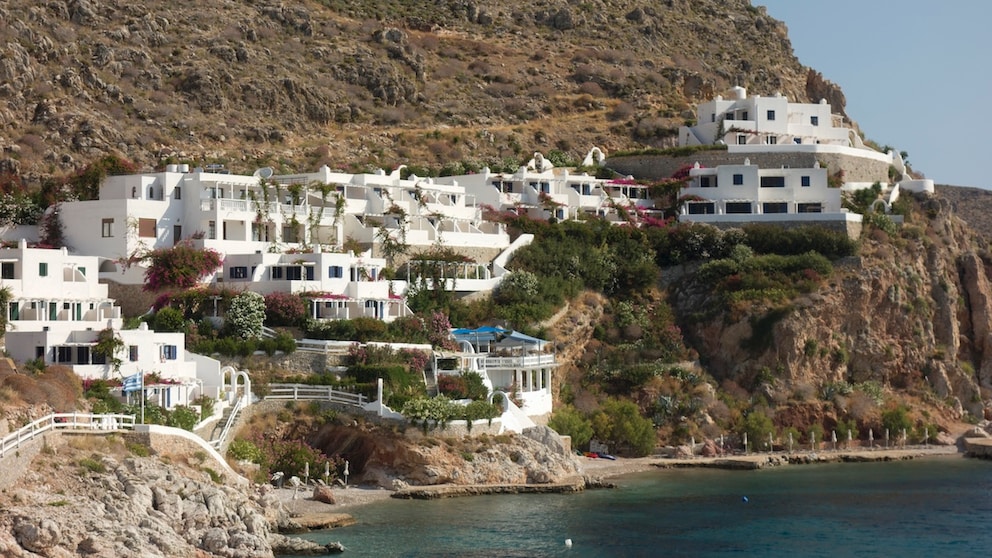
Idyllic coastal towns, dream beaches, culinary delights: The Greek islands captivate with their beauty and relaxed atmosphere. Especially in summer, they are a popular travel destination. Long sandy and pebbly beaches, lagoons, and hidden coves are perfect for a beach vacation. However, few have heard of an island that is, in some ways, ahead of others: Tilos.
Upon arrival, it quickly becomes apparent that things operate differently here than elsewhere in Greece. The small Aegean island demonstrates how sustainability works in times of climate change.
An Island in Greece Becomes a Zero-Waste Pioneer
Tilos is part of the Dodecanese island group, located near Rhodes, and has just about 900 residents. Four settlements—Megalo Chorio, Livadia, Agios Antonios, and Eristos—are spread across the tranquil, unspoiled island. Instead of mass tourism, the focus here is on sustainability—more consistently than on other Greek islands.
The community pursues a lifestyle where waste is avoided and reused. In summer 2021, it launched the Just Go Zero program. Together with the European organization Zero Waste Europe, the Mission Zero Waste Academy, and the Greek Ecological Society for Recycling, Tilos developed a system that practically eliminates waste. A local waste management company is a partner in this effort.
The principle is radical: Public trash cans were abolished. Instead, each household uses special bags for recyclables, and waste is collected directly from homes. The amount is tracked using an individual QR code, and personal recycling rates can be monitored in real-time via an app.
Organic waste is processed into fertilizer or used for energy. Old furniture and broken appliances are repaired, reused, or dismantled into raw materials. What cannot be recycled is further processed for energy recovery.
With these measures, Tilos aims to minimize environmental impact and ensure a true circular economy. And it has been successful. In 2023, the island was officially declared a “Zero Waste Certified City.” It became the first waste-free community in Greece and the first island worldwide with this certification. Today, nearly all of the island’s waste is recycled.
Sustainability Doesn’t Stop at Waste Here
The zero-waste approach is just one part of the transformation. Tilos had already undertaken the transition to environmentally friendly energy. Between 2015 and 2019, an EU-funded energy project aimed to make the island more independent. The centerpiece is a hybrid power plant that combines wind and solar power and stores excess energy in batteries.
For about two months a year, the island can largely supply itself with electricity. The system is complemented by a photovoltaic park. Additionally, green energy is delivered to the neighboring island of Kos via an undersea cable. Electromobility is also actively promoted. For this development, Tilos was awarded in 2024 in a European Commission-supported competition for energy transition.
Tilos Offers Both Culture and Relaxation
Despite all the innovation, Tilos remains a relaxed vacation destination. The beaches are unspoiled, and the water is crystal clear. Many areas are under nature protection, providing habitat for rare bird species. The island also has much to offer culturally. In Megalo Chorio, a medieval castle sits atop a hill, and the archaeological museum displays ancient artifacts. In the Charkadio Cave, visitors can marvel at the remains of dwarf elephants that lived here about 4,000 years ago.
A special place is Mikro Chorio: an abandoned village whose ruins are coming back to life. In summer, a bar opens here in the evenings, and the old stone houses are illuminated. Those who stay until the early morning hours can watch the sunrise on the horizon.

The Giant Solar Melting Furnace from Odeillo in France

Can You Really Offset Your Carbon Footprint With Money?
Dozens of Greek Islands Become “Eco Islands”
However, Tilos is not an isolated case. The island is part of the “GR-eco Islands” initiative, through which Greece has been promoting the energy transition on dozens of small islands with EU funding since 2023. The goal is to expand renewable energies, promote sustainable mobility, and make islands more resilient to climate change.
Islands with populations ranging from 100 to 3,500 residents have been selected. This includes Santorini and parts of Naxos, Corfu, and Lefkada. A flagship project is Chalki: The island, also part of the Dodecanese, supplies itself with green electricity through a photovoltaic park. Electromobility, modernized public lighting, and improved telecommunications services to further support e-learning and telemedicine made Chalki the first “Eco Island” in the region.
The Aegean island of Astypalea is also focusing on solar power and advancing the complete electrification of road traffic. In a joint project between the Greek government and the German automaker Volkswagen, electric vehicles were provided for local authorities. Naturally, a sharing service for electric vehicles, e-bikes, and e-scooters is also included.
Visitors to Tilos Can Share in the Success
At the same time, many Greek islands experience a high influx of tourists, so that during the summer months, the number of visitors significantly exceeds the number of residents. This strains the infrastructure, which was originally designed for far fewer people. To ensure that the success concept continues on islands like Tilos, visitors—who can reach the island by ferry from neighboring islands like Rhodes and Kos or from Piraeus on the mainland—are also to be involved.
At the port of Livadia, there is an information center that provides guidance on sustainable waste management upon arrival. Additionally, necessary information can be accessed via a QR code. To avoid waste while shopping, the use of a cloth bag is recommended.
Tilos demonstrates how tourism and sustainability can go hand in hand. The island doesn’t force anyone to do without, but it makes it clear that a different approach to resources is possible. The project may offer a glimpse of what life and vacations could look like in the future.