

June 6, 2019, 12:15 pm | Read time: 4 minutes
Borkum is Germany’s most beautiful island! That’s what TRAVELBOOK readers decided in a large poll. But what makes this island so special? TRAVELBOOK traveled from Berlin across Germany to take a closer look at the East Frisian island.
The journey to Borkum can be lengthy, depending on your starting point. The island is accessible from two cities: Eemshaven in the Netherlands and Emden in northern Lower Saxony. However, both ports are not easily reached, especially by public transport. From there, it takes at best 60 minutes to reach Borkum (if you take the catamaran and pay an additional eleven euros), or more than two hours at worst (if you book the ferry).
Once on the island, the pace slows down: The Borkum narrow-gauge railway, which is free, takes you to the town center at a maximum speed of 30 km/h. It takes about 15 minutes to cover nearly seven kilometers. This pace, like the journey itself, is completely opposite to the hectic life of many city dwellers. And it’s actually a good introduction to Borkum.
The Tranquility of the Nature Reserves
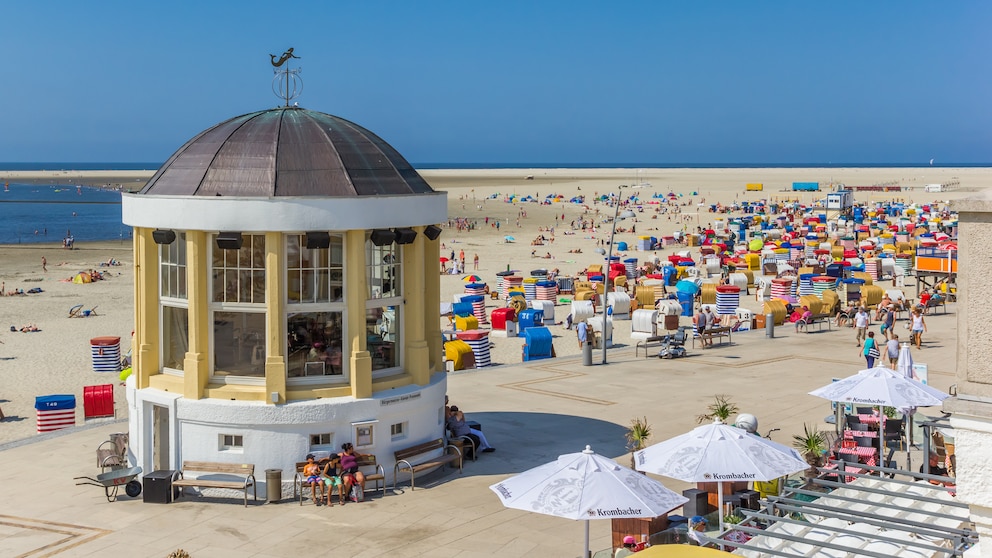
Borkum is primarily one thing: beautiful. The small town is beautiful, the beach promenade with its pavilion overlooking the North Sea is beautiful, the numerous lighthouses, and of course, the beaches–all truly beautiful. But what sets the largest of the East Frisian islands apart from its neighbors like Juist or Norderney?
For one, visitors appreciate the island’s leisurely pace. “My husband prefers vacationing on another island. But I’ve always been a fan of Borkum–it’s much quieter and more relaxing here,” a tourist revealed to TRAVELBOOK. The tranquility might seem surprising at first, considering that around 300,000 visitors come to Borkum each year–an island with just 31 square kilometers and about 5,300 residents. For comparison, the city of Düsseldorf is seven times larger!
Exciting travel videos are available on our YouTube channel–subscribe here!
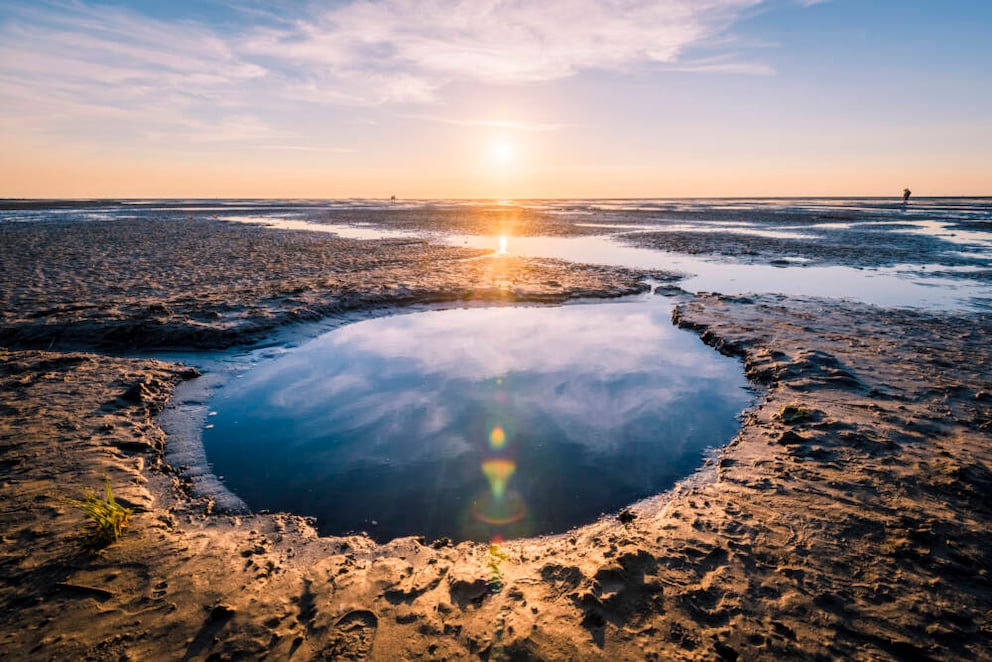
But the residents are very careful to ensure that this crowd goes unnoticed. For example, from spring to November, cars are banned in the city center. The numerous nature reserves are also part of the car-free zone. And anyone who has explored the approximately 130 kilometers of developed cycling and hiking trails through the UNESCO World Heritage-listed Wadden Sea, the Ostland, or the expansive dune landscape towards Hoge Hör knows about this unique tranquility. However, Borkum is not always “just” quiet.
Wide Beaches Invite Sports
The beaches on Borkum are arguably the most impressive feature of the island. There are a total of 26 kilometers of continuous beach, and in many places, it is dozens of meters wide. Whether at the North Beach, which is directly adjacent to the promenade, or the South Beach, which was voted Germany’s most beautiful by TRAVELBOOK readers in 2018: At Borkum’s beaches, despite numerous beach chairs, there is still plenty of open space for sports. In addition to “classics” like beach volleyball, kite buggying and land sailing are particularly popular. In 2018, Borkum even hosted the World Championship in kite buggying for the first time.
See how beautiful Borkum really is in the video!
Must try: A raisin snail from the island bakery Nabrotzky. Here, baking has been a family tradition for four generations, and the incredibly moist, buttery, sugary raisin snail is among their specialties. Best enjoyed in a beach chair with your feet in the sand.
Avoid: Choosing the first restaurant on the promenade just because it offers a nice view. In the worst case, you’ll pay more than ten euros for an average Pizza Napoli, can’t pay by card–and you can enjoy the view for free from one of the many benches.