


October 22, 2024, 2:58 pm | Read time: 6 minutes
Five regions in the world where people live to an old age with high quality of life–these have been referred to as “Blue Zones” for some time. TRAVELBOOK introduces them individually and delves into the various characteristics that define them.
The term “Blue Zones” was coined by American researcher and journalist Dan Buettner. He discovered them while searching for the secret to a particularly long life. People seem to know this secret especially in five specific places around the world. The population there reaches the age of 100 on average and remains healthy, fit, and vital into old age.
Overview
Germany is not one of the official Blue Zones. But before you consider emigrating: Simply moving to one of the places listed below is not enough to increase your life expectancy. It requires a very specific, health-promoting lifestyle.
Why People in Blue Zones Live So Long
Buettner discovered the Blue Zones during his travels around the world, conducting intensive field research. Together with his team, he studied demographic data extensively. What exactly people in the Blue Zones do differently was also the subject of a scientific paper that the colleagues at FITBOOK have already examined in detail. According to the expert, the residents of the Blue Zones share the following nine commonalities in their general lifestyle.
- 1. They engage in a high level of physical activity daily
- 2. They find meaning in life and in their existence within the community
- 3. They know and follow specific measures to reduce stress
- 4. They eat regularly but always in relatively small portions
- 5. Their diet consists largely of plant-based foods
- 6. They regularly consume moderate amounts of red wine (– “moderate drinkers live longer than non-drinkers,” according to the study)
- 7. They believe in a higher, benevolent power and feel protected by it
- 8. Family is their central focus
- 9. They have friends they can always rely on
Buettner and his team refer to these nine characteristics as the “Power 9.” According to his research, they collectively contribute to a healthy, long life.
These Are the 5 Global Blue Zones
To qualify as a Blue Zone, regions must possess various characteristics. These include, in addition to the observed habits, an above-average lifespan of the locals and low disease rates within the population. In Blue Zones, cases of cancer, cardiovascular diseases, and diabetes mellitus are significantly rarer.
Ikaria, Greece
It is not without reason that it is called the “Island of Centenarians” and sometimes the “Island of Immortals.” The proportion of 90-year-olds on Ikaria (pictured above) is ten times higher than the European average. There are also fewer cases of dementia and cancer counted there than anywhere else in the world. The specific reasons for this have intrigued researchers even before Buettner. In addition to a high consumption of vegetables and healthy plant-based fats, the active sexual activity of the locals is discussed. The Mediterranean climate is also said to contribute to life expectancy.
Okinawa, Japan
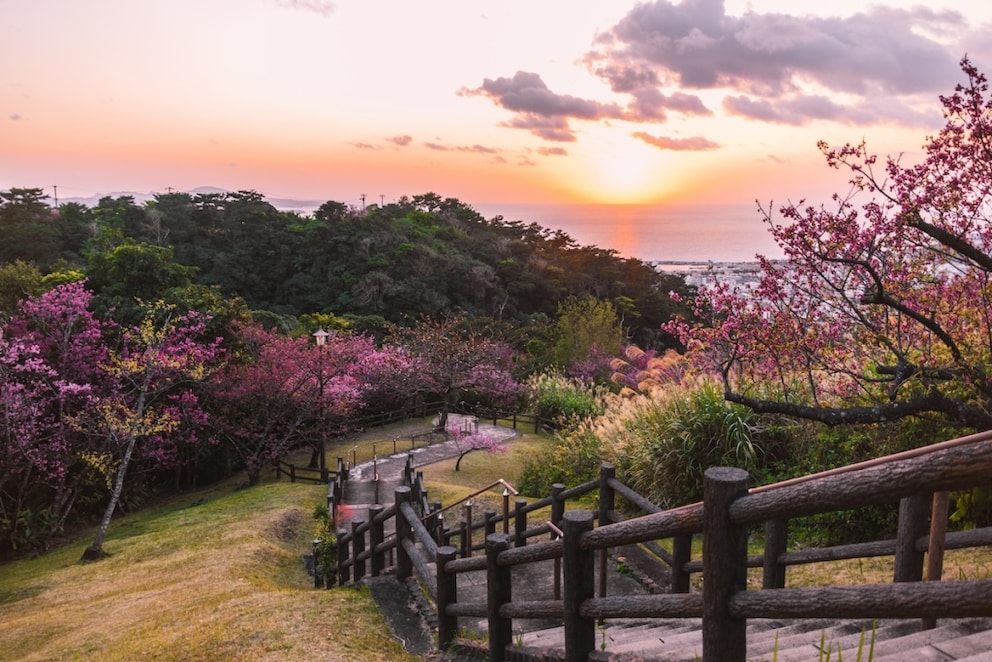
Japan’s longevity is a much-studied field in research. In Okinawa, Japan’s southernmost prefecture, women in particular seem to live especially long. According to the National Tourism Organization, their average life expectancy is 86; men still reach an average of 80 years. The traditional Japanese diet is known to be one of the most health-promoting worldwide. In the Blue Zone Okinawa, plant-based products, especially soy, play a crucial role, but the Japanese sweet potato Imo is also a praised staple food. It is considered a fiber-rich nutrient miracle tuber, as you can learn on the official “Blue Zones Organization” website.
Sardinia, Italy
On the Italian island of Sardinia, men again reach particularly high ages. According to Buettner’s research, there are more male centenarians here than anywhere else. Villages in the subregion of Barbagia are specifically considered Blue Zones. People here place great importance on social connections and largely consume vegetables and whole grains. Meat is rarely on the table.
Nicoya Peninsula, Costa Rica
The Nicoya Peninsula is also considered a Blue Zone. It is said that the locals place great value on a stress-free life. They move a lot in their daily lives, walking or working in the garden. The sense of family is also said to be very pronounced among Nicoya’s residents–it is typical for people to live under one roof with their children and grandchildren and support each other. The diet is considered particularly wholesome. Typical foods include vegetables like squash and corn, along with various legumes and the famously nutrient-rich bananas.

Loma Linda, California (USA)
The Adventist community in Loma Linda, California “outlives the average American by a decade,” according to Dan Buettner’s study. It is a well-known Christian faith community that adheres to apparently health-promoting principles. Followers of the Adventist community eat a biblically vegan diet with plenty of leafy greens, nuts, and legumes. “They observe the Sabbath,” says Blue Zone researcher Buettner, which involves “slowing down” for about 24 hours once a week. In addition to their spirituality, a generally high level of physical activity is said to contribute to their long lifespan.
Don’t Take the Blue Zones Principle Too Seriously
Certainly, you can learn a thing or two from the observed habits of Blue Zone residents. But please don’t make a dogma out of it. Especially since the concept founded by Dan Buettner, which has long been lucratively marketed, is no longer viewed uncritically today. It is criticized, for example, that the underlying data regarding the lifespan and health of people in the Blue Zones are not always reliable.
And: “The Blue Zone diet essentially repeats much of the conventional advice for a healthy diet,” wrote the recently deceased American physician Harriet Hall. She referred to similarities with the generally considered healthy Mediterranean diet. The critic suggested that the reporting on Buettner’s Blue Zones research could bring him commercial advantages.