

August 17, 2026, 12:59 pm | Read time: 7 minutes
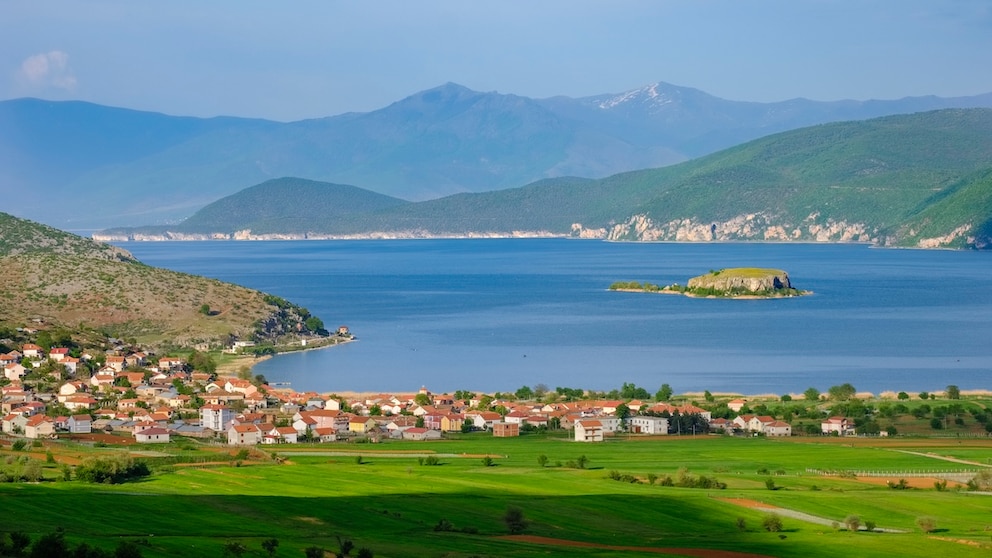
The scene feels familiar: deep blue water surrounded by white pebble beaches, green hills, and high mountains. Here and there, an island lies in the middle of the lake, with small bays and secluded beach sections hidden in between. However, this idyllic copy of Lake Garda is not in Italy: About 590 miles southeast as the crow flies is its twin lake, nestled between three countries. And so far, it still holds true insider status!
We are talking about Lake Prespa, which spans about 104 square miles at the tri-border area between North Macedonia, Albania, and Greece. The region is still relatively undeveloped for tourism. Here, you will mostly find individual travelers, hikers, and birdwatchers. All shoreline areas are protected and form an important habitat for numerous rare animal and plant species.
Those seeking the same beauty as at the most popular swimming lake for German vacationers will find it here without the approximately 18 million visitors who travel to Lake Garda each year. Lake Prespa is one of the oldest lakes in the world and is particularly captivating due to its pristine nature. The environment in the tri-border area is largely untouched, and the atmosphere at the beaches, accommodations, and traditional restaurants is pleasantly relaxed. The lake is accessible from all three neighboring countries, each offering its own unique character.
Lake Prespa in North Macedonia
About two-thirds of Lake Prespa is located in North Macedonia. Here, you will also find the somewhat better-known Lake Ohrid on the border with Albania. Those traveling to Greece, Serbia, or Bulgaria often pass by there automatically. In contrast, Lake Prespa is much more remote and is therefore still a true insider tip. From the North Macedonian cities of Ohrid or Resen, you can reach the lake and the small towns on its shores via winding roads. There, some particularly original nature experiences await.
Also interesting: Lake Ohrid in North Macedonia is still a true insider tip
Golem Grad Island – the Snake Island
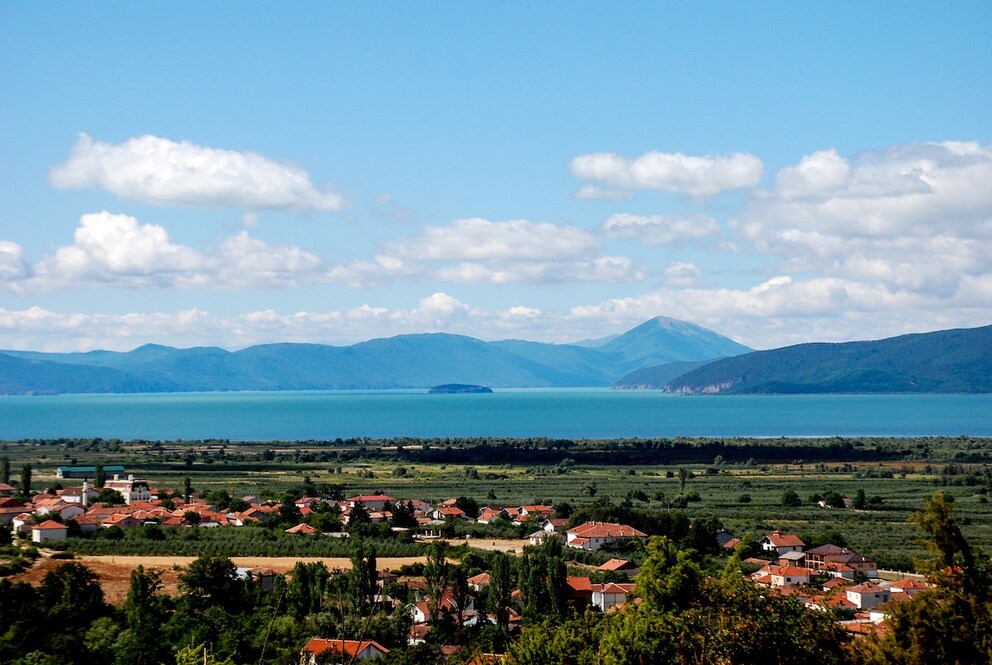
The island, almost completely covered with white stones, is an important breeding ground for numerous bird species, including pelicans. Additionally, land tortoises live here in the wild. However, spotting one requires a bit of luck. Various non-venomous snake species also inhabit the dense forest, which is why Golem Grad is also known as “Snake Island.” Despite its untouched nature, the island is accessible to visitors. Three boat docks were established for this purpose back in 2008.
Paragliding in the Galičica Mountains
The Galičica Mountains stretch between Lake Prespa and Lake Ohrid. Its highest peak, Magaro, reaches 7,398 feet and can be climbed on a challenging hike. In many places, there is an impressive view of both lakes. The hiking trails are well-marked and are also suitable for mountain biking tours in some areas. For those seeking even more adventure, guided climbing tours are available, or you can experience the region from a bird’s-eye view by paragliding above the village of Trpejca on Lake Ohrid.
Wild Horses in Pelister National Park
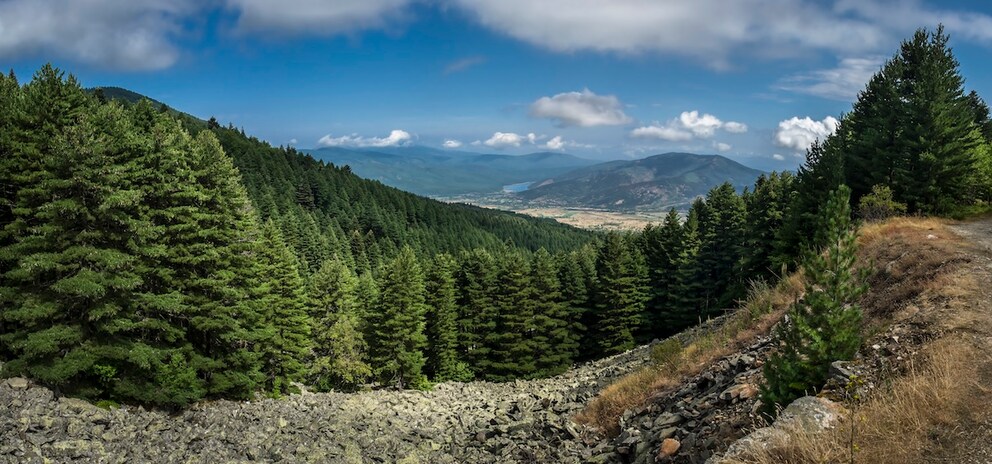
Between striking rock formations and dense forests lie two glacial lakes, also known as the “Eyes of Pelister.” The highest peak of the mountain range reaches over 8,530 feet. A diverse wildlife makes the region even more interesting. Among the most unusual inhabitants are wild horses, brown bears, wolves, and various eagle species.

This Country in Europe Is Still a Well-Kept Secret for Nature Lovers
5 Charming Villages on Crete That Are Worth a Visit
At Lake Prespa in Albania
In just about half an hour, you can reach Lake Prespa from the lively Albanian city of Korça via winding roads. You won’t find high-rise buildings, wide shopping streets, or large promenades here. Instead, protected natural landscapes and small traditional brick villages define the scene. Many of them offer a few guest rooms for travelers.
Day Tours through Prespa National Park
A vast protected area also extends on the Albanian side of Lake Prespa. Prespa National Park covers more than 66,700 acres and is one of the most significant nature reserves in the region. Rare animal species such as brown bears, wolves, and wildcats live here, as well as numerous bird species, including the Dalmatian pelican.
On day trips by foot, bike, or car, you will repeatedly encounter cultural sights such as historic churches and monasteries. Since there is hardly any tourist infrastructure here, you should bring provisions and arrange accommodation before your arrival.
Cave Churches on Maligrad Island
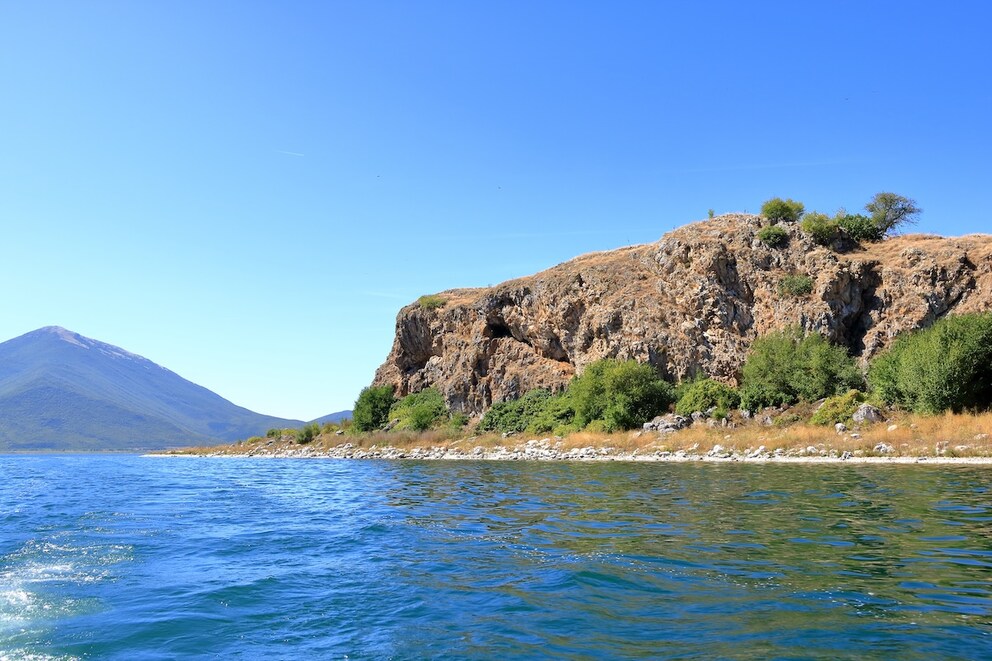
From the village of Pustec, which is also located in the national park, visitors cross over to the small five-hectare island with local boat rentals and a guide. From a distance, it looks like a large boulder in the middle of the lake. In its limestone cliffs is one of the region’s most significant cultural monuments: the cave church of St. Mary. According to travel experts, it was built by a nobleman in 1369. Inside, exceptionally well-preserved frescoes can be seen, whose colors remain impressive to this day. Additionally, archaeological finds are displayed, telling the long history of this remote place.
Cultural Fusion in the Village of Pustec
On the shores of Lake Prespa, as a starting point for visiting Maligrad, lies the traditional village of Pustec. With fewer than 2,000 inhabitants, the community is one of the smallest in Albania. The people here belong to a Macedonian minority that still shapes the cultural life of the place today. This mix of different traditions is particularly evident in the regional cuisine and local festivals. Those who want to learn more about the region’s history can visit the local Ethno-Museum.
Lake Prespa from Greece
The smallest part of the large Lake Prespa belongs to Greece. Further south, however, lies its smaller namesake, which definitely remains one of the country’s underrated travel destinations. Together, both lakes form a vast natural landscape on the border with Albania and North Macedonia. Among small villages, historic buildings, and abandoned settlements, Lake Prespa reveals yet another side.
Agios Achillios Island and Its Basilica
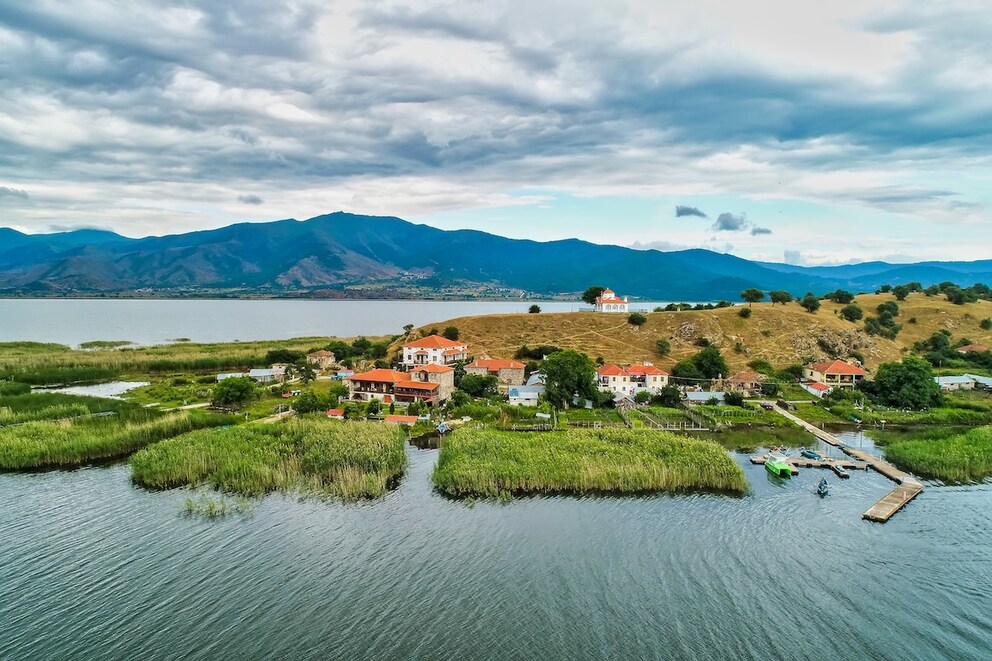
A long pedestrian bridge leads through reeds and water directly to the small island. There, time seems to have stood still. Among old stone houses, grazing animals, and shady paths, you will find the ruins of an impressive basilica from the 10th century.
Abandoned Villages Full of History
Along the Greek side of Lake Prespa, there are several abandoned villages that today serve as silent witnesses to a turbulent past. Especially during the Greek Civil War in the 1940s, many places were deserted. Among overgrown houses, collapsed walls, and old churches, you can still get a sense of what life was once like here. Some of the settlements can be visited on hikes or with local guides. The lost places give the already secluded region an almost mystical atmosphere.
Centuries-Old Fishing on the Lake
Lake Prespa is still characterized by a traditional form of fishing. Along the shore stand so-called daljans, large wooden fish traps that have been used for generations.
Especially in the morning hours, the simple wooden structures are among the most defining motifs of the region. Many families have lived off fishing for decades and supply the taverns of the surrounding villages with fresh fish from the lake. The tradition is considered an important part of the local culture and serves as a reminder that life at Lake Prespa is still closely connected to nature. Naturally, you should try the freshly caught fish from the lake in a traditional local restaurant.