

February 16, 2026, 6:34 am | Read time: 6 minutes
In 1891, the ingenious idea of a resourceful German businessman revolutionized the travel industry forever. He embarked from Cuxhaven with 240 passengers aboard a luxuriously equipped ocean liner for a two-month journey to the Orient. This is considered by many to be the first cruise in history, sparking a travel trend that continues to grow in popularity today. TRAVELBOOK tells the story of this unique journey and its consequences.
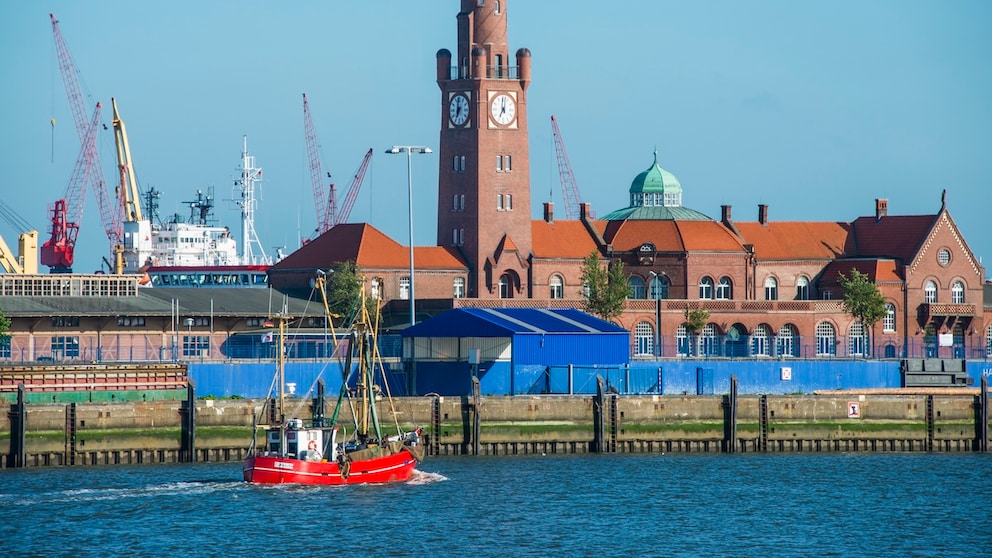
The Lower Saxon town of Cuxhaven on the North Sea coast lives in the shadow of well-known German port cities like Hamburg, Kiel, and Rostock. While these destinations see hundreds of cruise ships each year, the local dock, Steubenhöft, is usually very quiet. Yet it was here in 1891 that a new era of travel began. From Cuxhaven, a multi-month sea voyage set sail, now regarded as the first cruise in history. Its price: astronomical, its guests: the absolute social elite, and its destination: the Orient. This is the retelling of an adventure that created a travel trend that endures to this day.
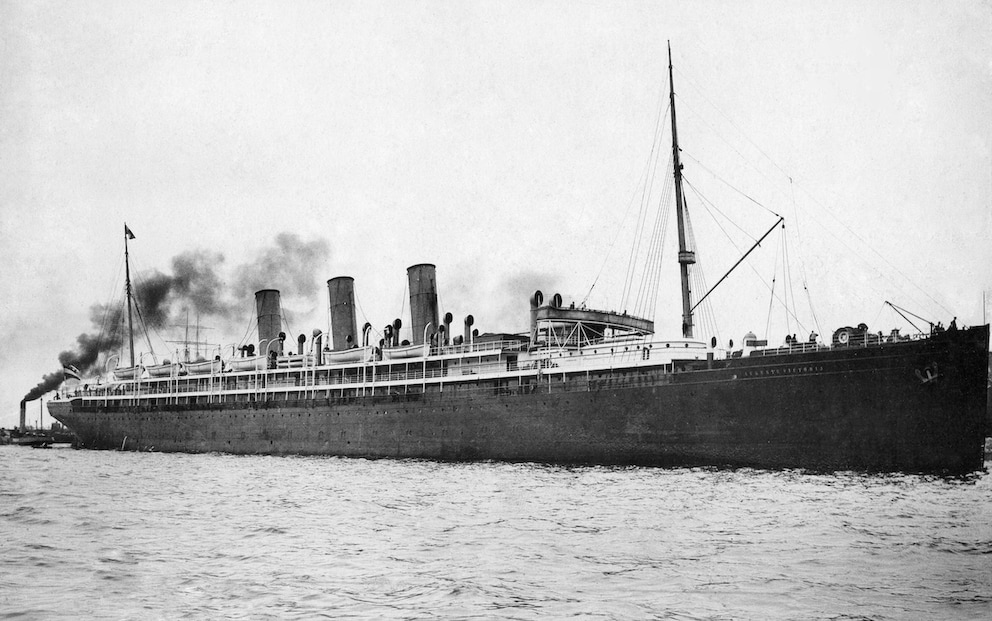
It is January 22, 1891, and there is great excitement in the port of Cuxhaven. None other than Kaiser Wilhelm II has announced his visit to personally inspect the ship “Augusta Victoria” of the “Hamburg-Amerikanische-Paketfahrt-Actien-Gesellschaft,” or Hapag for short. This ship is set to embark on a two-month pioneering voyage. According to the newspaper “Aus Politik und Zeitgeschichte” by the Federal Agency for Civic Education, there had been advertisements in national newspapers since November 1880 for an “Excursion to Italy and the Orient,” provided there was “sufficient participation.” And the participation is more than sufficient, with the ship fully booked with about 240 passengers on board. This is despite the fact that participating in the first cruise in history cost three to four times an average annual salary at the time.
Revolutionary Repurposing
Kaiser Wilhelm II admires the luxuriously equipped ship, then the “Augusta Victoria” sets sail. Its initial destination is Hamburg, then it heads to Southampton in England. From there, the journey continues to Genoa and Gibraltar, then to Alexandria, Port Said, Jaffa, Beirut, Constantinople (now Istanbul), Athens, Malta, Palermo, Naples, and Algiers, finally reaching Lisbon. From here, it is set to return to Hamburg and eventually Cuxhaven. The idea for the luxury cruise came from Alfred Ballin, director of Hapag, a few years earlier. His ships typically served the sea route to the USA, primarily used by emigrants. However, this business regularly declined during the cold season, prompting Ballin to seek another way to utilize his large express steamers.
On board, guests lack nothing on their cruise, with 245 crew members attending to every need. The provisions of the “Augusta Victoria” include nearly 12,000 oysters, almost 2,400 pounds of ham, 43,700 eggs, and 700 venison saddles. Entertainment on deck includes dance evenings and art exhibitions. In several ports, guests disembark for shore excursions. They see the pyramids in Cairo, visit Jerusalem and the Acropolis, and some even climb Mount Vesuvius. Among the travelers are mainly single men or fathers with marriageable daughters. There are hardly any couples on deck, and no children at all. Most passengers share a cabin with another person.

World’s Longest Climate-Neutral Cruise Sets Sail in November

Can Women Sunbathe Topless on Cruises?
Tremendous Demand
When the “Augusta Victoria” returns to Cuxhaven on March 21, 1891, Hapag director Ballin is already certain of one thing. He will offer such a cruise every year from now on. His company quickly expands the offerings to include trips to Norway and the Caribbean, then known as the West Indies. Other shipping companies soon follow suit. The demand is so tremendous that several companies can coexist without issue. According to the “NDR,” Hapag soon enlarges its fleet, sending the “Kaiserin Auguste Viktoria,” the world’s largest ship at the time of its commissioning, on voyages in 1905. The cruise pioneer “Augusta Victoria,” however, meets an inglorious end. Decommissioned in 1904, it sails under the name “Kuban” under the Russian Navy’s flag until 1907, and is then scrapped in Stettin.
As early as 1900, the Blohm+Voss shipyard launched the “Prinzessin Victoria Luise,” the first ship worldwide built exclusively for cruises. Nevertheless, until the 1960s, cruises were still mostly conducted on regular liners and outside the transatlantic season. The term “cruise,” by the way, emerged in the 1920s and derives from sailing, where the movement of ships with or against the wind is also called “cruising.” By that time, the demand for the offering had become so substantial that by the 1950s, providers like AIDA could establish themselves, offering the trips at comparatively low prices.
There Were Cruises Before
Today, cruise ships are often floating cities that can transport several thousand passengers at once. Worldwide, cruise lines face criticism for significantly contributing to overtourism and environmental pollution. Albert Ballin likely had no inkling of this when he embarked on the cruise with his guests aboard the “Augusta Victoria” in January 1891. The very first provider, Hapag, now Hapag-Lloyd after a merger, still exists. “We no longer offer cruises ourselves,” says a company spokesperson in response to a TRAVELBOOK inquiry. “We sold that business and are now the fifth-largest container shipping company in the world with 300 ships. But of course, we have a very large archive of our company history.” Today, Hapag-Lloyd Cruises handles the cruise business.
However, there are indeed doubts as to whether the 1891 voyage from Cuxhaven was truly the very first cruise in the world. The Federal Agency for Civic Education points out that, for example, the writer Mark Twain participated in a multi-month charter trip to destinations throughout the Mediterranean in 1867. Norwegian and British shipping companies also offered similar formats under the label “Pleasure Cruise” as early as 1875. The reason the voyage with the “Augusta Victoria” is still considered the birth of the cruise as a business model today is partly due to the great public attention the journey received at the time. Popular travel narratives by authors like Karl May also particularly fueled the imagination and longing of many people at that time.