

August 3, 2026, 1:24 pm | Read time: 4 minutes
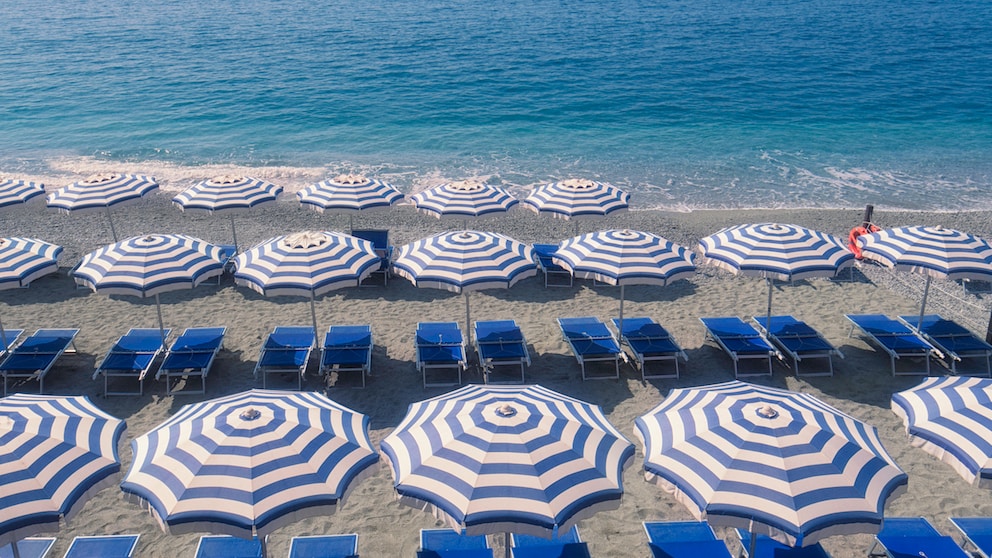
August is the most important vacation month of the year for many Italians. But right now, the scene is changing along many of the country’s coastal areas. Where lounge chairs, umbrellas, and beach resorts usually dominate, authorities are increasingly restoring free access to the sea. Are private beach resorts in Italy being abolished?
Demolition Instead of Beach Operations in Ostia
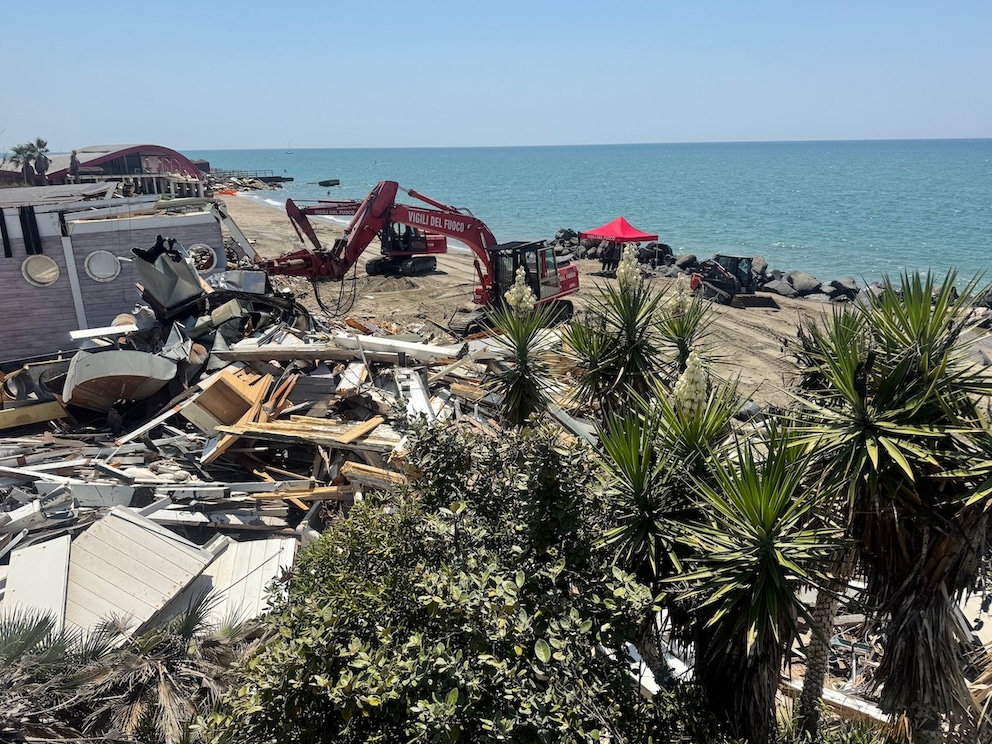
Normally, Ostia, Rome’s city beach, is packed in the summer. This year, however, some areas present an unusual sight. At the private beach resort “Shilling,” demolition excavators are at work, restroom facilities are being removed, and bathers are nowhere to be found.
The “Shilling” exemplifies a trend currently observed in many places along Italy’s approximately 7,500-kilometer Mediterranean coast. The private beach resorts, known as Stabilimenti Balneari, have shaped large parts of the coastal landscape for decades. They rent out sun loungers and umbrellas, generating significant revenue. However, more and more municipalities and authorities are questioning the fact that access to the sea is often only possible for a fee.
Criticism of High Prices Grows
Officially, there are more than 7,300 private beach resorts in Italy, but the actual number is likely much higher. For vacationers, a day at the beach is becoming increasingly expensive: This season, the average cost for two loungers and an umbrella is about 40 euros per day.
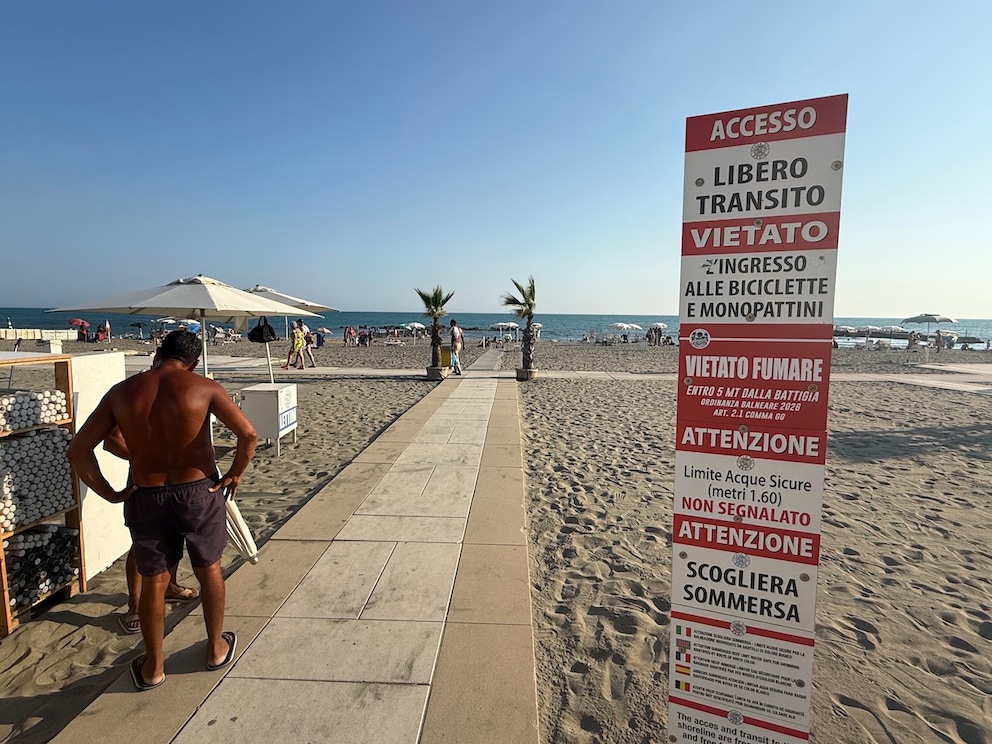
The coastal strips belong to the state. According to current law, access to the shore must be fundamentally free and open. Yet, more than half of the beaches are now privately leased. Discontent over this development has been growing for years, not only among international guests. Many Italians also find the fees too high.
Also interesting: Analysis shows price increases at Italy’s beaches
Authorities Take Action Against Barriers
Additional frustration is caused by fences and walls that some operators use to restrict access to the water. In Ostia, Rome’s city administration is now taking decisive action against this.
The “Shilling” was seized due to building violations and other allegations against the operator. After the facility was damaged by severe storms in the winter and was at risk of falling into disrepair, demolition is now underway. The neighboring facility “Sporting Beach” is also being removed.
Rome’s Mayor Roberto Gualtieri plans to establish a Spiaggia Libera, a freely accessible beach section, instead. The city revoked the concession of the beach club “Village” in connection with mafia investigations and handed over operations to a cooperative.
Free Access to Be Significantly Expanded
So far, only 1.2 kilometers of Ostia’s total 11.3-kilometer coastline are freely accessible. In the future, this is expected to increase to 6.5 kilometers. At the same time, the number of private beach resorts is set to decrease from 70 to 35.
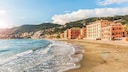
Similar developments are now occurring in other regions. Both on the Italian Riviera in Liguria and in Apulia, municipalities are working to make more coastal sections freely accessible again.
Portugal to End Dispute Over Beach Umbrellas with Beach Passes
The Region in Italy With the Most Pristine Beaches
EU Regulations Increase Pressure
European law is also behind these changes. An EU directive from 2006 mandates that state beach concessions must be regularly re-tendered, as they are public property.
Several Italian governments postponed the implementation of these regulations for years. Starting in 2027, the tenders are set to begin. Many observers expect this to lead to more competition and possibly lower prices for beachgoers.
Dispute Over Food and Drinks at the Beach
Recently, some operators in Apulia have sparked discussions. They wanted to prohibit bathers from bringing their own food and drinks. They cited a potential “image damage” as the reason.
The president of the Apulia region, Antonio Decaro, responded clearly to this initiative. Given the already high costs for loungers and umbrellas, such a demand is incomprehensible. He made it clear: “The sea is a public good. It must not become a luxury item.”
With material from dpa