

October 29, 2025, 5:35 am | Read time: 5 minutes
Boarding is one of the phases of air travel most prone to delays. To make the process more efficient and avoid waiting times in the aisle, the U.S. low-cost airline Southwest Airlines is now adopting the so-called WILMA principle. How exactly it works–and why it might seem familiar to you–is explained by TRAVELBOOK.
Southwest Airlines is planning comprehensive changes to the boarding process, set to take effect on January 27, 2026. This is currently reported by the “Wall Street Journal.” Until now, travelers with the airline could choose their seats freely (“Open Seating”), but in the future, they will be assigned fixed seats (“Assigned Seating”). Those who draw an aisle seat will be among the passengers called in the later boarding groups. This is when everything will follow the WILMA principle.
What the WILMA Boarding Principle Entails
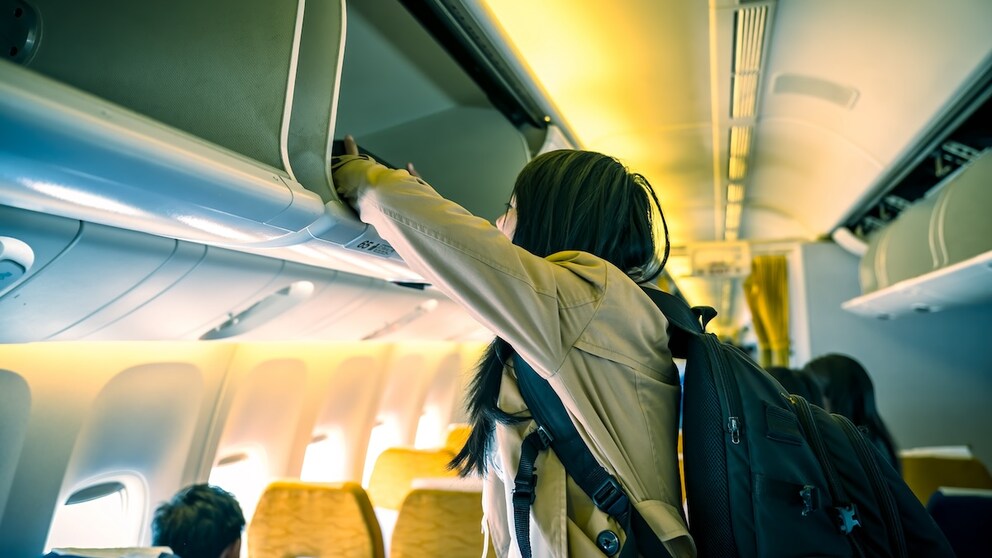
The so-called WILMA principle describes the order in which passengers board a plane. First are those with window seats, then those with middle seats, and finally those with aisle seats. The advantages are clear: If those who need to slide into the row board first, followed by the others, there is less congestion in the aisle. For example, middle seat passengers who have already boarded do not have to stand up to let others in. This leads to what many air travelers have likely experienced–a “human traffic jam” in the narrow cabin aisle, causing delays.
Long before Southwest Airlines–in 2017–the U.S. airline United tested the procedure, then temporarily suspended it and reintroduced it in 2023. This is reported by the travel portal “Chepair.” There are many reasons for it–smoother processes are naturally also in the interest of passengers. In Europe, they have long since caught on.
Lufthansa Group Has Long Implemented WILMA–The Reasons
The German airline Lufthansa and its subsidiaries like Swiss and Austrian Airlines have already implemented the WILMA principle since 2019–initially on selected short- and medium-haul European routes, later more broadly. “The boarding procedure based on the window-middle-aisle principle has proven to be the most efficient method and also supports more punctual departures,” a Lufthansa spokesperson told TRAVELBOOK.
The WILMA principle is intended to make the boarding process more orderly and comfortable, she explains. Passengers can save valuable time if they adhere to the carry-on baggage rules. To avoid overcrowded overhead bins, passengers are offered the option to check their carry-on luggage at check-in, and on heavily booked flights, they receive emails with this notice in advance.
What Are My Rights if My Paid “Window” Seat on a Plane Has No Window?
8 Tricks You Can Use to Almost Always Fly Next to an Empty Seat
Where WILMA Reaches Its Limits, According to an Insider
2019 was some time ago. However, the new boarding system will still be “rigorously” adhered to in 2025, as a Lufthansa flight attendant confirmed to TRAVELBOOK. She wishes to remain anonymous. In Germany, it is not called WILMA, but rather certain boarding groups are mentioned. These are called by number in the order they are allowed to board the plane. “Lufthansa strictly controls this,” the insider says. Passengers who try to board before their group is called will fail at the gate. For example, boarding group 5 will hear an error message when attempting to scan their boarding pass if only group 3 has been called, and they will not be allowed through. However, regardless of these groups, status customers (such as Senators or HON Circle Members), families with small children, and people with mobility impairments are allowed to board the plane first.
But according to the flight attendant, there are also cases where the window-middle-aisle system reaches its limits. This happens when the plane is parked at a remote stand. Letting passengers board in a fixed order would be “total nonsense,” she knows from experience. “When buses bring passengers to the plane, they naturally disembark in an unorganized manner, and everything is mixed up again inside the aircraft.” The so-called WILMA principle only works at the gate.
Theoretically, It Could Be Even Faster
By the way, while WILMA is currently used by several airlines, there is theoretically an even more efficient variant. The apparently fastest one is based on computer simulations by U.S. physicist Jason Steffen. It resembles the WILMA principle but is even more detailed. Here, too, passengers with window seats board first, but initially only on one side of the plane. This is to avoid anyone having to wait while the person in front of them stows their luggage or sits down. Then the remaining window seats on the opposite side follow. Only then do passengers with middle seats board, also staggered, and finally the aisle seats.
The method prevents blockages in the aisle–passengers can reach their seats much faster. The crucial disadvantage: It requires a very precise boarding order, which is difficult to implement in practice. This is likely why the so-called Steffen method has not been adopted by any airline to date.