

March 24, 2019, 7:24 am | Read time: 3 minutes
Training to become a pilot is not easy. It takes 18 months and includes both theoretical parts and many practical exercises. One person taking on this challenge is Laura Schmitt. TRAVELBOOK accompanied the 28-year-old for a day.
Laura is training at Lufthansa Aviation Training (LAT). Here, pilots are trained for airlines such as Lufthansa, Eurowings, Swiss, and Austrian Airlines, where Laura will also fly later, and sometimes for external airlines. The flight school itself has its own name: European Flight Academy. A branch is located in Rostock, where Laura is in the final part of her training. But what exactly does it look like?
The Training
In Laura’s case, there was initially six months of theoretical instruction in Bremen. Students are taught in 12 to 14 subjects, usually one subject per day. This is followed by a first practical phase of four to five months in Arizona in the U.S. Why in the U.S. and not in Germany? “There is desert there, and the weather is so good that you can almost always fly visually,” explains Maximilian Schneider from LAT. Flying visually is easier than flying by instruments–that’s why this part is completed relatively early in the training. Afterward, it’s back to Bremen for the second theoretical part, which lasts four months.
Once that’s behind you, the second theoretical part follows in Bremen, again lasting four months. This block concludes with the theoretical exam at the Federal Aviation Office in Braunschweig, for which the flight students must prepare as they would for a high school diploma. On average, 99 percent of students pass.
Finally, the second practical part follows, where flying is done solely by instruments. “That’s much more difficult and complex,” says Schneider.

How Do I Become a Flight Attendant?
Lufthansa Strike! These 3 Passenger Rights You Should Know
Preparing for a Flight Lesson
Preparation for a flight lesson begins the day before, when the student first meets with their flight instructor. The upcoming flight is then discussed. What exactly should be trained? Popular situations include landing approach, go-arounds, and unusual scenarios–such as engine failure. Additionally, the student and teacher look at the weather and decide which airports to approach. One thing depends on the other: The wind plays a significant role because it determines how fast you can fly.
Afterward, the flight plan is submitted and must be approved by air traffic control. This usually works, but not always. “There are a few exceptions, for example, when the airspace is very crowded. For this reason, our flight students also fly from Rostock, because the airspace here is very empty. In Tegel, you have virtually no chance.”
Read the best travel stories in advance for free! Sign up for the TRAVELBOOK newsletter now!
On the Day
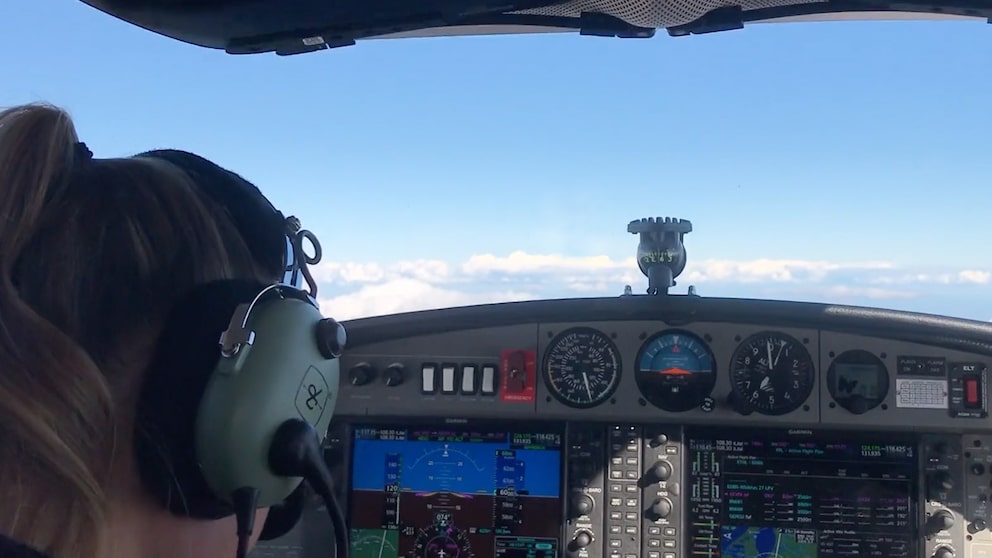
On the day of the flight lesson, Laura and her flight instructor meet two hours before takeoff for a briefing to discuss the current weather, among other things. Afterward, the aircraft is checked. This includes checking the brakes and fuel level. Then both get into the aircraft. Laura goes through the checklist, contacts air traffic control–and then the nearly 3-hour program begins.
What exactly Laura did above the clouds can be seen in the VIDEO above!