

March 13, 2026, 6:18 pm | Read time: 6 minutes
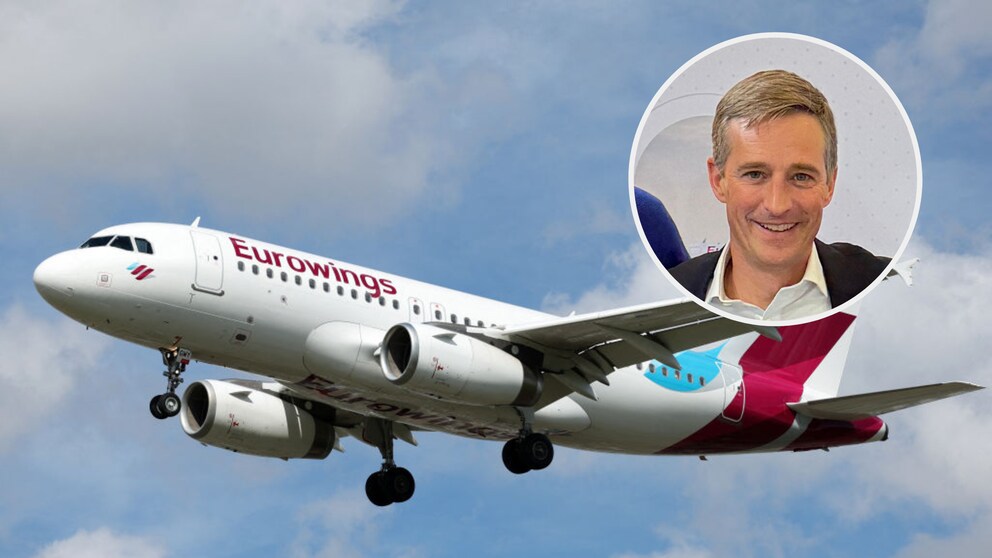
From low-cost carrier to value airline: Eurowings has undergone a transformation in recent years. The new CEO, Max Kownatzki, discusses this and much more in an interview with TRAVELBOOK.
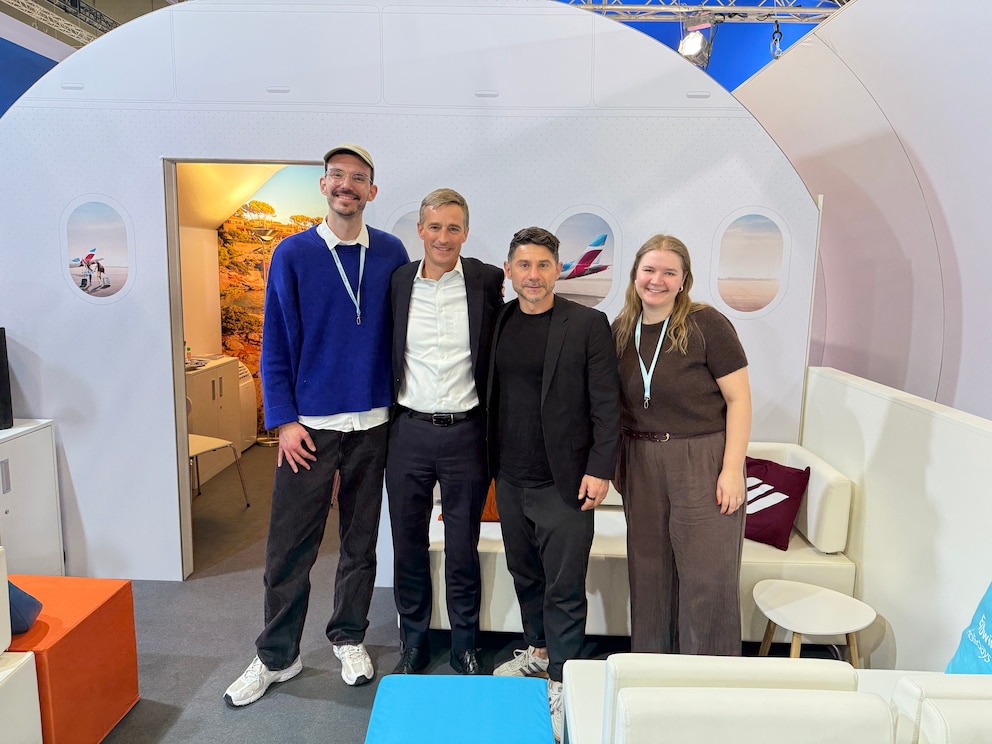
With new premium offerings, growing confidence, and a clear positioning in the fiercely competitive German market, Eurowings aims to continue the course of recent years. During the conversation at the ITB 2026 in Berlin, CEO Max Kownatzki had been in office for just four weeks. He talked about why flying has become so expensive in Germany, why Berlin is still growing, and what he thinks of the traditional low-cost image.
From Low-Cost Carrier to Value Airline
TRAVELBOOK: Mr. Kownatzki, many still know Eurowings as a traditional low-cost carrier. Is that still the case?
Max Kownatzki: “When I joined the Lufthansa Group eleven years ago, my first job in Germany was with Eurowings–and since then, this company has fundamentally changed. Back then, it was a regional low-cost carrier meant to cover decentralized traffic away from the major Lufthansa hubs. Today, Eurowings is a value airline for Europe–still affordable, but with a significantly enhanced product and service offering that convinces customers. After a series of losses, Eurowings has turned around and posted profits for several consecutive years. The value positioning works not only with customers but also in terms of profitability. You can feel it in the company–and it’s fun.”
And what does that mean for your time as the new CEO?
“I’m not someone who walks in and says: Now we’re doing everything differently. The Eurowings team has achieved many great things in recent years and has developed the company significantly. That deserves appreciation, and it’s a solid foundation to build on.”
Flying has become noticeably more expensive in Germany. How big is the problem really?
“If we had talked about an airline’s cost structure ten years ago, I would have said: About 30 percent goes to fuel, 30 percent to the fleet, and 30 percent to administration and personnel. That has fundamentally changed. Fuel still accounts for 30 percent, but today 30 percent is solely for fees and charges: whether it’s the air traffic tax, security fees, or air traffic control charges. In all three areas, we have a significant competitive disadvantage in Germany.”
Also interesting: German airline named best low-cost carrier in Europe
German Airline Named Best Low-Cost Carrier in Europe

Low-Cost Flight Market in Europe Grows, but Tickets in Germany Are Getting More Expensive
»Ticket Prices Cannot Be Lowered Immediately
The federal government wants to lower the air traffic tax to the 2024 level by July 1. Should tickets then immediately become cheaper?
“If a discussion about lowering ticket prices starts just two days after an overdue cost relief for the industry, we haven’t understood the precarious situation here. German air traffic has recovered significantly slower compared to other European countries and is still partly below the pre-COVID level of 2019. This is due to a cost avalanche that makes it impossible for many airlines to operate economically in Germany. This cost disadvantage urgently needs to be reduced.”
Does that mean, in plain terms, that routes are moving abroad?
“The travel enthusiasm of Germans remains high. Lower flight prices could stimulate demand–but that is currently unthinkable with record-high taxes and fees. Airlines are in the dilemma that they can no longer fully pass on the significant cost increases to their customers. Therefore, they cut routes in Germany or relocate them to more cost-effective locations simply because it no longer pays off.”
Yet you are currently focusing strategically on the Berlin location–why?
“Despite the challenging conditions, Berlin is developing into a success story for Eurowings. We have grown from three to seven and now to nine aircraft here. We see the capital as a very interesting location that we want to expand further. Eurowings is already the largest airline in the north (Hamburg) and the south (Stuttgart) and the clear number one in the west (Düsseldorf, Cologne). The east remains, and we see potential there.”
»With the Premium Offering, We Emphasize Our Positioning
Six more aircraft will now receive the Premium Business Seats, which have already been tested in two planes. Is this a trial balloon–or does it fundamentally change Eurowings?
“The Premium BIZ seat is designed to target three customer segments. First, guests who want a bit more comfort and privacy on longer medium-haul flights. Then business-oriented city traffic, for example, on routes like Berlin–London or Düsseldorf–London. Those who want to fly business class on such business routes without transferring through hubs will find an attractive offer with Eurowings. The third area is attractive vacation destinations that also attract guests from the premium segment, such as Mallorca or the Canary Islands.”
But is it economically viable?
“In fact, we are reducing the number of seats in the first three rows from 18 to eight. Accordingly, we must achieve sufficient demand and higher revenues with the premium offering. Therefore, we focus on city business, premium leisure, and longer medium-haul routes. With the premium offering, we also emphasize our positioning as a value airline, which increasingly sets itself apart from the traditional low-cost model. Eurowings offers a significantly higher-quality product–from flexible rebooking to earning miles to the sweet chocolate bar upon exit. We see that this offer is highly appreciated by customers–especially in our home market, Germany.”
The ITB was overshadowed this year by the current situation in the Middle East. Just recently, connections to Amman and Jeddah were added with the current winter flight schedule, and frequencies to Dubai were to be expanded. How cautiously must an airline plan today?
“We have created new direct flight offerings to the Gulf region, also to better balance the strong seasonality of a holiday airline. In total, however, it’s just 30 weekly frequencies that we planned for the demand-weaker winter towards the Middle East. For comparison: In summer, we fly more than 400 weekly frequencies to Palma alone. In relation to our entire offering, the Gulf region currently accounts for only two and a half percent of the seats. This is financially manageable, but we still hope, of course, that the situation in the crisis region will calm down as quickly as possible–especially with regard to the people on the ground.”
You have a commercial pilot’s license. Does that change your perspective on decisions?
“It helps me understand connections better, including technical ones. You have a different depth of understanding for processes around the aircraft and may also ask different questions. But I only fly privately now; I leave passenger flights to our professionals in the cockpit.”
Finally, a tricky question that many passengers have already had to deal with: Economy, middle seat–both neighbors block the armrests. Your solution?
“Just like you solve many other situations in life: by talking to each other from person to person and addressing the issue kindly. It’s so easy on a plane to make contact with your neighbor and resolve the small matter with a smile and a few friendly words.”