

December 2, 2025, 10:02 am | Read time: 3 minutes
Whether for business or leisure, hundreds of thousands of people fly every day. Many passengers suffer from a fear of flying. TRAVELBOOK spoke with an expert who reveals how to properly manage this fear.
For some, it’s a relaxing moment–the final leg before reaching their destination. For others, it’s sheer horror: They are afraid of flying. “The cause of fear of flying is often a lack of knowledge,” says psychologist Sascha Thomas. He offers coaching against fear of flying at his practice in Munich.
It’s important to get informed before the flight: How does a plane fly? What are turbulences? How is a safety briefing conducted? The answers to these questions can help you feel safer on board.
The Fear of Being Trapped
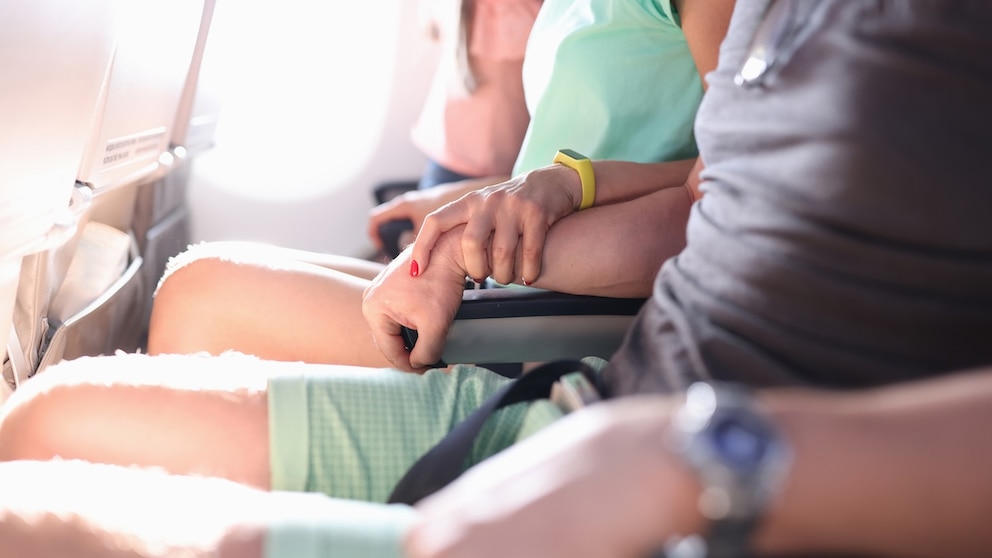
Some also fear their own reactions on the plane, as Thomas explains. They are afraid of panicking on the plane because they have experienced similar situations that scare them. Here, it can help to simulate a panic attack in a safe environment with professional support, advises the expert. “Often, these fears aren’t about the plane or flying itself,” says Thomas. Instead, people fear being in closed spaces and feel trapped.
Before the flight, it can help to do something relaxing. “Fear always leads to physical tension and an increased heartbeat.” A long walk, muscle relaxation exercises, or autogenic training can help. People with a fear of flying should focus on positive things before the flight and remind themselves that flying is safe. “Of course, this only helps if you truly believe it,” says Thomas.
Turbulence on Planes: How Passengers Can Protect Themselves
Where You Feel Turbulence Least on a Plane
Don’t Keep Fear to Yourself
On the plane, it’s wrong to keep your fear to yourself. Sitting silently and wondering what’s happening only makes things worse. A strange noise, a jolt–it’s best to speak to the cabin crew and ask what’s going on, advises Thomas. “Otherwise, you get caught in a spiral of thoughts.” You start imagining the worst-case scenarios and the most adventurous explanations for turbulence.
Also interesting: Where you feel turbulence the least on a plane
3 Quick Tips Against Panic on a Plane
Breathing: When panic sets in, you can quickly calm yourself with your breathing. Here’s how: Breathe consciously and slowly count to four with each inhale and exhale. The effect is enhanced if you consciously breathe from your belly to your chest and up to your shoulders and back down.
Pressure Points: Press the tips of your thumb and index finger together. This not only provides distraction, but the pressure point is also associated with fear, and pressing it helps you stay calm.
Thought Control: When panic thoughts arise, it helps to remind yourself that these are “just” negative thoughts in your head. Instead, visualize a smooth flight and a pleasant, safe arrival. Alternatively, think of a “happy place,” a beautiful location where you feel safe and comfortable.