

October 7, 2026, 8:18 am | Read time: 3 minutes
A rough landing can quickly give the impression that something went wrong in the cockpit or that the pilot wasn’t particularly skilled. In reality, there are various situations where pilots intentionally opt for a hard landing. TRAVELBOOK spoke with an aviation expert about this.
When a Rough Landing Is a Good Thing
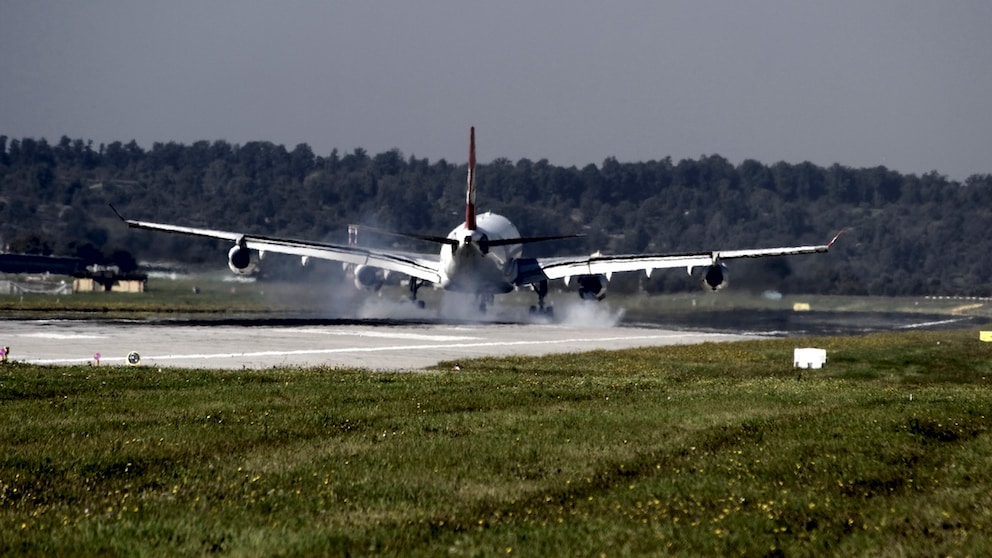
Most passengers are startled when, instead of the expected smooth arrival on the runway, they hear and feel a rumble. But those who think this is necessarily a mistake or that safety on board was compromised are mistaken. On the contrary, a somewhat harder landing is generally for safety.
A typical case where a harder landing can be beneficial is a so-called “contaminated runway,” as aviation expert Heinrich Großbongart explains to TRAVELBOOK. This refers to a runway where water has accumulated due to heavy rain or where there is snow, slush, or ice. “In these situations, the pilot tries to establish ground contact with the aircraft as quickly as possible,” the expert says. A slightly firmer touchdown ensures that the weight of the aircraft is quickly on the landing gear and the wheels are sufficiently loaded. This allows the aircraft to be controlled and braked afterward.
Also interesting: The 12 Most Dangerous Approaches in the World
Similarly, a harder landing can be beneficial in strong or gusty winds. As Heinrich Großbongart explains, the aircraft should establish stable ground contact as quickly as possible so that the pilot can keep the plane safely on the runway. This is especially important in crosswinds, as the aircraft can otherwise be more easily displaced sideways or lifted again by a gust.

Why Do Planes Arrive Early Even When They Depart Late?
What you definitely didn’t know about airplanes
Not Just the Moment of Touchdown Is Crucial
As described in a report by Airbus’s flight and maintenance safety department, it is important to touch down at a designated spot on the runway. Landing too far back loses valuable distance for braking—especially when water, snow, or ice further impairs braking effectiveness.
After touchdown, the aircraft must decelerate as quickly as possible. At the same time, special caution is required when braking, as water, snow, or ice on the runway can affect wheel traction. Spoilers—those flaps on the wings that are deployed after landing to reduce lift—help with this. Additionally, the reverse thrust of the engines contributes to slowing down the aircraft. Therefore, an early and controlled braking process is crucial to bring the aircraft safely to a stop on the runway.
Why Gentle Landings Could Become a Problem
Now, as a layperson, you probably better understand why an especially gentle landing on a contaminated runway is not necessarily advantageous. Upon touchdown, the wheels must quickly and reliably make ground contact and start rotating. With a very soft, gliding touchdown, this process can be delayed—especially on a runway with water, snow, or slush. Then, the brakes and other deceleration systems might only become effective later. A firm but controlled ground contact, on the other hand, helps to quickly load the wheels and initiate braking as early as possible.