

July 28, 2025, 4:30 am | Read time: 9 minutes
Tenerife is, of course, no longer a hidden gem. But here, you can find more than just swimming, culture, and parties; especially in the north, there’s breathtaking natural beauty. Our author Doris Tromballa reveals seven natural wonders in Tenerife that you shouldn’t miss when visiting the Canary Island.
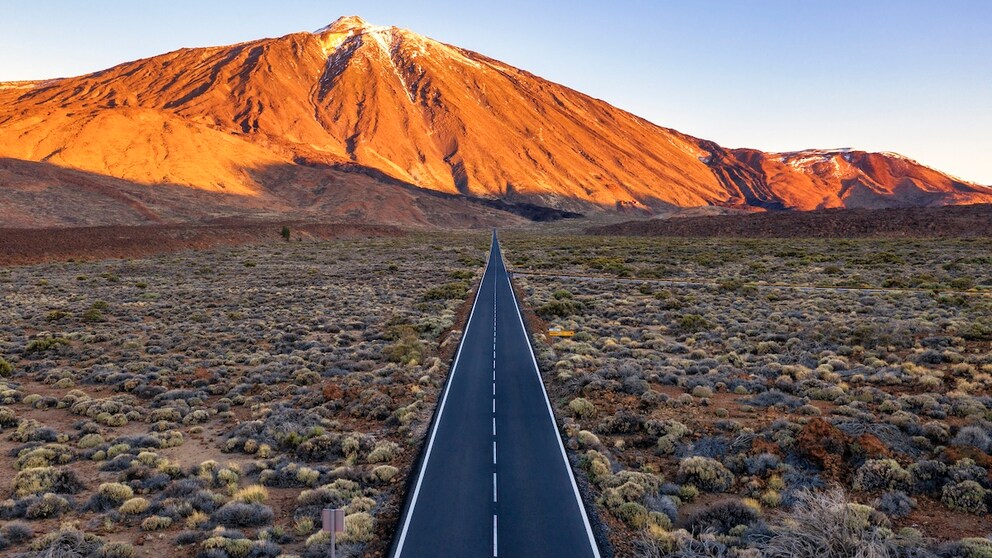
Okay, I have to admit, I’ve been to Tenerife many times, but never to Teide. That’s the peak of the massive volcanic cone that is so characteristic of Tenerife. Cable cars aren’t my favorite mode of transportation, and unfortunately, I lack the fitness and mountain experience to hike it. But that’s okay. Even for those with average hiking enthusiasm (like me), Tenerife offers breathtaking natural wonders that are easy to reach and admire. Here are my favorite seven natural wonders of Tenerife!
1. Montaña Negra: Three Volcanic Cones and a Path Through the Earth’s Primordial Forces
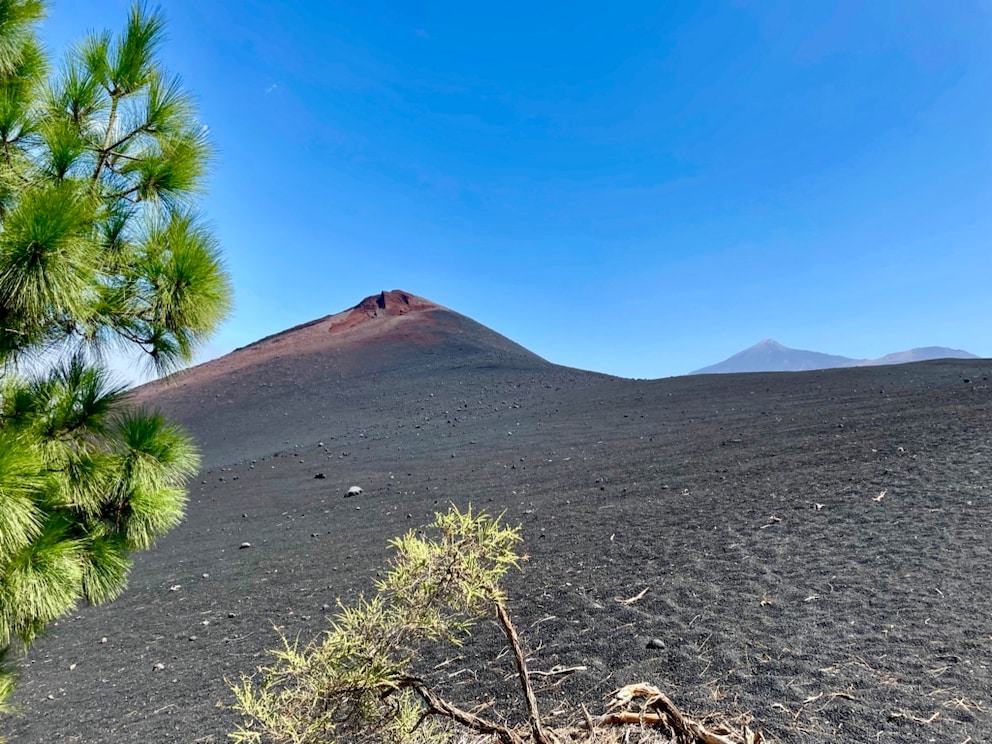
This hike is a must every time I’m on the island! The best route starts from the recreation park in San José de Los Llanos and winds through dill meadows and pine forests to the mighty Montaña Negra. The reddish-black volcanic cone was formed during an eruption in the 18th century and is located near Montaña Chinyero, the island’s last active volcano, which erupted in 1909.
At the base of the cone, you can still see cooled lava fields and bizarre rock formations. And the best part: On clear days, you get a wide view all the way to Teide. One hike–three volcanoes! I find the contrast between the black volcanic ash and the fresh green of the young pines reclaiming their space particularly impressive. Despite the remote location, the path is well-developed–you can also drive to the “Arena Negras” picnic area and be at Montaña Negra in about half an hour.
2. The Giant Fig Tree in the Botanical Garden of Puerto de la Cruz
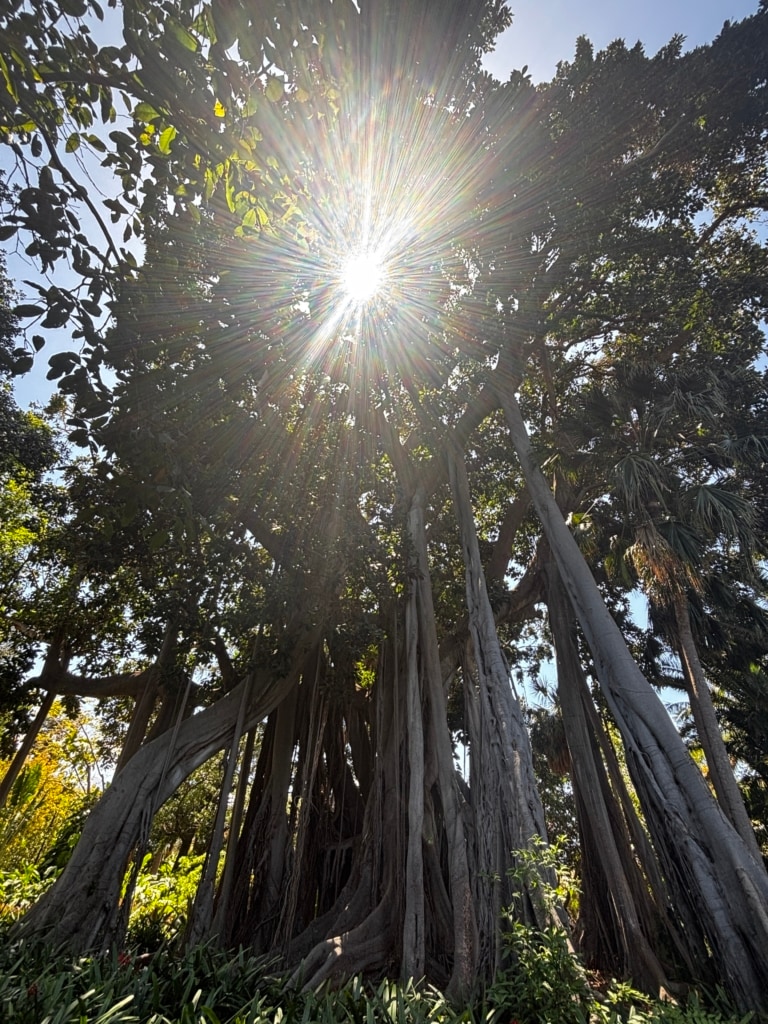
The Botanical Garden in Puerto de la Cruz is one of my favorite places in northern Tenerife when I seek peace and inspiration. It is one of the oldest of its kind in Europe. Founded in 1788, it still serves as an acclimatization garden for plants from around the world. One of the most impressive sights there is a giant fig tree of the species Ficus macrophylla f. columnaris. It looks like it’s not from this world–or not from this time. And somehow that’s true: The tree is about 200 years old and actually originates from Lord Howe, an island off Australia.
The peculiarity of the fig tree: It forms aerial roots that hang like curtains from the mighty branches. Over time, these aerial roots become thick, dig into the ground, and grow into their own trunks. And so, I stand speechless in awe before this marvel of nature every time. The garden is open daily from 9 a.m. to 6 p.m. and costs 3 euros for adults, with free admission for children under 14. And: The fig tree is just one of the many natural wonders the garden has to offer! You can tickle mimosa, admire orchids, or search for the “sausage tree.”
3. The Solar Observatory in Izaña: A View into Space Above the Clouds
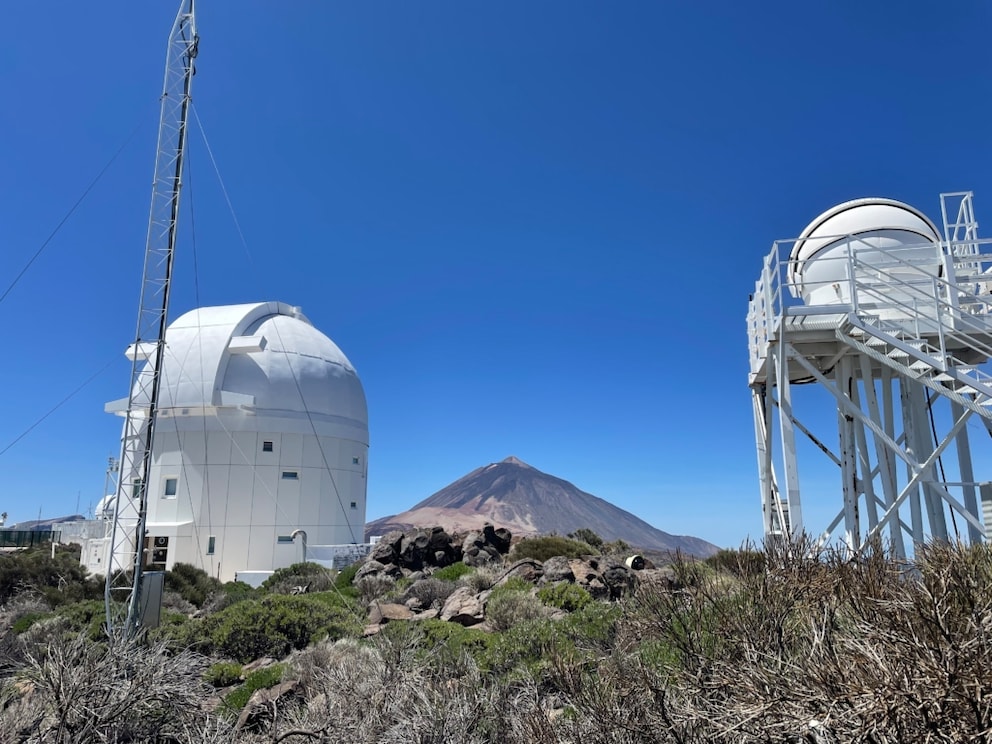
The most important star in our universe, that’s undisputed for us here on Earth: The sun. But it’s not easy to look at it, because as we all know from recent solar eclipse events, you ruin your eyes if you look at the sun unprotected. That’s why the Observatorio del Teide in Tenerife is something special: There, you can actually observe the sun–live and in color! The observatory hosts many scientists from around the world with their research, but even non-astrophysicists can take a look at the sun here, at over 2,400 meters altitude.
BILD Reisen: Discover the best hotels in Tenerife now!
There are daily tours of the site (on some weekdays also in German), and at the end, you can look at the sky through two provided telescopes. I actually saw sunspots and prominences (the wild streams of matter on the sun’s surface) “live” there for the first time. The visit must be booked online in advance, and admission costs 21 euros. Children must be at least eight years old. Fun fact: Queen’s guitarist Brian May spent a few months at the observatory in Tenerife and wrote part of his astrophysics doctoral thesis there.
4. The Wild Surf on the Coastal Path of Punta de Teno
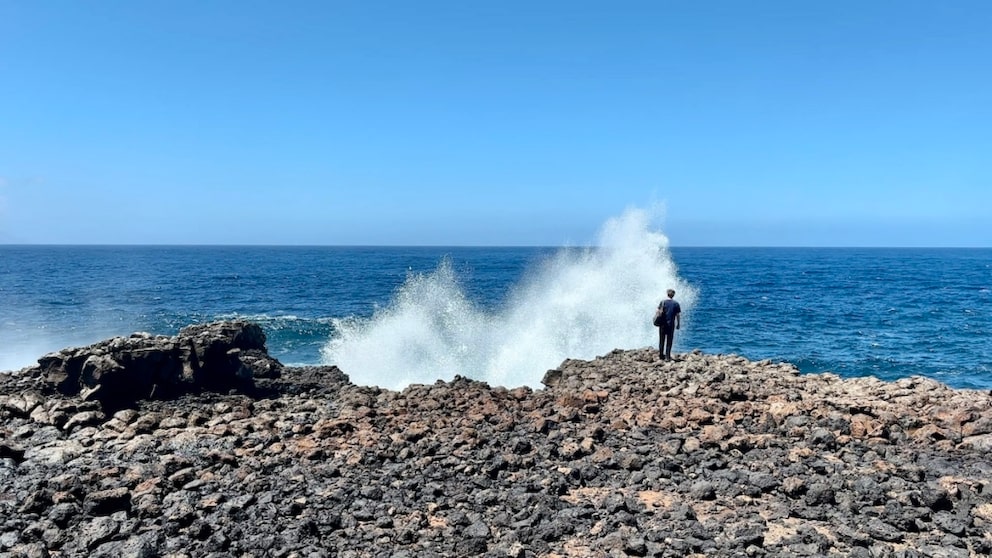
It thunders and rumbles, then bangs and hisses, and a twenty-meter-high spray fountain shoots into the air between the rocks! A fireworks display of water, that’s the wild surf on the coastal path of Punta de Teno. The westernmost point of Tenerife is also one of the island’s most dramatic coastal sections: Rugged cliffs, towering waves, and a lighthouse against the backdrop of the Los Gigantes cliffs make this place unique. But it’s really fun when you walk along the northern shore. There, the sea has perforated countless caves and gorges into the lava rock, and the Atlantic surf crashes through the jagged rocks with full force, shooting out everywhere into the air. Absolutely stunning!
What you should know: For now, the road to the viewpoint is closed because it is being renovated. Access is therefore only possible by bus (from Buenavista del Norte). It’s not really a problem–the bus costs only one euro, runs every hour, and takes less than 20 minutes to the lighthouse. But the ride is something else! I initially sat happily by the window to enjoy the view over the cliffs to the sea, but the road became narrower, steeper, and more winding. The bus navigated it confidently, but the view into the abyss was too daunting for me–and I moved to the mountain side and stared at the rocks…
5. The Masca Gorge: Journey to Tenerife’s Most Remote Mountain Village
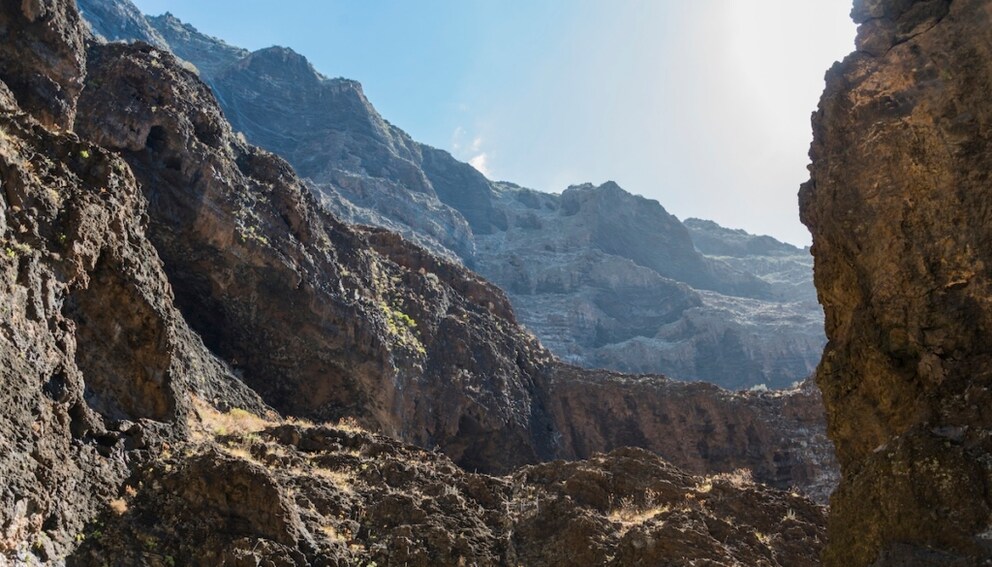
Speaking of spectacular drives: If you enjoy that, a visit to the remote mountain village of Masca in the rugged Teno Mountains is well worth it. The slightly kitschy mountain village itself isn’t necessarily worth the trip–but the drive there is. The road to Masca is certainly among the top 10 craziest routes I’ve ever driven. The serpentine road winds through the mountains in super-tight hairpin turns, with steep drops on either side, and the almost vertical rock formations of Masca in view.
The massive mountain slopes are simply magnificent, especially in the early morning or evening light. And there are also some points where you can stop and enjoy the view. Or you can mentally prepare for the real thrill: when one of the island buses comes toward you on the narrow road! And here’s the insider tip for visiting Masca: Take the island bus and save your nerves. Then the trip along the mountain slopes is a real wonder.
The Best Hiking Trails on La Palma
The Best Tips for a Vacation on Gran Canaria
6. Coral Kingdom in Loro Parque: An Underwater World to Marvel At
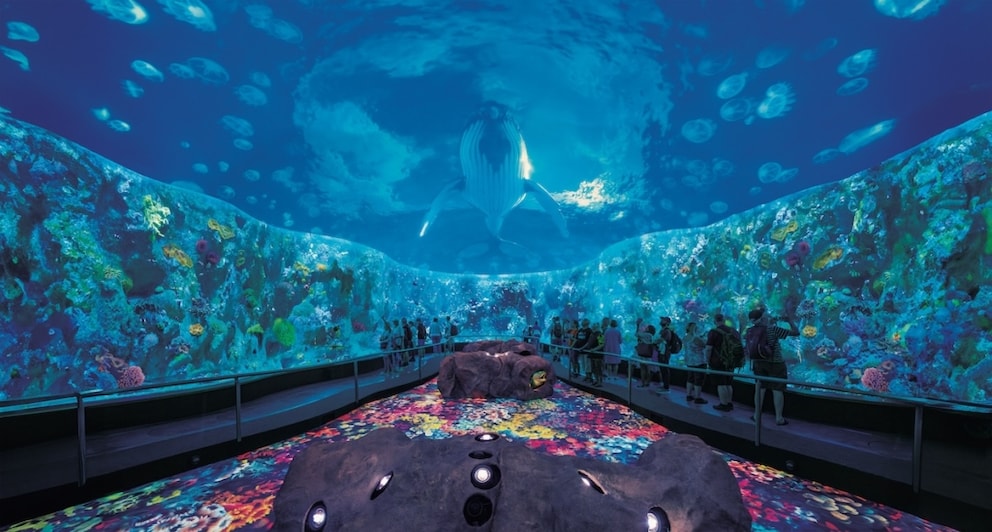
The “Loro Parque” zoo in Puerto de la Cruz has been one of the top attractions in Tenerife for over 50 years. The German entrepreneur Wolfgang Kiessling originally established it as a parrot park (“Loro” means parrot), but it has since become one of the most modern zoos in the world. This is evident in the company’s latest addition. The “Coral Kingdom” is one of the world’s largest replicas of a coral reef (all the corals are real!). The “Coral Kingdom” opened in 2022.
You stand on a “conveyor belt” and are taken past the coral world in the huge, U-shaped aquarium. The aquarium window is a full 40 meters long and made from a single piece! The floor and ceiling are illuminated with sea images by gigantic projectors. More than 8,000 corals live in the gigantic tanks, and nearly 10,000 fish swim through the marine landscape. If the Canary Islands are too cold for diving (like for me), you can marvel at the wonders of the sea here without getting wet. The park is open every day from 9:30 a.m. to 5:30 p.m., and admission costs 42 euros for adults, 30 euros for children, with free entry for those under 11.
7. The Laurel Forest in the Anaga Mountains: Hiking in a Fairy Tale Forest
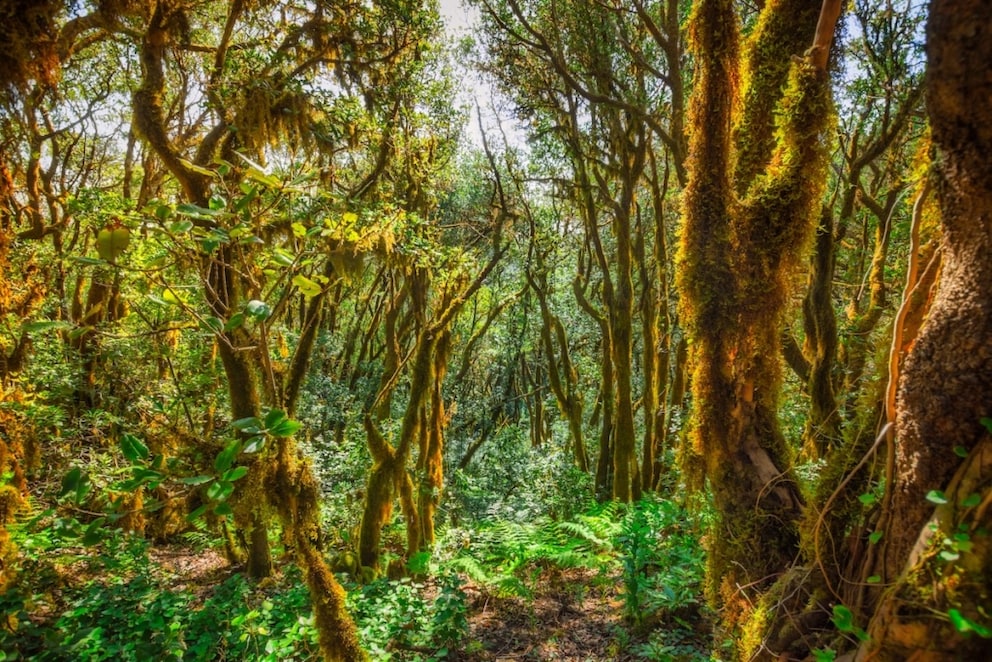
It’s known as a fairy tale forest–and rightly so! The Parque Rural de Anaga in northeastern Tenerife is home to one of the last original laurel forests in Europe. Here, the trees find optimal conditions: Between 500 and 1,100 meters in elevation, the trade winds hit the Anaga Mountains in northeastern Tenerife. The clouds accumulate on the mountain slopes, creating a humid, almost tropical climate. The laurel trees can grow up to 30 meters high!
And wandering through the forest gives me goosebumps every time: Ghostly lichens and ivy hang from the branches, mist swirls between the trunks, and the sun casts narrow beams of light on the moss patches on the ground. The scent of damp earth gives the forest an almost mystical atmosphere. Numerous hiking trails lead through the green thicket–from short walks to challenging day routes. Starting at the Cruz del Carmen visitor center is particularly worthwhile, offering information and a viewing terrace with a view to the coast. The forest is part of a UNESCO Biosphere Reserve and is an intense nature experience, especially in the morning when it’s still quiet.