

November 16, 2022, 5:30 pm | Read time: 4 minutes
Kruger National Park spans nearly 20,000 square kilometers. Given such vastness, it’s easy to forget that South Africa’s largest wildlife reserve is bordered by a fence in many areas. Kruger National Park is a threatened paradise that requires intensive protection. TRAVELBOOK has all the tips for visiting the national park.
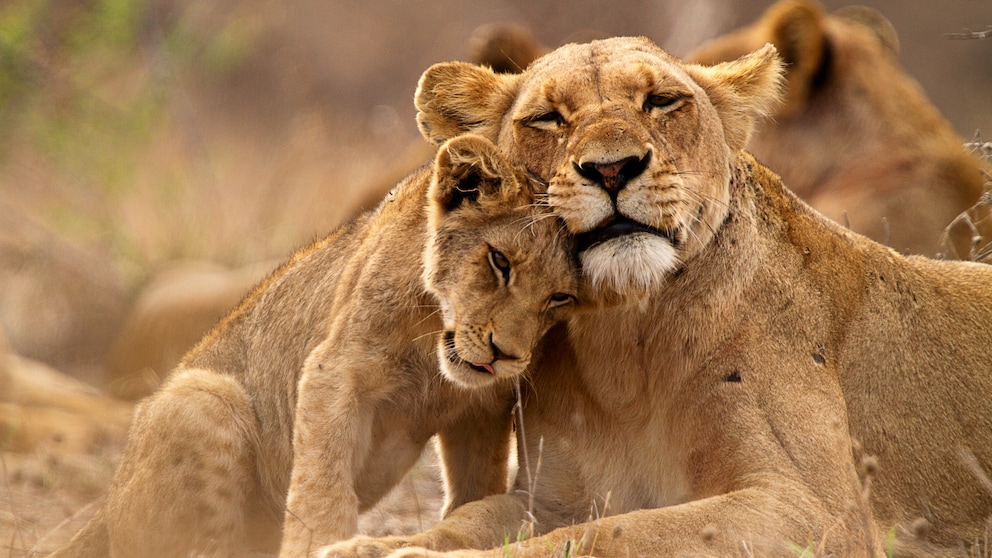
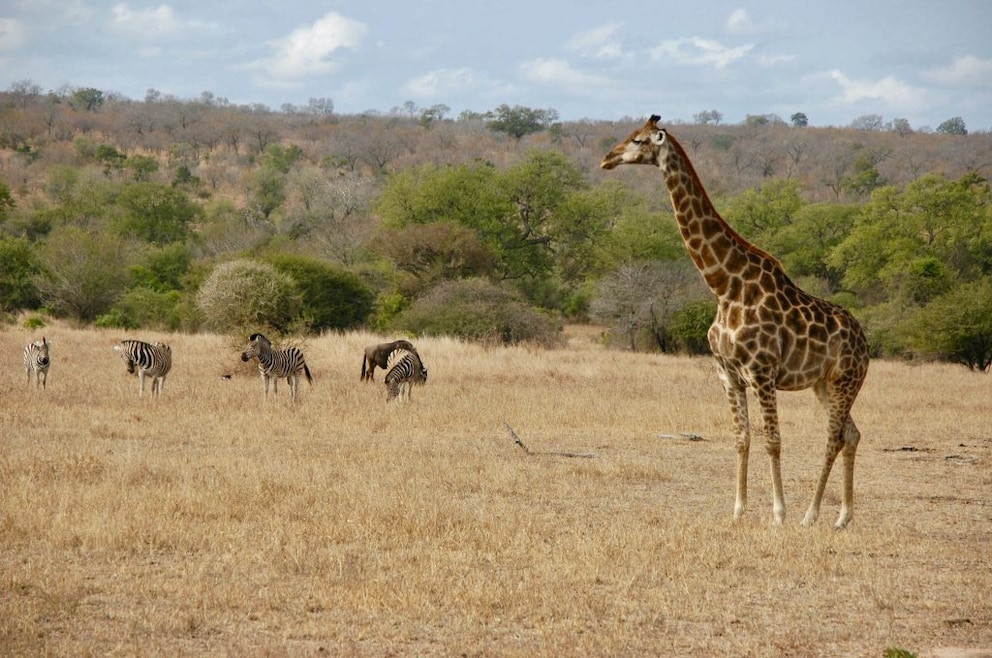
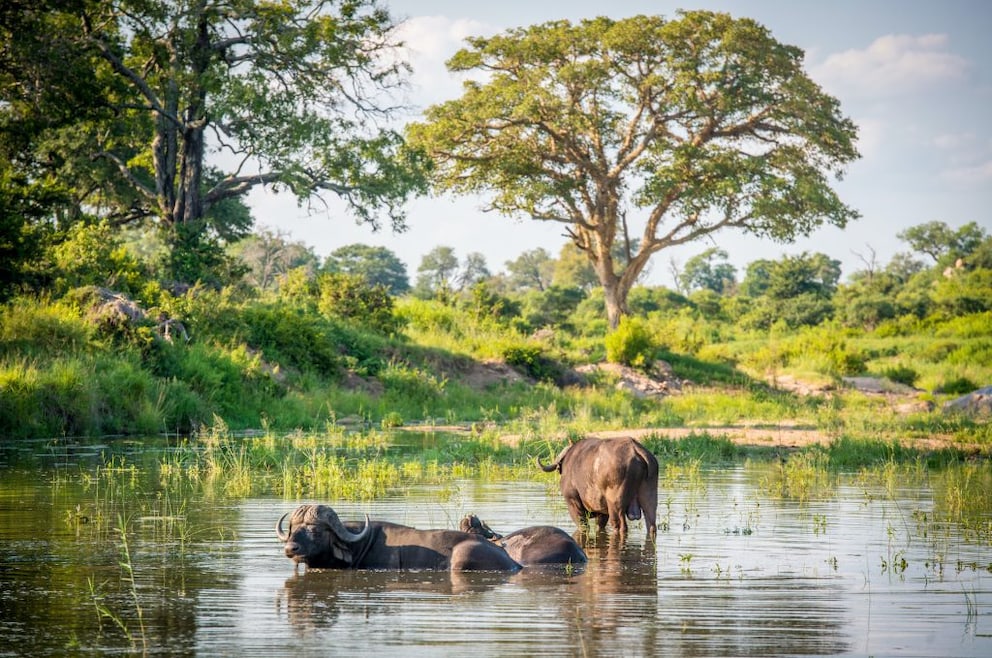
Visitors to Kruger National Park are treated to magnificent nature: mountains up to 1,800 meters high, rolling landscapes, bushland and savannas, large rivers that sometimes dry up, mixed forests, and much more. There are 30 different ecosystems in the park, which explains the diversity of animal and plant species. Home to 147 mammal species, including the African elephant, black rhinoceros, African buffalo, lion, and leopard, more than 500 bird species, 114 reptile species, and nearly 100 fish and amphibian species, it’s a paradise for wildlife observers who often only see these species in zoos. The most common animal is the impala, with up to 150,000 individuals in Kruger National Park.
Some four-legged residents can be observed directly from the car on a safari. A zebra leisurely strolls across the wide sandy road, a lion family suns itself on a nearby hill, and giraffes strut through the wilderness here and there.
In 2000, Kruger National Park was merged with adjacent reserves in Mozambique and Zimbabwe to form the “Great Limpopo Transfrontier Park.” Some of the existing border fences were removed to allow the migration of different animal species without disruption. Additionally, large animals were relocated to the reserve.
Kruger National Park is located in northeastern South Africa and has been a protected area since 1898. It was founded by then-South African President Paul Kruger. Twenty-eight years later, the protected area became a national park.
Tips and inspiration for Cape Town in South Africa are available in the following podcast episode of In 5 Minutes Around the World – narrated by freelance TRAVELBOOK author Sonja Koller:
Overview
Climate and Animal Migrations
The park’s plants are also remarkable. Acacia species, euphorbias, palms, baobabs, and other trees thrive here, as do shrubs like the desert rose. They all must cope with the region’s extreme climate, just like the animals. Summers are hot and rainy, while winters are warm and dry. Temperatures above 40 degrees Celsius are not uncommon during the rainy season, but it can drop to zero degrees at night. The climatic extremes force animals to migrate: During dry periods, they follow the waterholes.
It’s no wonder that such a natural paradise, alongside Table Mountain or the Garden Route, is one of South Africa’s major attractions. Many tourists visit Kruger National Park as part of a safari. The park can be accessed through nine entrances in the south, southwest, west, and north of South Africa. Tourists can explore the park with a rental car or as part of an organized safari. The most convenient way to get there is by flying from Johannesburg or Cape Town to Kruger Mpumalanga International Airport or Hoedspruit Eastgate Airport.
Safaris in Kruger National Park
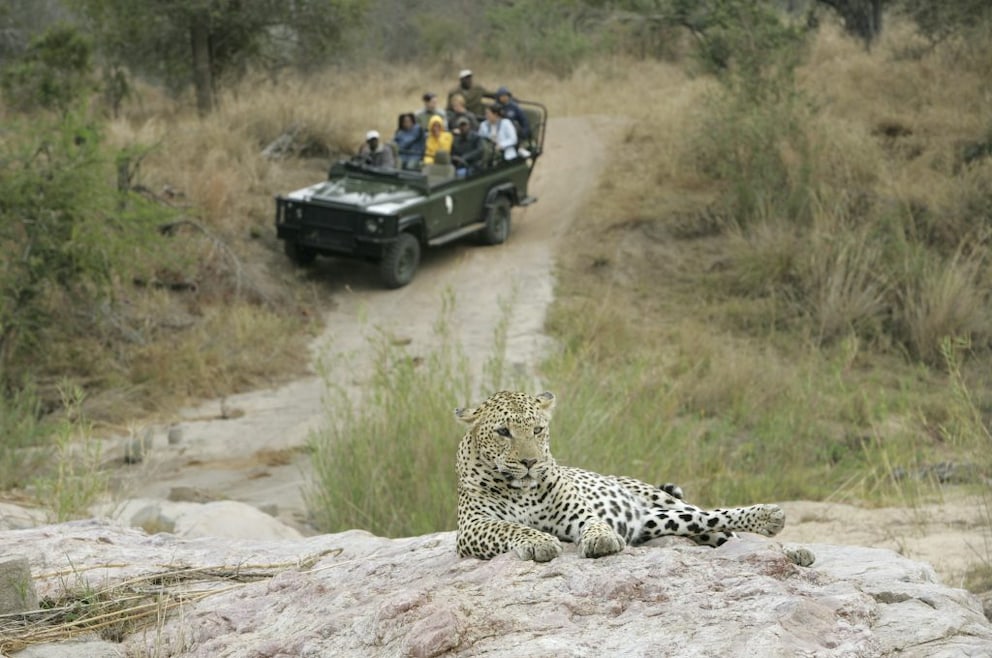
The most fascinating experience when visiting Kruger National Park is a wildlife safari. For several days, you travel through the captivating landscape, and with a bit of luck, you might see lions or giraffes up close. Along the way, guests stay in various lodges. Many safaris can be booked online.
Incidentally, you can also explore the park on foot. On so-called Wilderness Trails, you spend three days in different areas–a delightful experience with a sense of adventure.
Important Note: Whether by car or on foot, visitors to the national park should never disturb the animals living there and always maintain a safe distance. If you still want close-up shots of the “Big Five” or other animals in Kruger National Park, you should use a telephoto lens.
Staying Overnight in Kruger National Park
Those wishing to stay overnight in Kruger National Park can choose from various camps. Most guests stay in one of the 13 large Main Camps, where you can also take a break during a day trip. The Bushveld Camps are slightly smaller and only accommodate overnight guests. For those with higher standards, there are a good dozen private lodges.
Map: Location of Kruger National Park

Current Weather in Pretoria
(Text: Silke Böttcher)