


August 6, 2025, 10:23 am | Read time: 3 minutes
The Great Barrier Reef is a unique natural wonder. However, the world-famous coral reef is severely threatened by the climate crisis and repeatedly affected by coral bleaching events. New findings from marine researchers now show how dire the situation is for the largest structure on Earth created by living organisms.
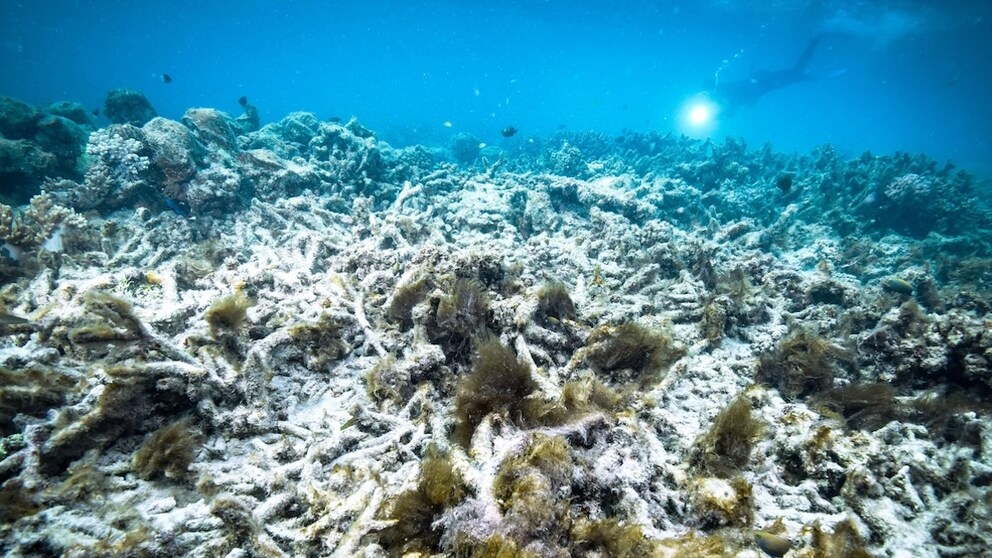
Coral reefs typically shine in the most vibrant colors. But due to rising water temperatures, the corals are increasingly bleaching and dying. Following the massive coral bleaching events in 2024 and 2025, the Great Barrier Reef has suffered the largest losses in coral cover since records began, according to the annual report from the Australian Institute of Marine Science (AIMS).
“Compared to 2024, coral cover in the northern region has decreased by a quarter (from 39.8% to 30%), in the central region by 13.9% (from 33.2% to 28.6%), and in the southern region by almost a third (from 38.9% to 26.9%),” the report states. For the northern and southern regions, these are the largest annual declines since monitoring began nearly 40 years ago. The high temperatures have caused “unprecedented heat stress” for the corals.
Coral Bleaching as the Main Cause of Coral Death in the Great Barrier Reef
In addition to the bleaching itself, cyclones, floods, and crown-of-thorns starfish also contributed to the massive coral die-off in the summer of 2024, according to AIMS. However, coral bleaching was definitely the main cause.
In a video posted on Facebook, the marine researchers explain their findings and also describe how they conducted their analyses:

Endangered Natural Wonder
The Great Barrier Reef has been a World Heritage Site since 1981. UNESCO has repeatedly warned in recent years that the reef could be placed on the list of endangered World Heritage Sites due to environmental damage. Since 1998, there have been a total of eight massive coral bleaching events at the Great Barrier Reef. However, the Australian government has so far managed to prevent the classification as an endangered World Heritage Site. As early as 2022, Australia’s then-Prime Minister Scott Morrison announced that the government would increase investment in the preservation of the Great Barrier Reef.
Researchers warn, however, that given recent developments, current protection measures may not be sufficient to save the reef. Richard Leck, head of the ocean program at WWF Australia, said the devastating coral die-off increases the pressure on Australia’s emissions reduction target for 2035, which is set to be announced soon. “The evidence in the AIMS report shouts it from the rooftops: ‘We need a strong target for 2035.’ Climate change has wiped out the encouraging recovery of the corals in recent years in one fell swoop.”